
Headlamp · Fog Lamp · Signal
Automotive Glass Lenses and Lighting Components
Custom molded, aspherical, freeform and TIR glass optics developed for automotive headlamp, fog-lamp, auxiliary and signal-lighting modules.
Custom Automotive Glass Lenses and Lighting Components
An automotive glass lens may collect light directly from the source, reshape an intermediate beam, form the final distribution or protect the optical module. Calling every component a headlight lens hides these different roles and makes the source position, datum structure and acceptance method unclear.
Lampoptics supports molded glass development from controlled optical and mechanical data. Automotive feasibility is reviewed as a component-manufacturing project; vehicle and complete-lamp regulatory approval remain within the customer's defined system-validation plan.
Primary and Secondary Optics in the Lamp System
The lens role determines which optical and mechanical inputs control the part.
| Application | Optical or component task | Required project input |
|---|---|---|
| Primary optic | Collect light close to the LED or lamp | Emitter geometry, cavity, source gap and thermal clearance |
| Secondary optic | Focus or redistribute an existing beam | Input ray field, focal data, aperture and optical axis |
| Freeform beam optic | Create cutoff, asymmetric or shaped distribution | Target photometry, coordinate system and clocking |
| Signal or position-light optic | Control visibility and appearance | Viewing-angle target, source array and color/transmission |
| Protective or decorative glass | Protect the module or form a visible interior/exterior part | Housing, edge, coating, cosmetic zones and environment |
Optical Datums, Source Position and Microstructures
The production source model, emitting area, spectrum and operating position must be linked to the optical prescription. Axial and lateral source shift, lens tilt and rotation can change the beam, so the glass seat, key, flange or other clocking feature should reference the optical coordinate system.
Molded microstructures can redistribute light or soften source imaging, but they also affect tool generation, glass filling and inspection. Clear aperture, functional surface zones, non-optical edge regions and cosmetic acceptance should be separated on the released drawing. Final photometry is evaluated using the customer's defined lamp setup.
Recommended Products for Automotive Lighting
Select products by their role in the lamp module rather than by outward appearance.
| Product | Role | Key selection input |
|---|---|---|
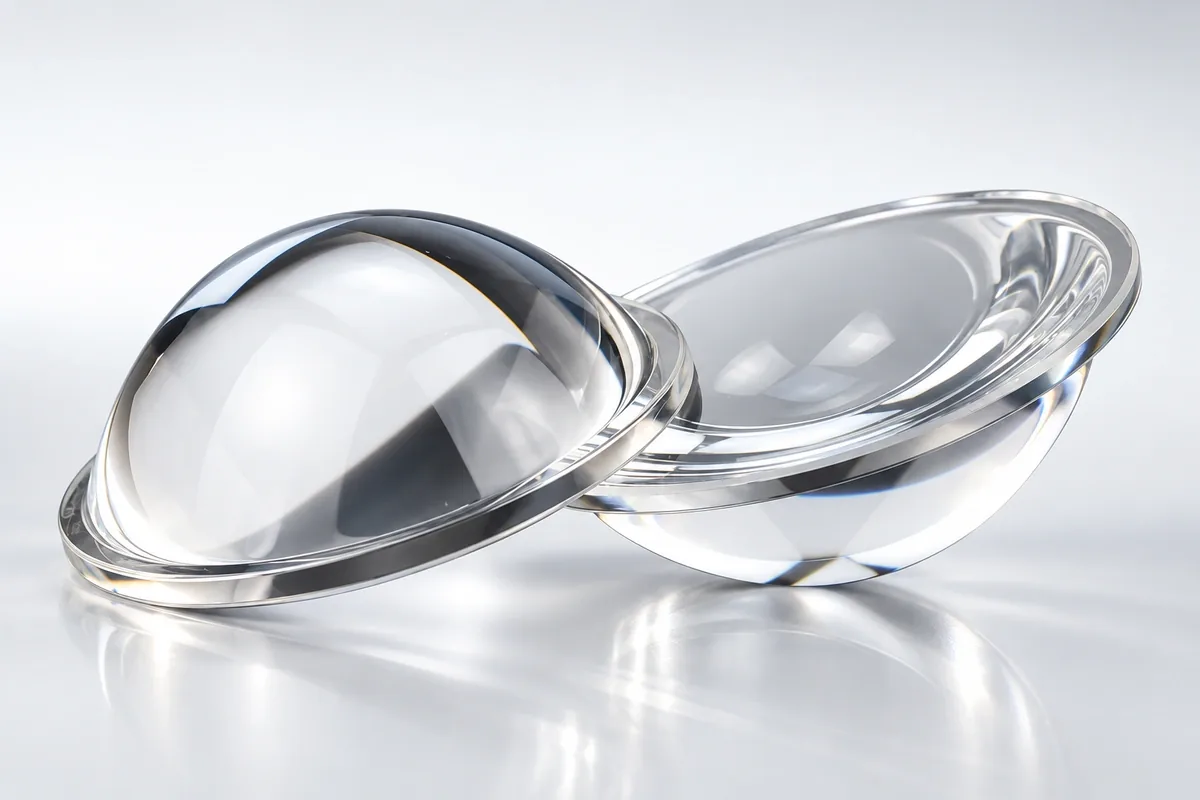
| Aspherical Glass Lenses | Headlamp and fog-lamp focusing optics | Surface prescription, centration and focal data |
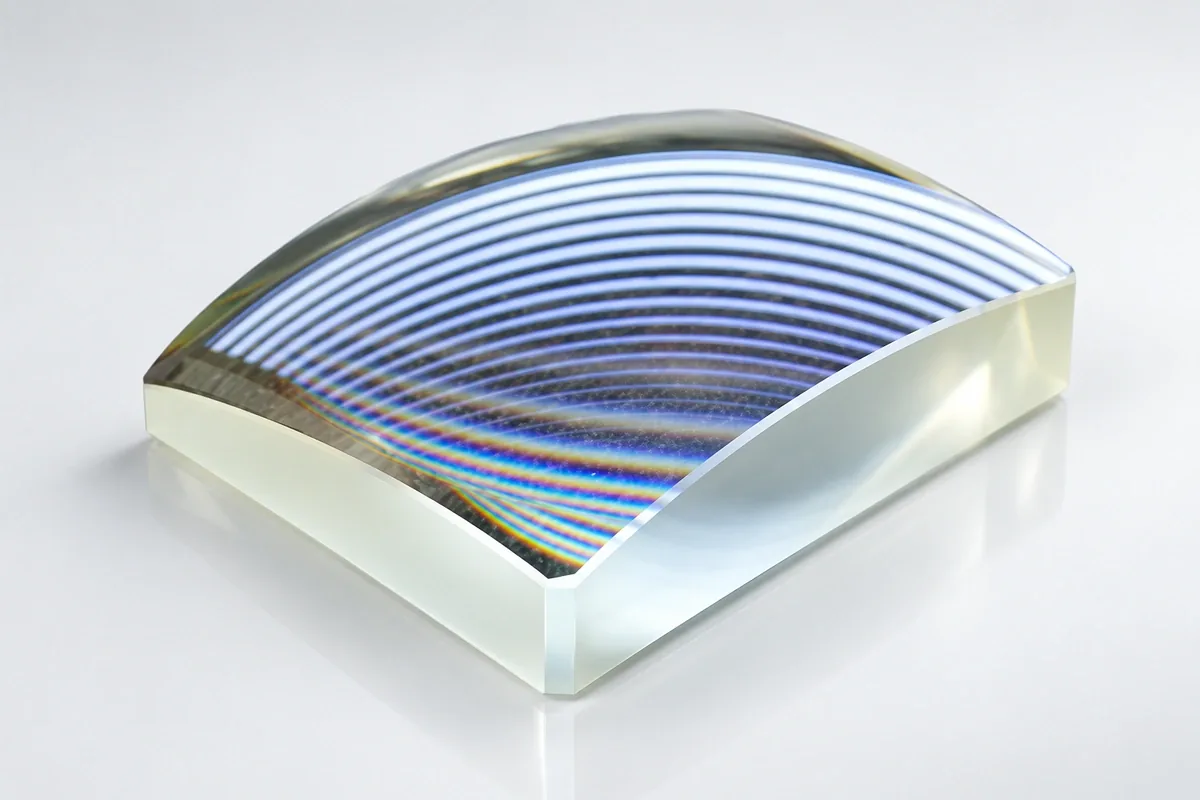
| Freeform Glass Lenses | Asymmetric or shaped distributions | Optical coordinates, target map and clocking |
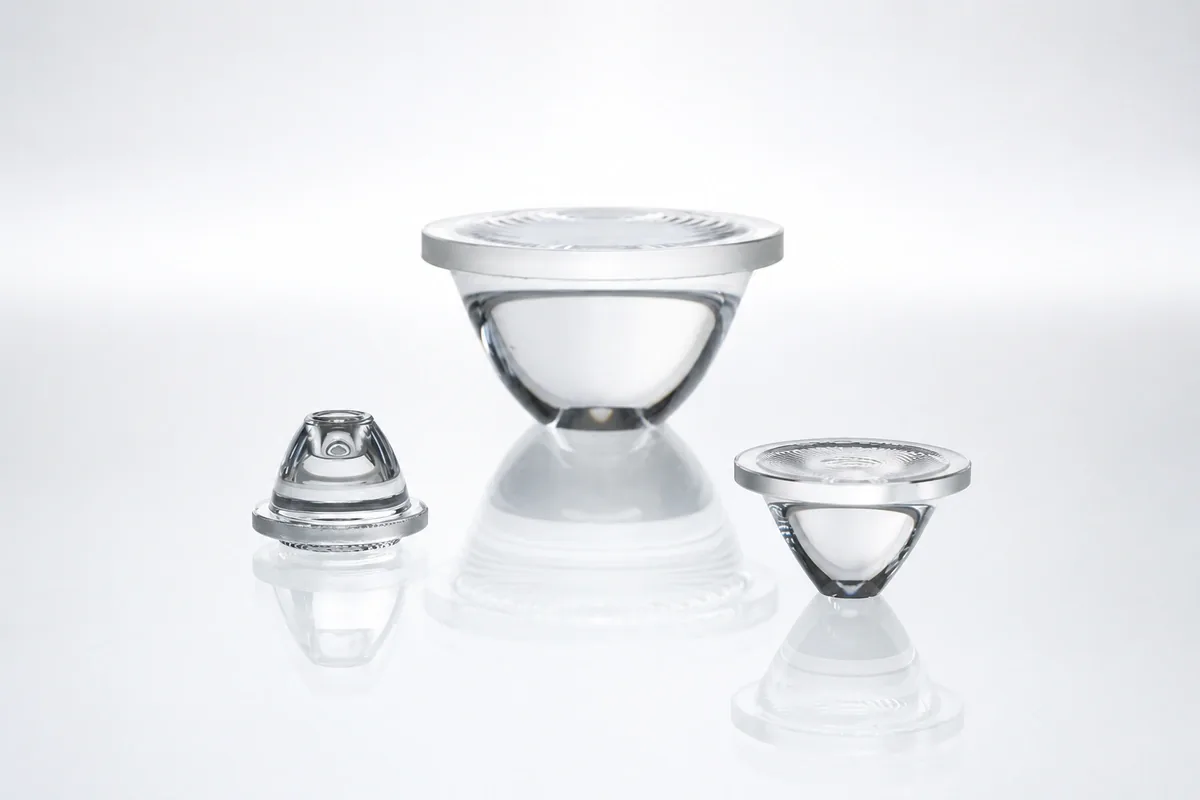
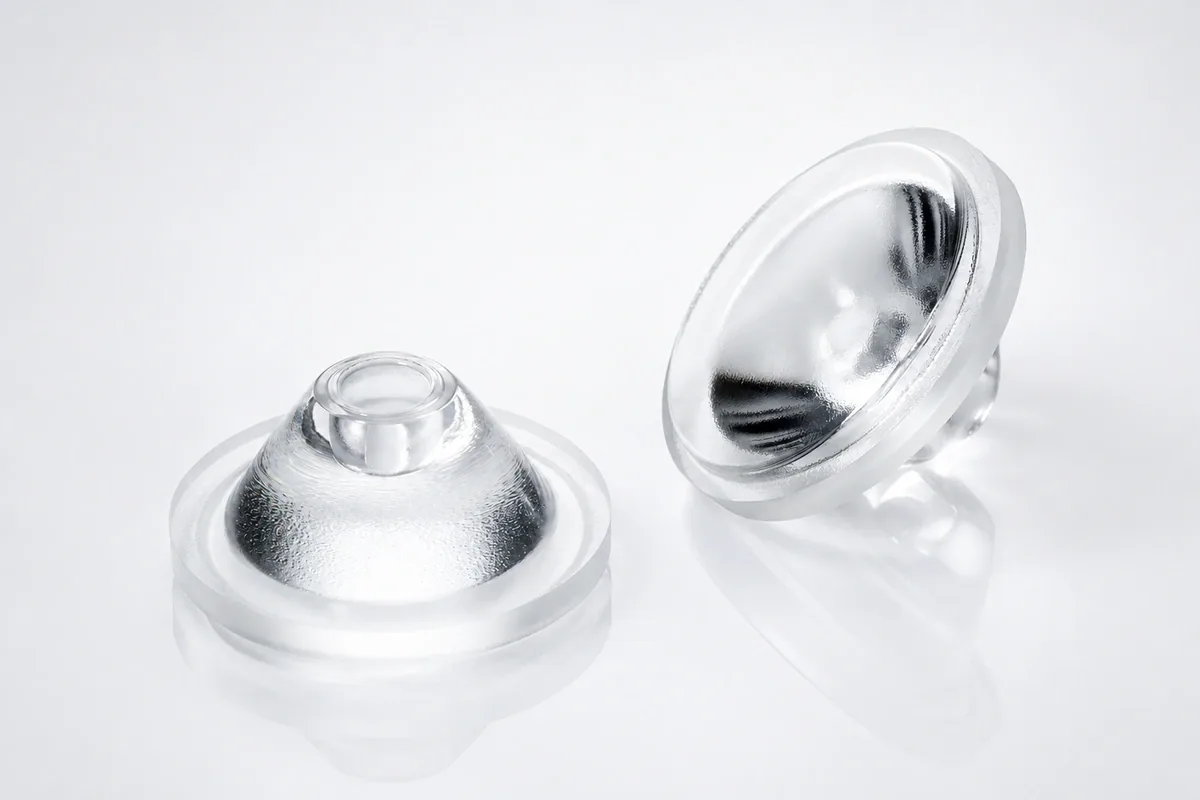
| Molded Glass Lenses | Primary and secondary lamp optics | Glass grade, aperture and mounting datum |
| TIR Glass Lenses | Compact LED collimation | LED package, entrance cavity and source tolerance |
| Fresnel Glass Lenses | Compact focusing and selected legacy layouts | Focal length, groove geometry and orientation |
| Pressed Glass Components | Signal, decorative or integrated molded parts | Molded features, datums and assembly interface |
Recommended Glass Products
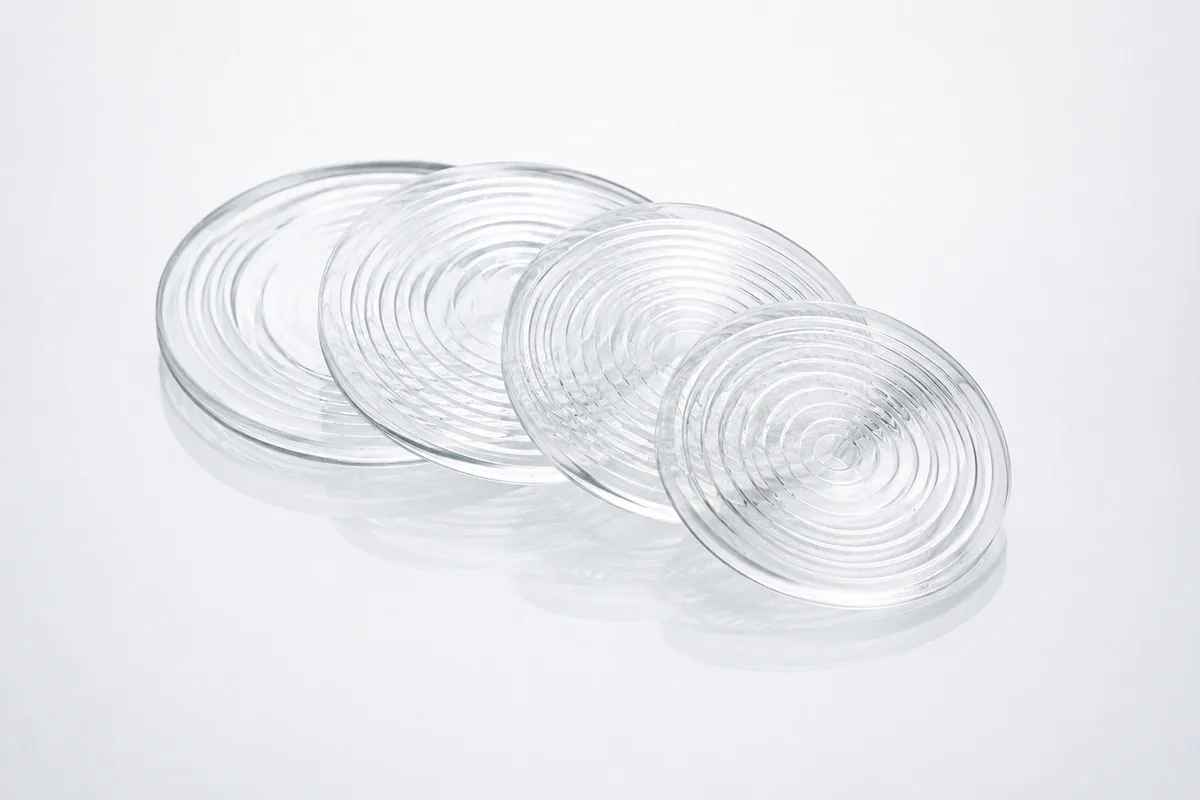
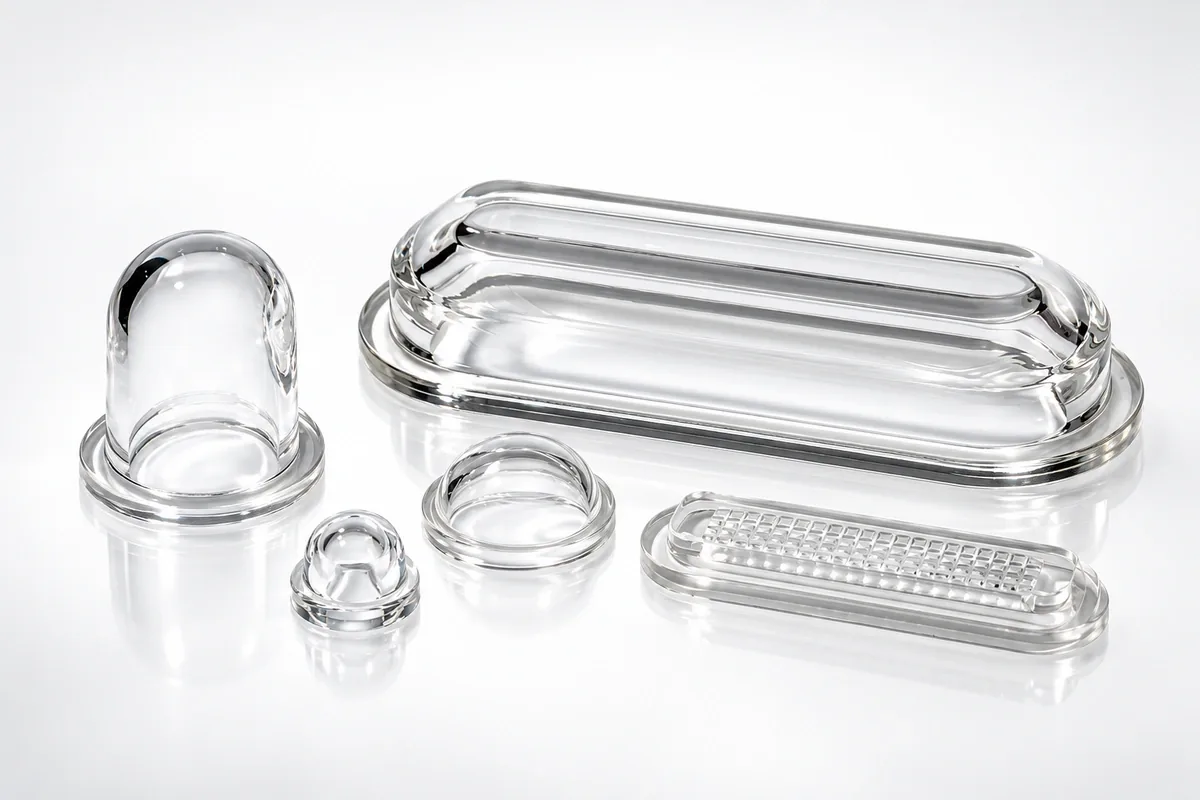
Development, Tooling and Validation Responsibilities
- Release the intended lamp function, production source and controlled optical target.
- Align the optical coordinate system with the lens seat, key, holder and lamp datums.
- Review the glass surface, edge, wall, microstructure and forming route before tool release.
- Produce trial parts and inspect the agreed dimensional, surface and cosmetic characteristics.
- Correlate component results with customer photometric and complete-lamp validation before approval.
Data Required for an Automotive Lens Review
- Lamp function and production light-source revision
- Optical prescription, ray file or target photometry
- Mechanical drawing, datums, clocking and holder model
- Glass grade, transmission band and coating requirement
- Operating temperature and environmental test plan
- Prototype quantity, annual volume, inspection plan and approval authority
Automotive Glass Lenses and Lighting Components FAQs
Can Lampoptics manufacture both primary and secondary automotive optics?
Both roles can be reviewed, but they require different source, ray-field, focal and mounting inputs. The component role must be defined before feasibility is confirmed.
Why are automotive glass lenses often aspherical or freeform?
These surfaces can improve collection or create complex distributions within a constrained package. Their benefit depends on the complete source and lamp geometry.
Can a fog-light lens be copied from an existing sample?
A sample can support reverse engineering, but preserving the beam also requires the intended source position, orientation and target photometry.
Does Lampoptics certify the complete automotive lamp?
This page describes glass-component development and manufacturing. Vehicle and complete-lamp regulatory validation must follow the customer's applicable system requirements.
How are first articles approved?
The agreed plan may include geometry, centration, surface form, cosmetics, fit and photometry. Methods and responsibility should be fixed before samples are produced.


