Custom Pressed Glass Lamp Shades
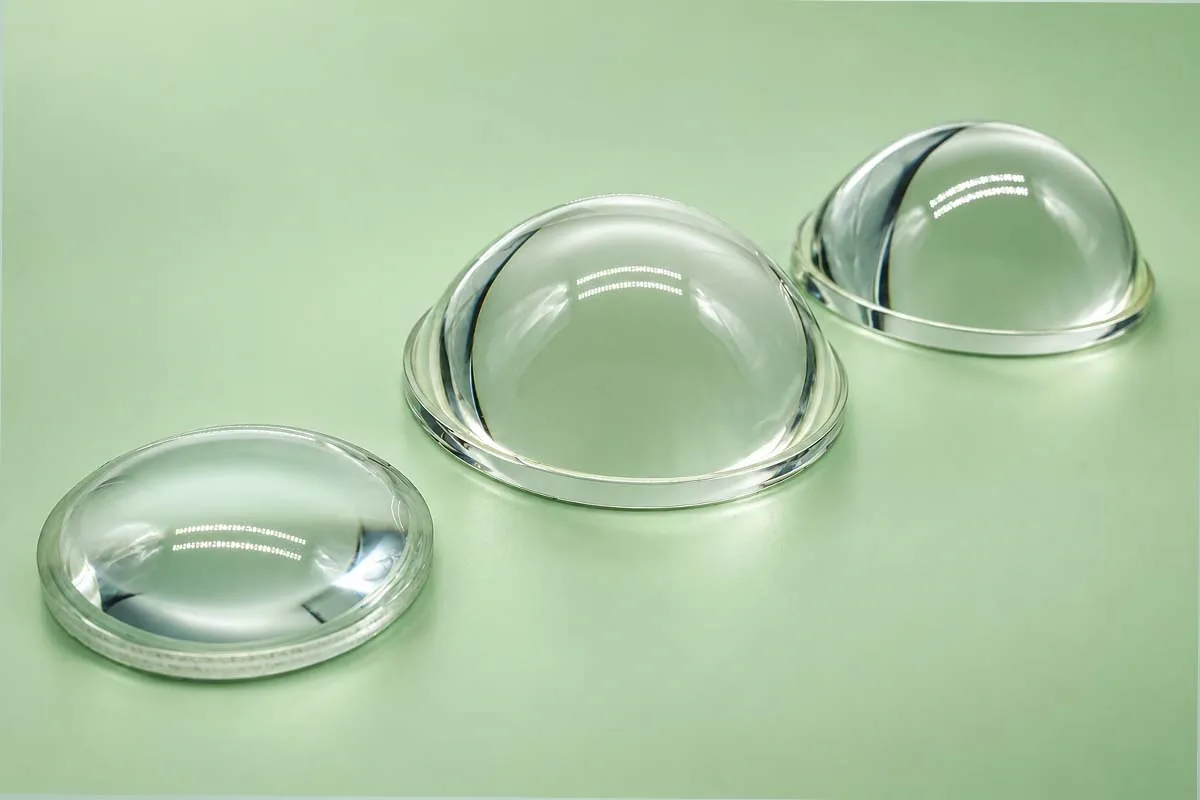
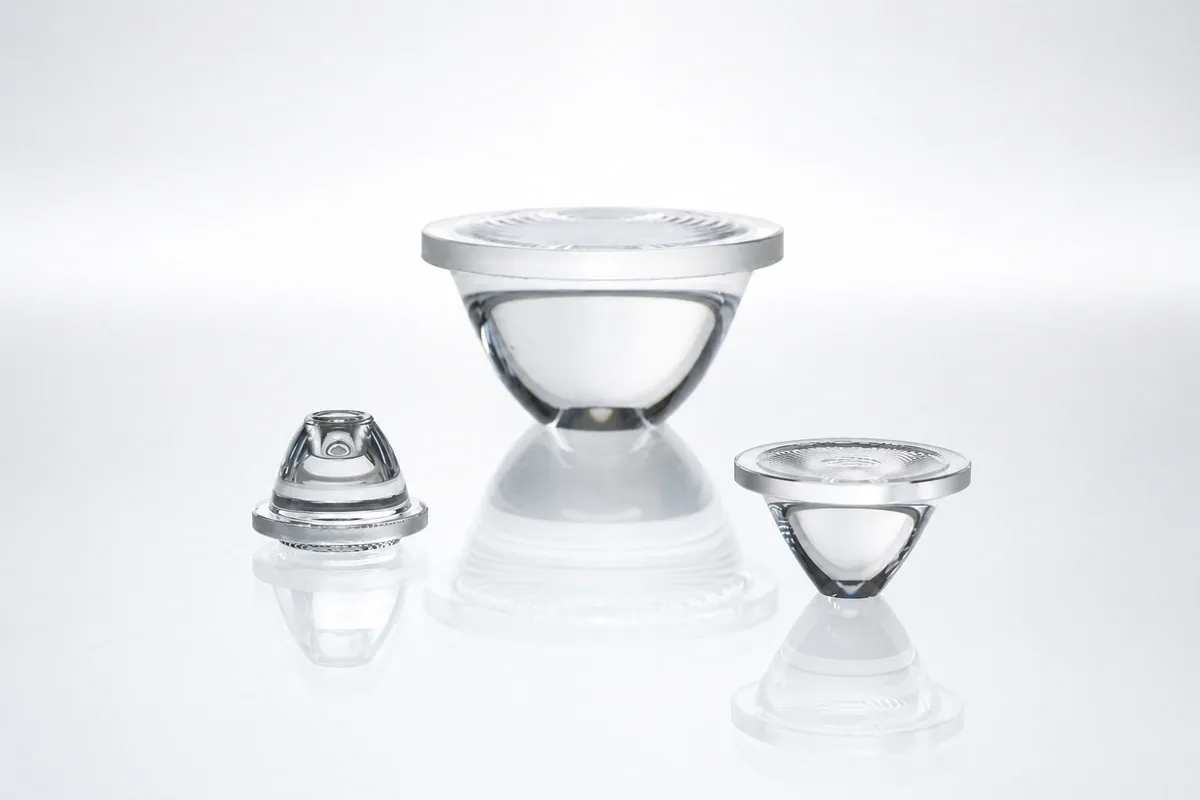
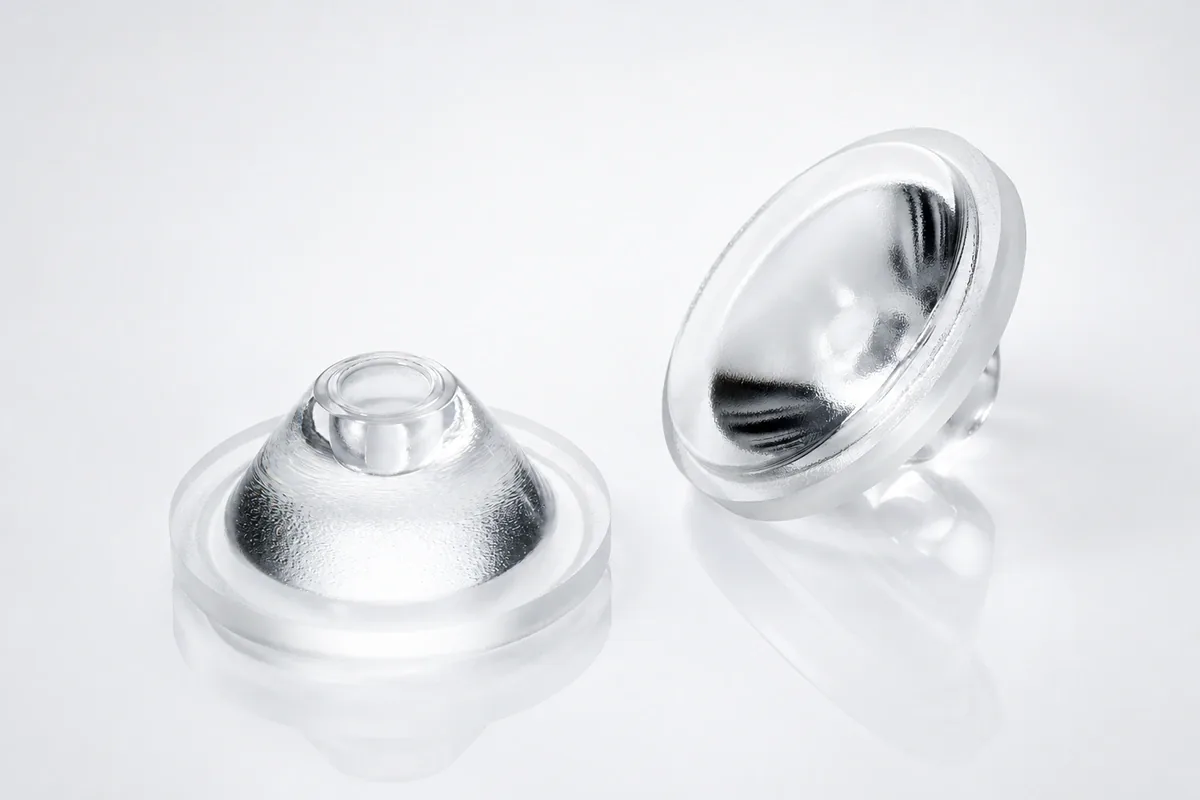
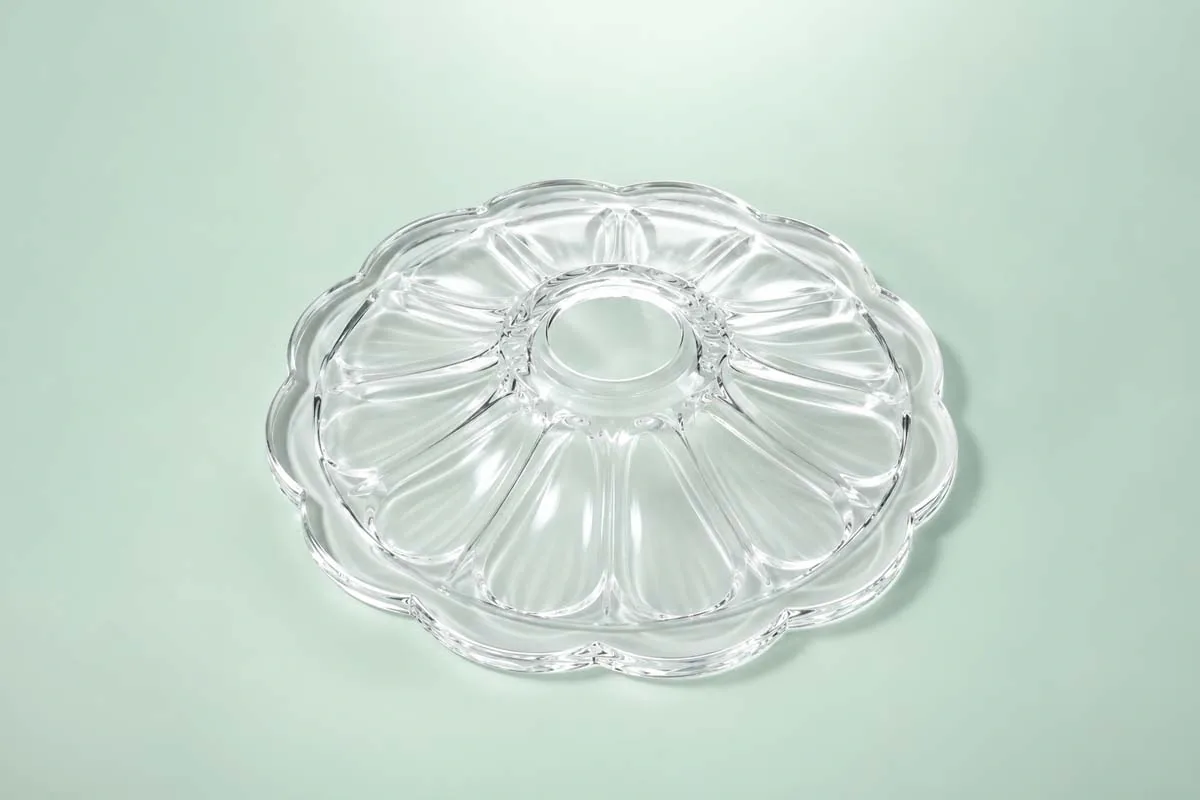
Custom pressed glass lamp shades are formed in matched molds to produce repeatable profiles, wall sections and mounting features. The process is suited to lamp covers that need a defined optical texture, rib pattern, flange, rim or other geometry that must remain consistent across production batches.
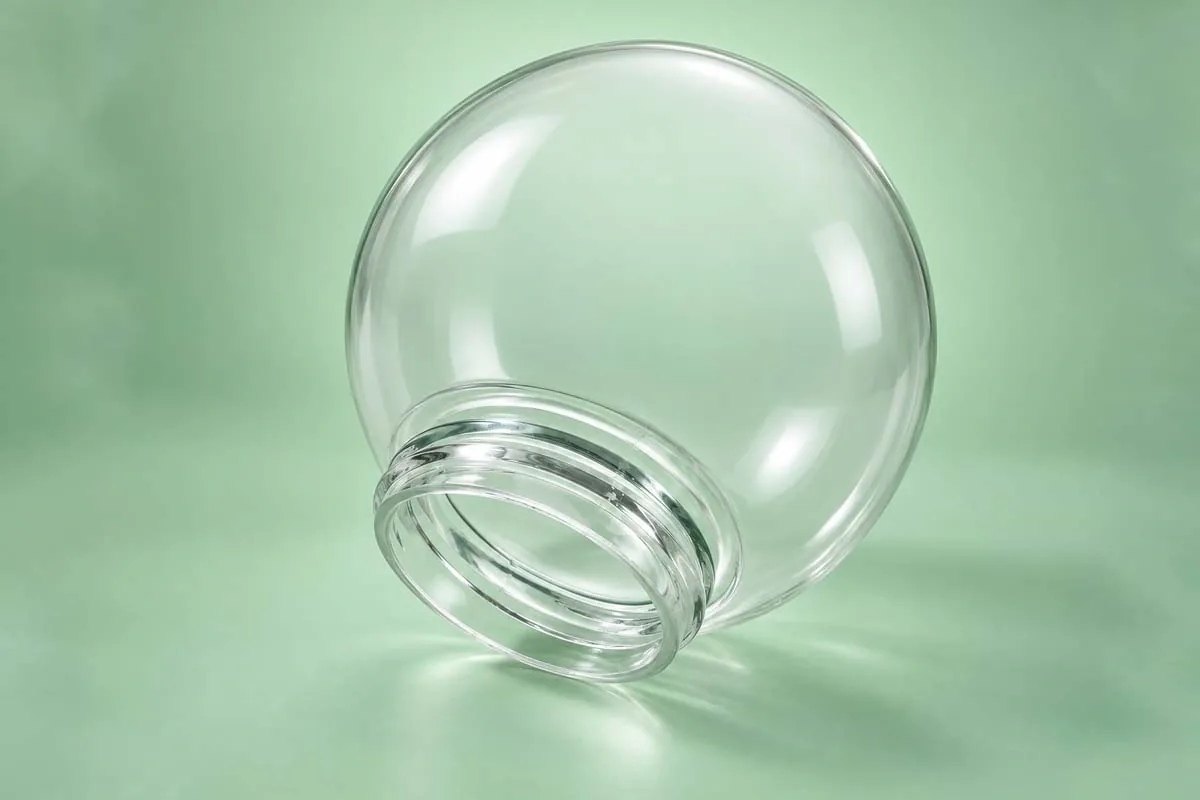
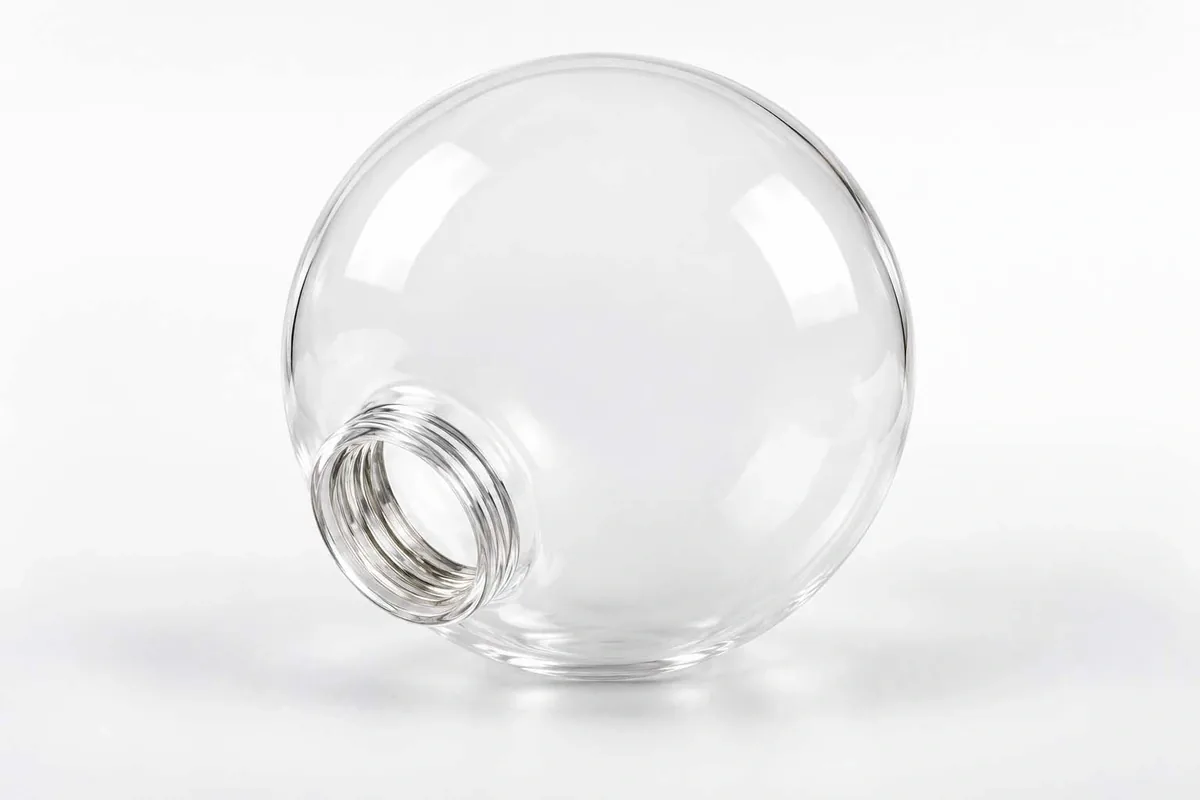
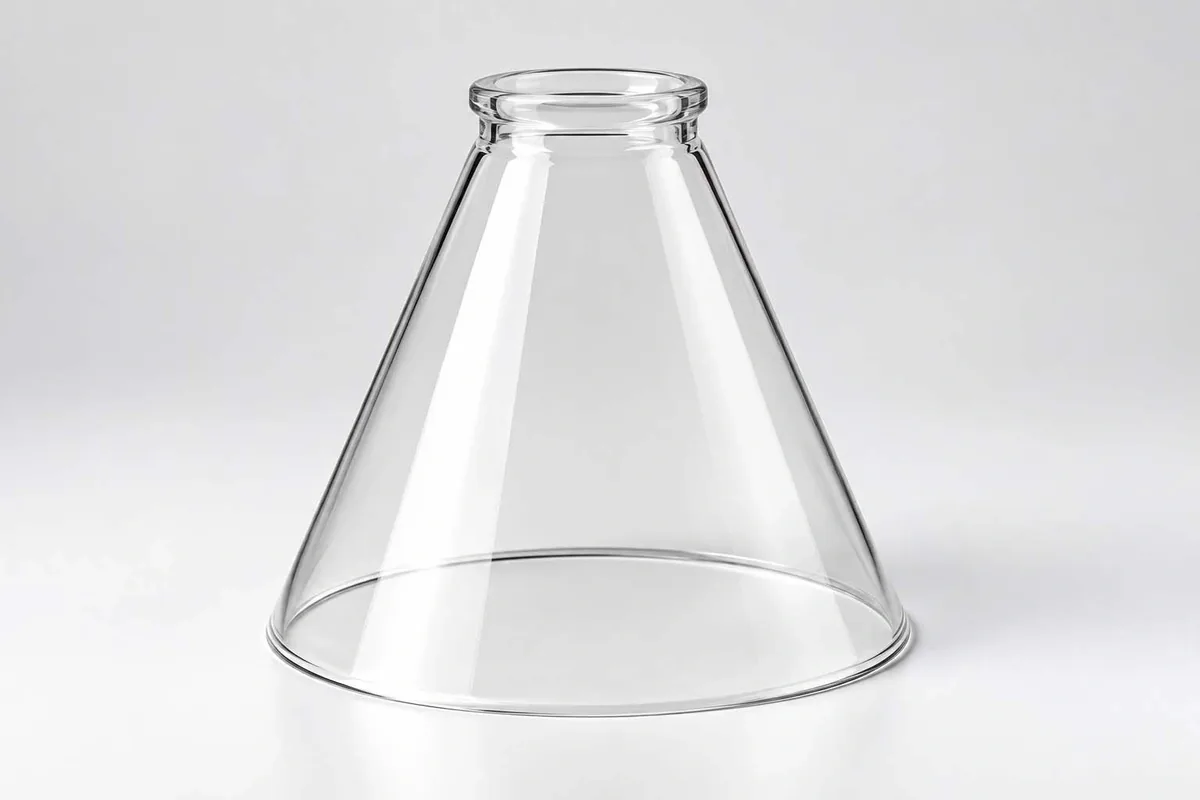
China Lampoptics develops pressed glass parts from drawings or approved samples. Typical project formats include domes, bowls, cones, automotive and motorcycle lamp glass, industrial covers and other molded lighting components.
Specification note: Numerical ranges shown on this page are preliminary engineering references for project screening. The quotation and approved drawing define the final material, dimensions, tolerances, processing route and inspection method.
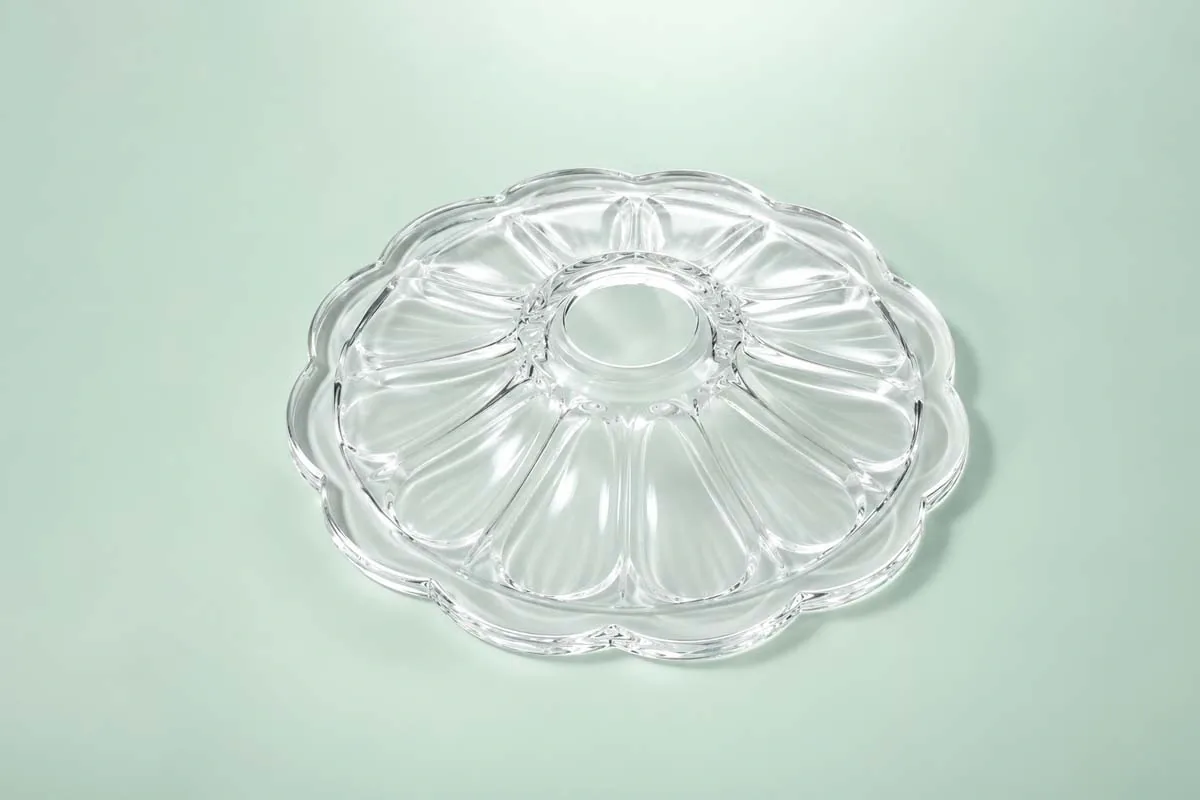
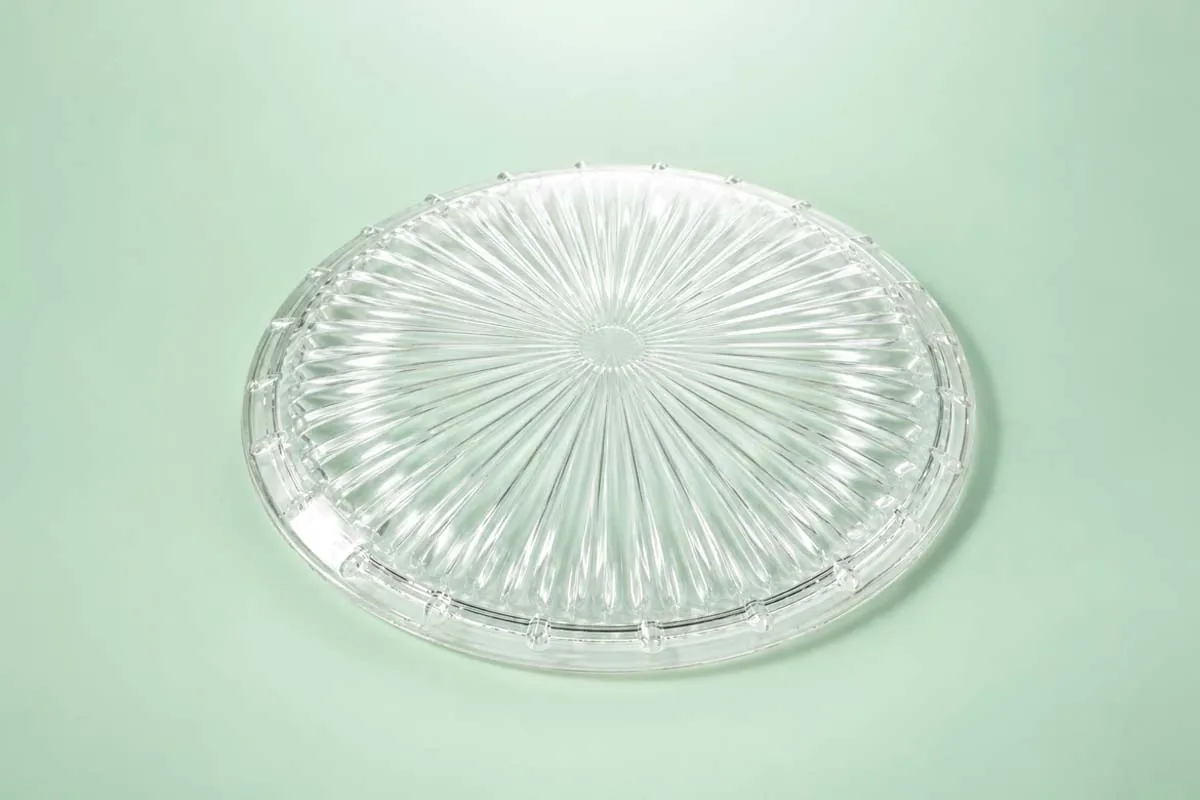
Pressed Shade Types
| Type | Functional feature | Typical use |
|---|---|---|
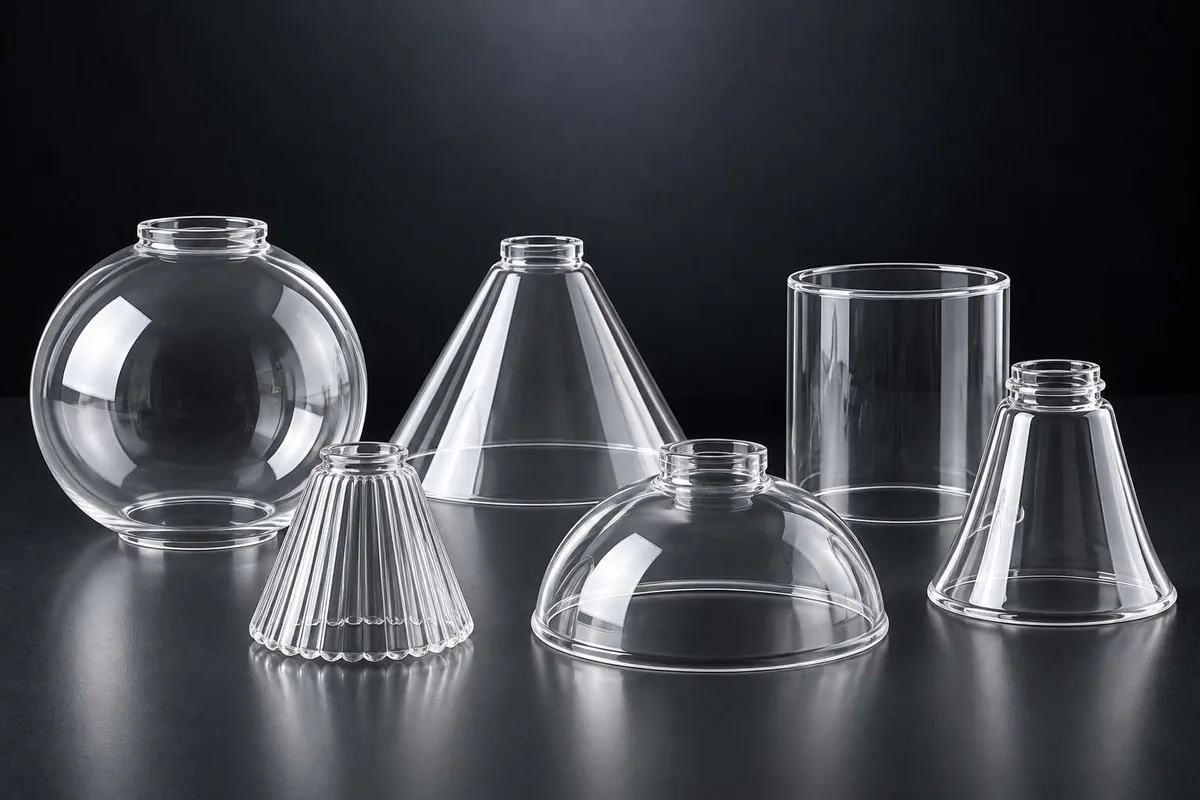
| Smooth clear shade | Transparent molded body with a defined rim or flange | Decorative and equipment lighting |
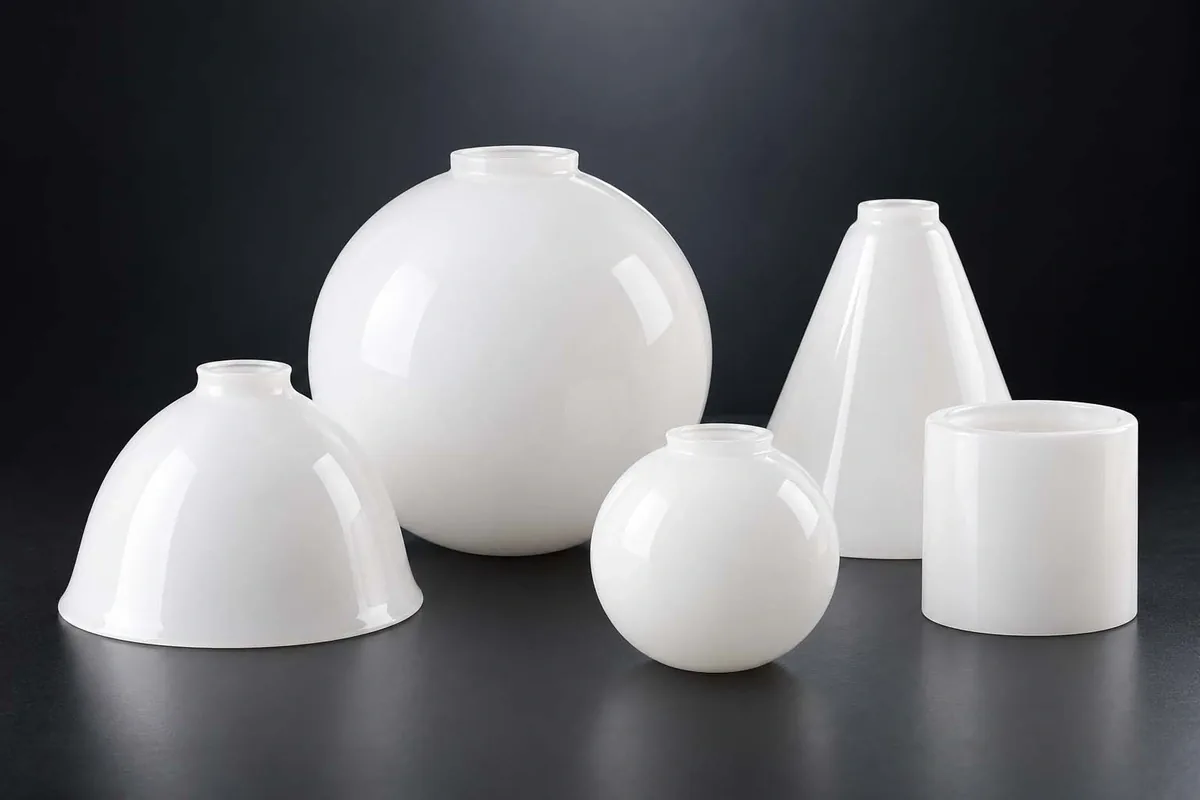
| Opal or diffusing shade | Body or surface diffusion reduces direct source visibility | Indoor and commercial lighting |
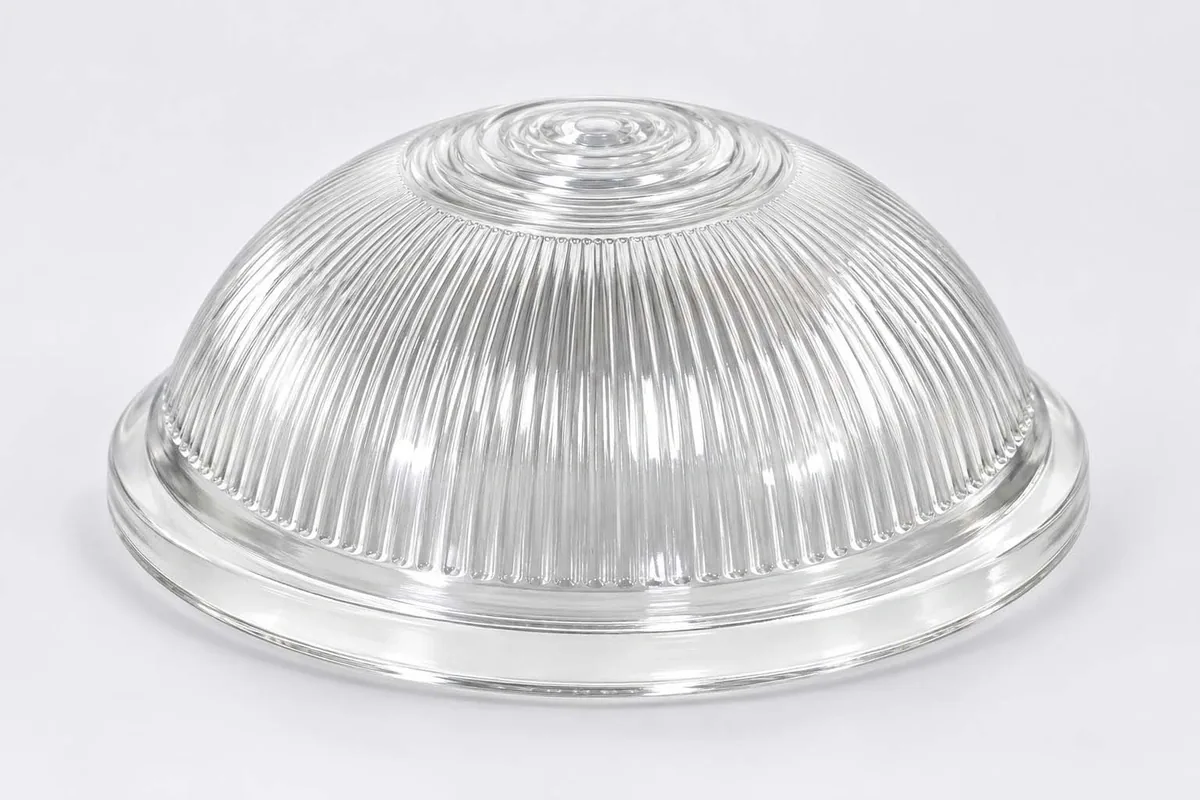
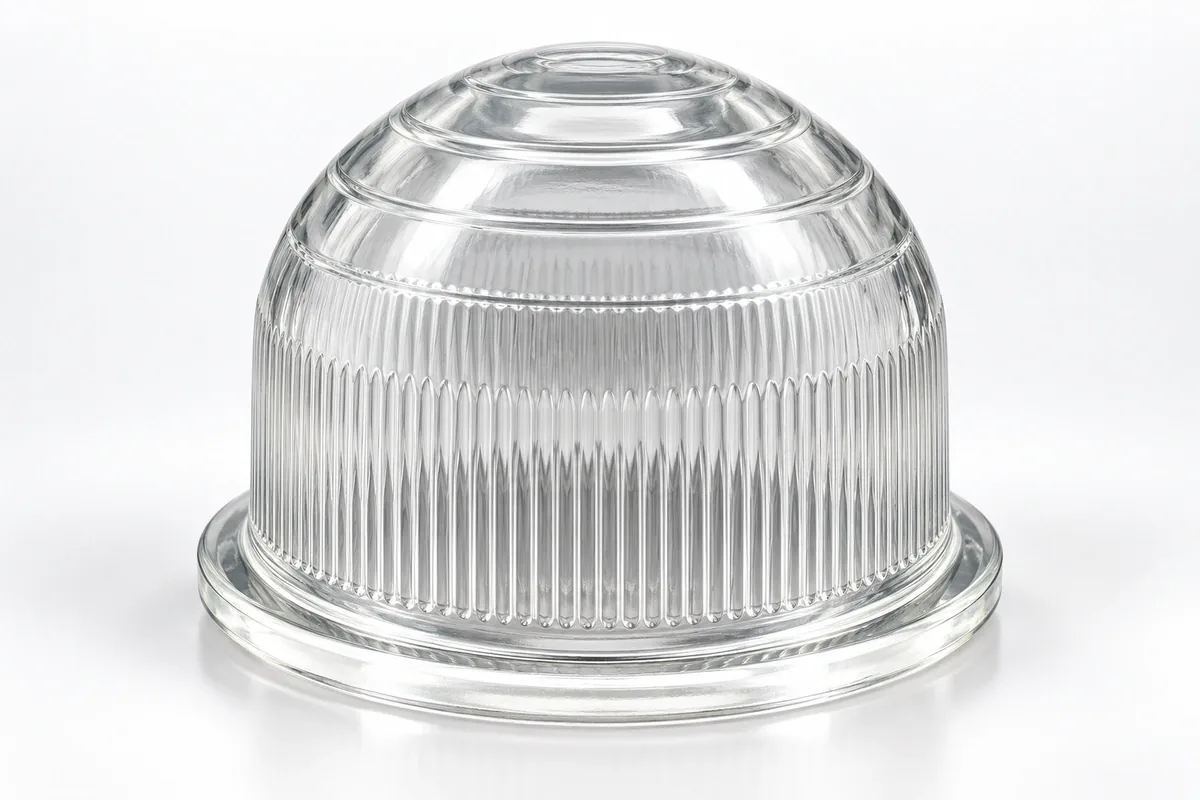
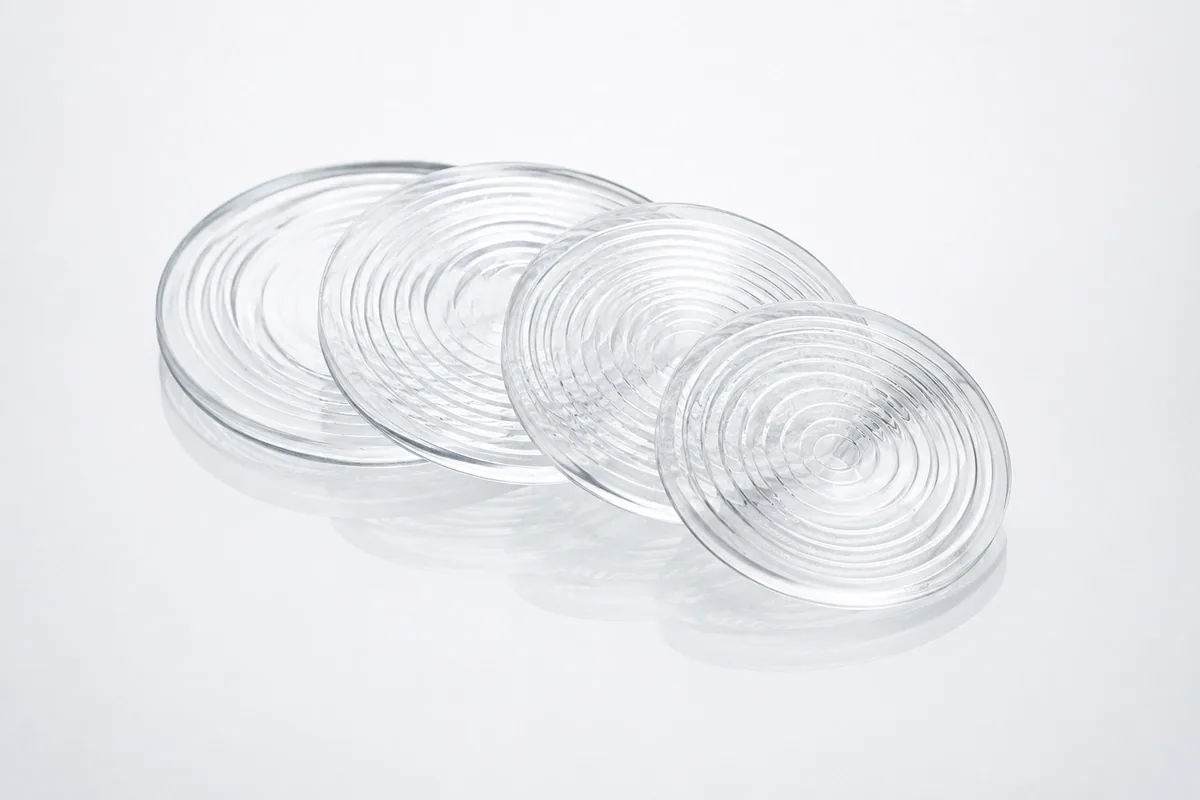
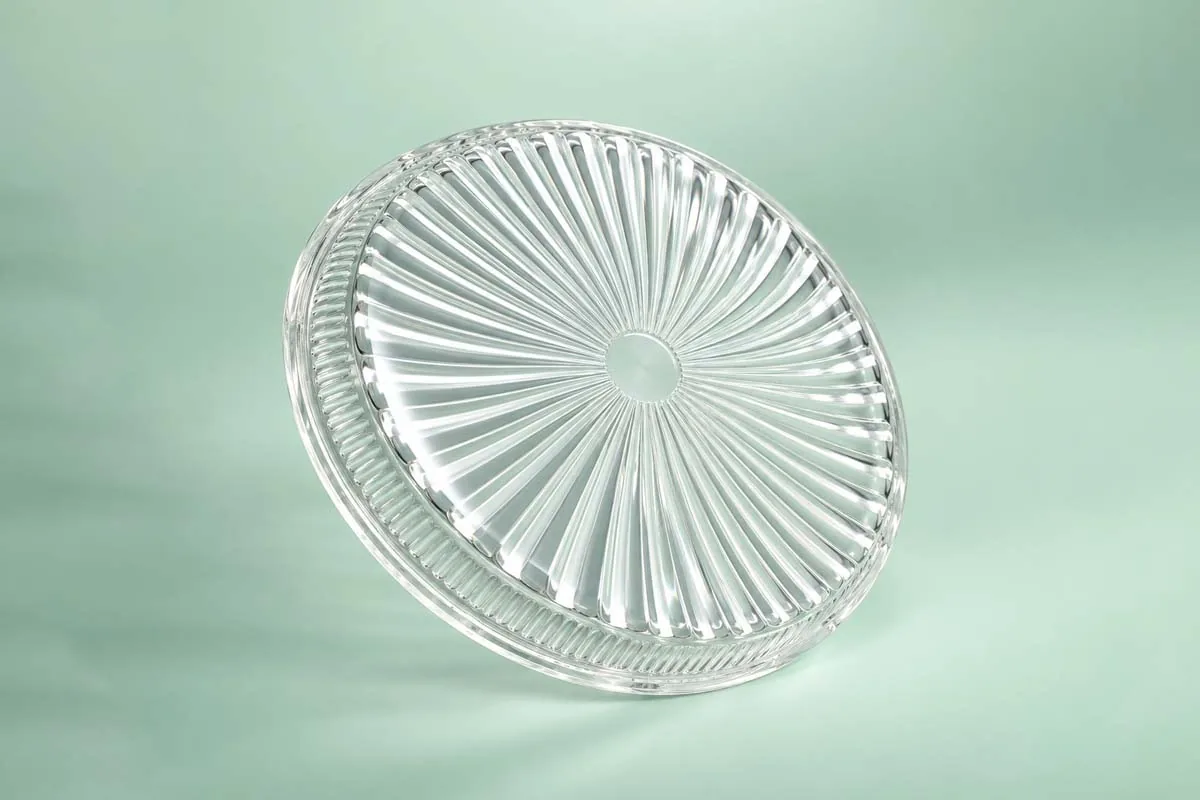
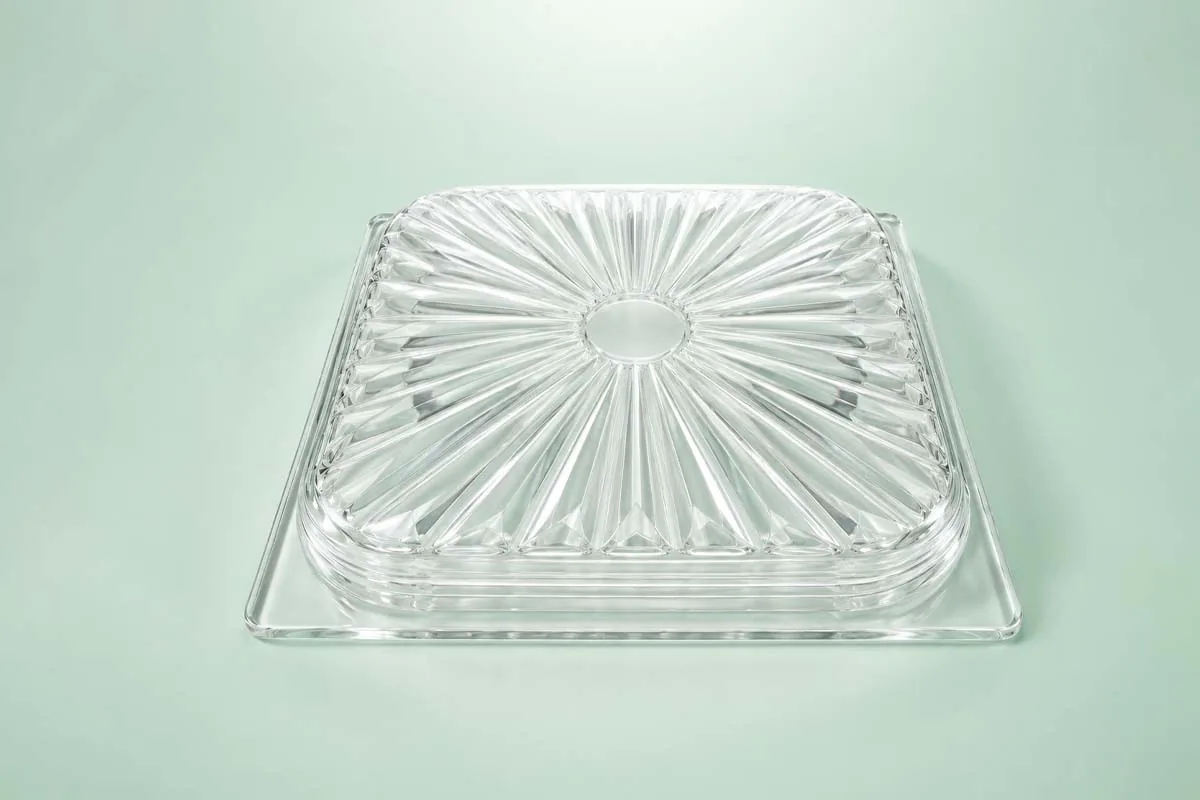
| Ribbed shade | Molded ribs redirect light and reinforce the visual pattern | Industrial, outdoor and vintage-style fixtures |
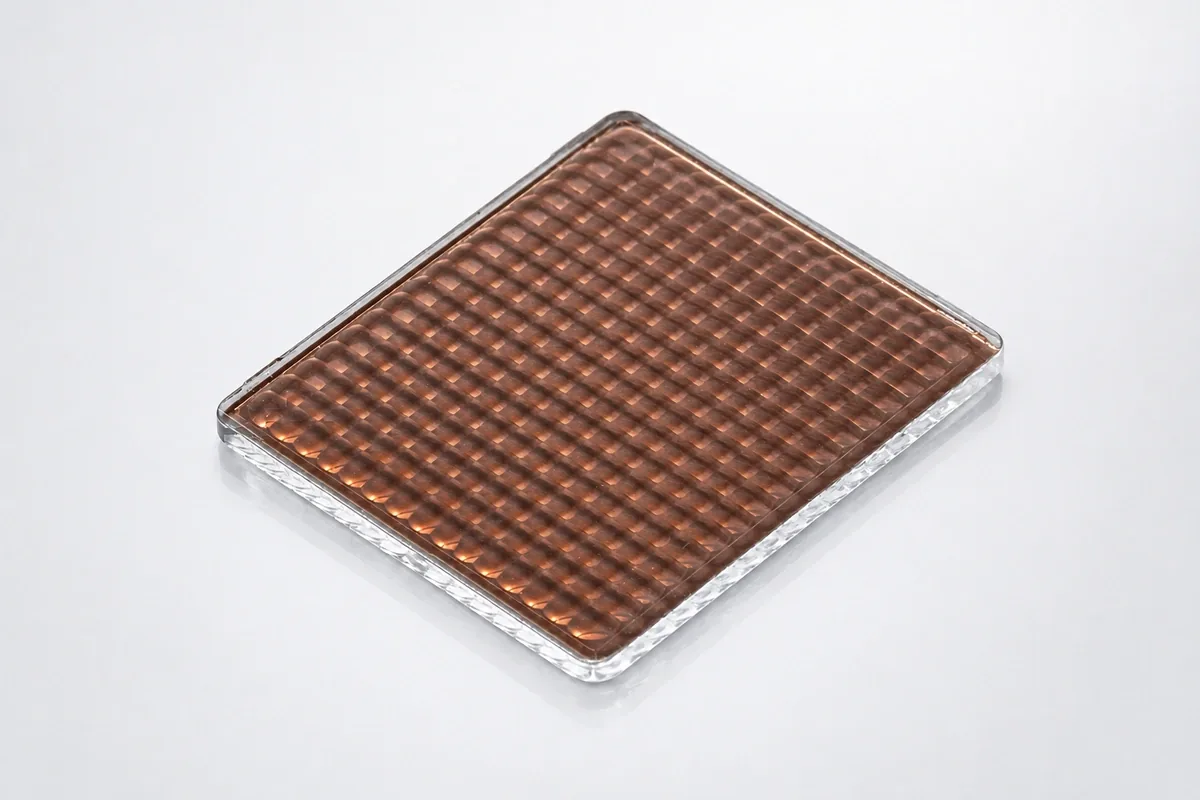
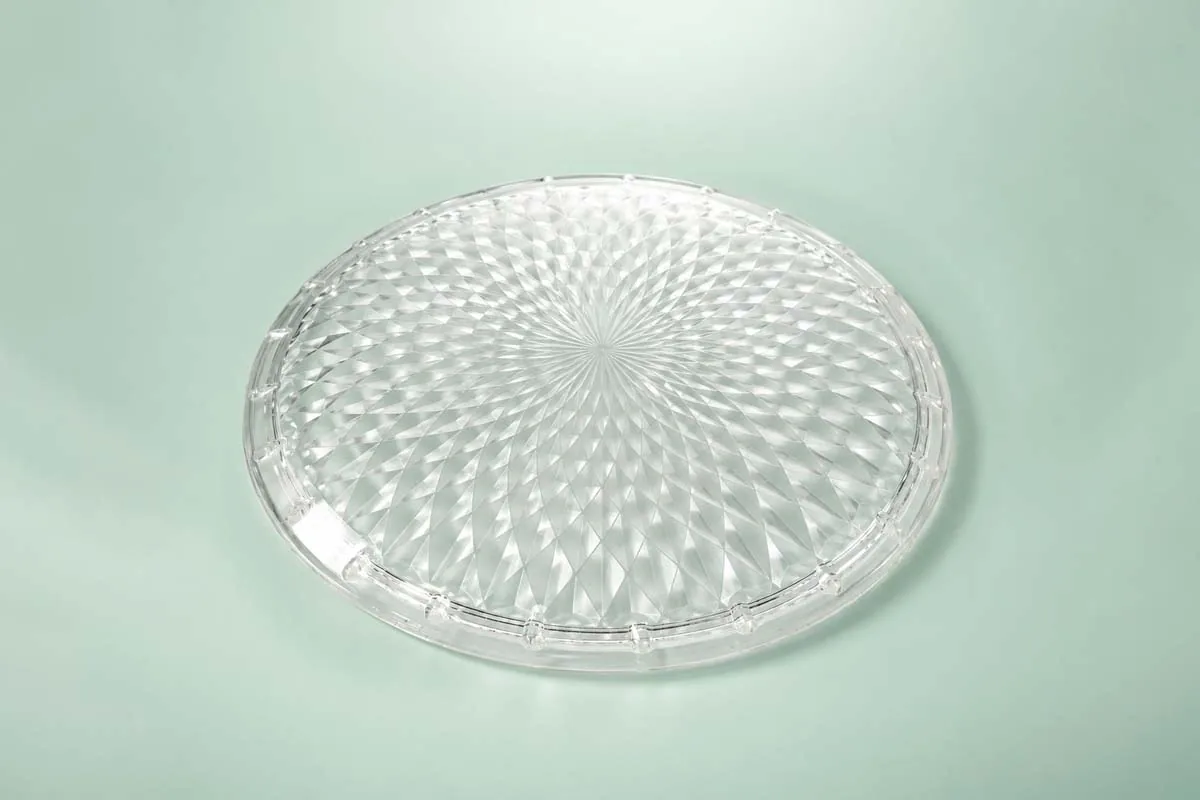
| Prismatic lamp glass | Repeated prisms shape or spread the beam | Vehicle, signal and utility lighting |
| Heavy-wall cover | Robust molded section for a supported housing | Machinery, oven and industrial luminaires |
Product Specifications
| Glass composition | Selected for the application and confirmed with the quotation and material data |
|---|---|
| Outside dimensions | Preliminary forming range Ø40–400 mm; larger parts require a separate tooling and press review |
| Height or depth | Made to the approved drawing; production limit confirmed after tooling review |
| Nominal wall thickness | 3–8 mm reference range; 4–5 mm is common for machine-pressed lighting glass |
| Opening / flange / seat | M10, M13 or M16 center mount, or a drawing-defined opening, flange or seat |
| Optical texture | Smooth, ribbed, prismatic or project-defined |
| Edge finish | Defined by the drawing; feasible method confirmed during process review |
| Dimensional tolerance | Typical formed-part consistency ±0.3–1.0 mm; critical fit dimensions are quoted separately |
A pressed shade drawing should identify the optical face, mounting datums and areas where mold parting or gate evidence is acceptable. These requirements are different from purely decorative surfaces and should be controlled separately.
Mold Development and Production
Lampoptics has a dedicated lamp-glass workshop and mold workshop, supported by two electric furnaces, two electric annealing furnaces and three automatic production lines. Mold development can begin from a complete drawing, a 3D model or an approved sample.
After forming and annealing, compatible parts can receive physical tempering, chemical tempering, coating, sandblasting or drilling. The approved operations depend on glass composition, wall distribution and product geometry.
Pressed Glass Lamp Shade Processing
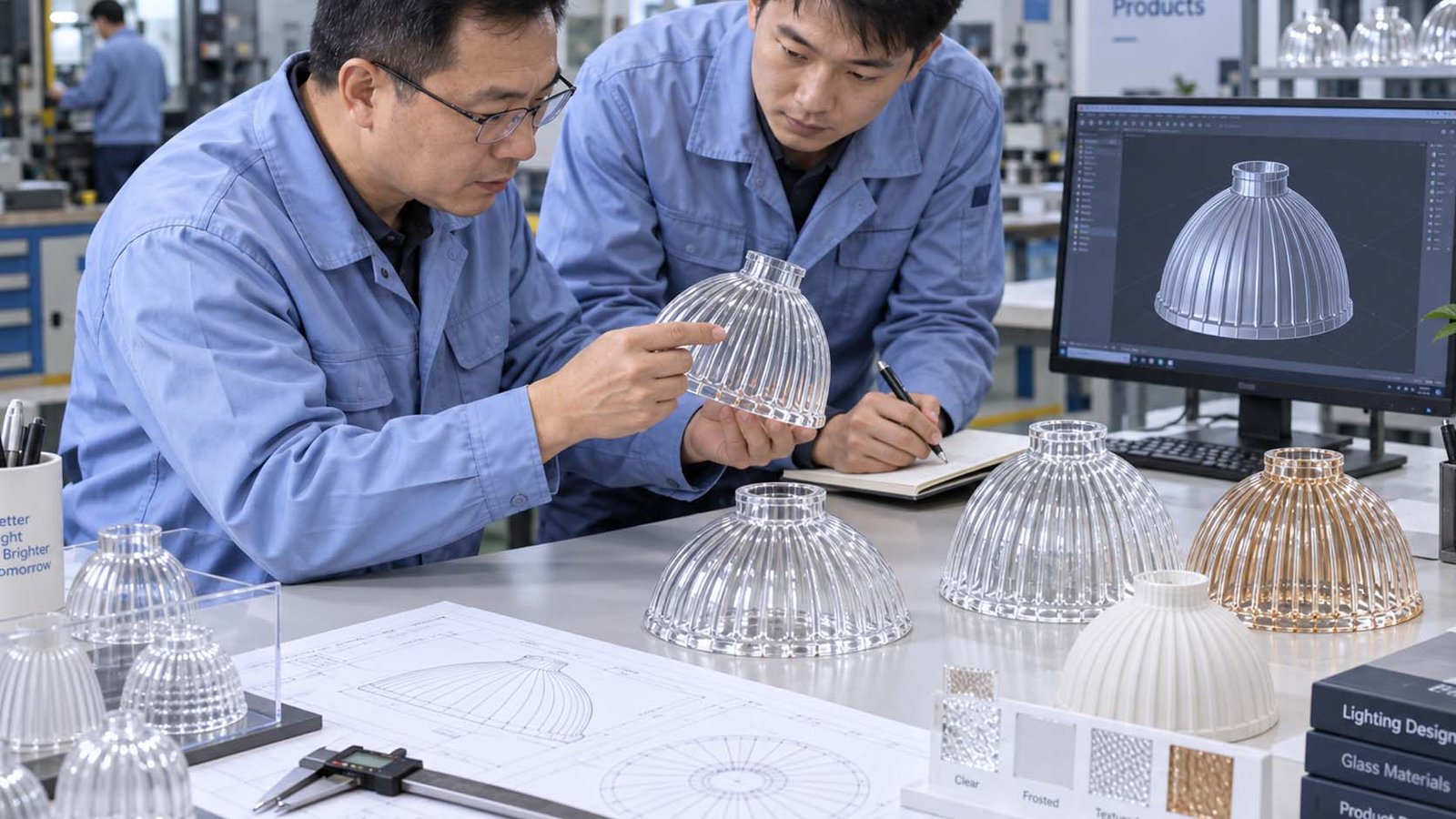
Mold Development
Tooling is developed from the approved drawing or physical sample, including the shade profile, mounting features and molded texture.
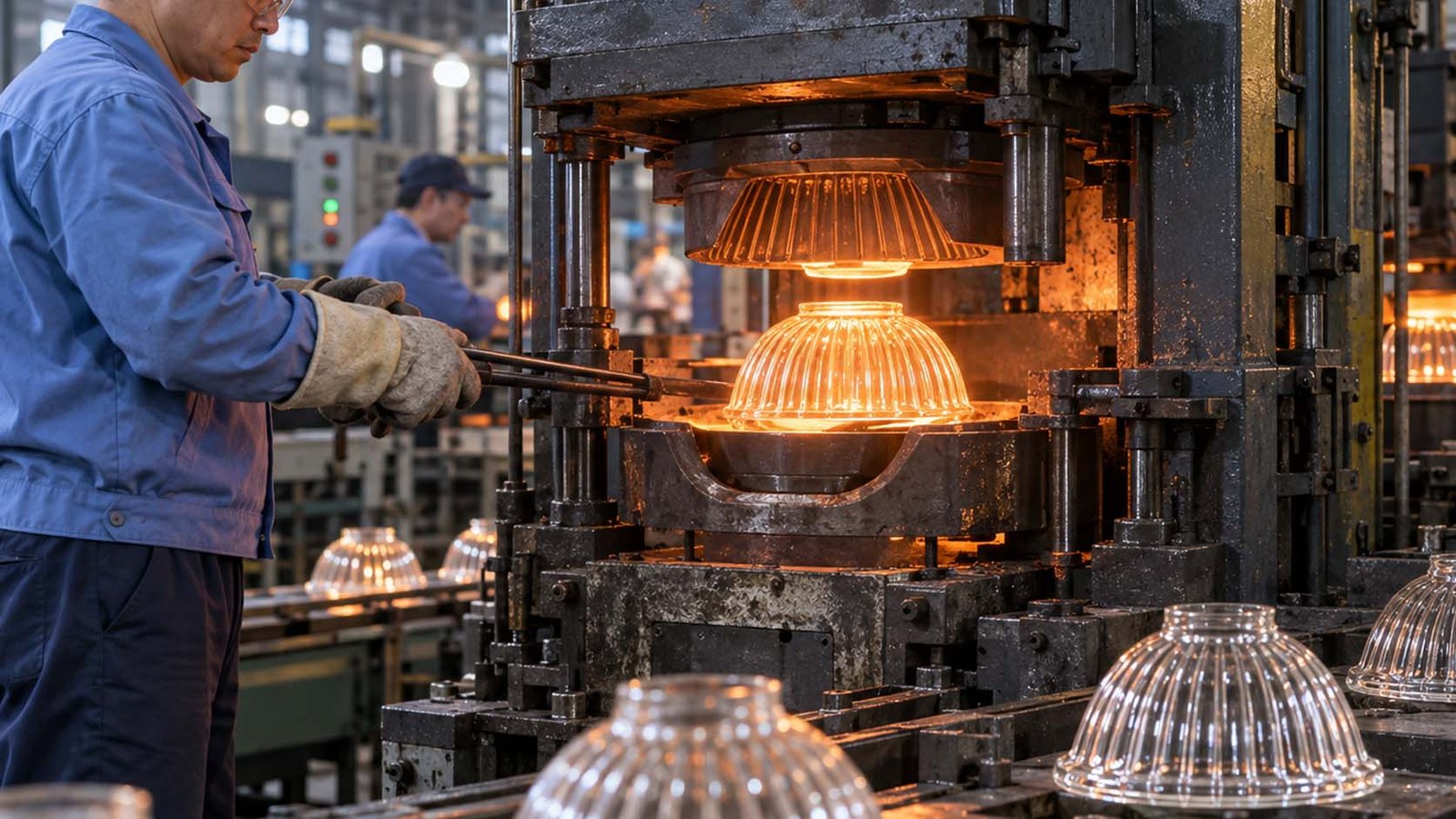
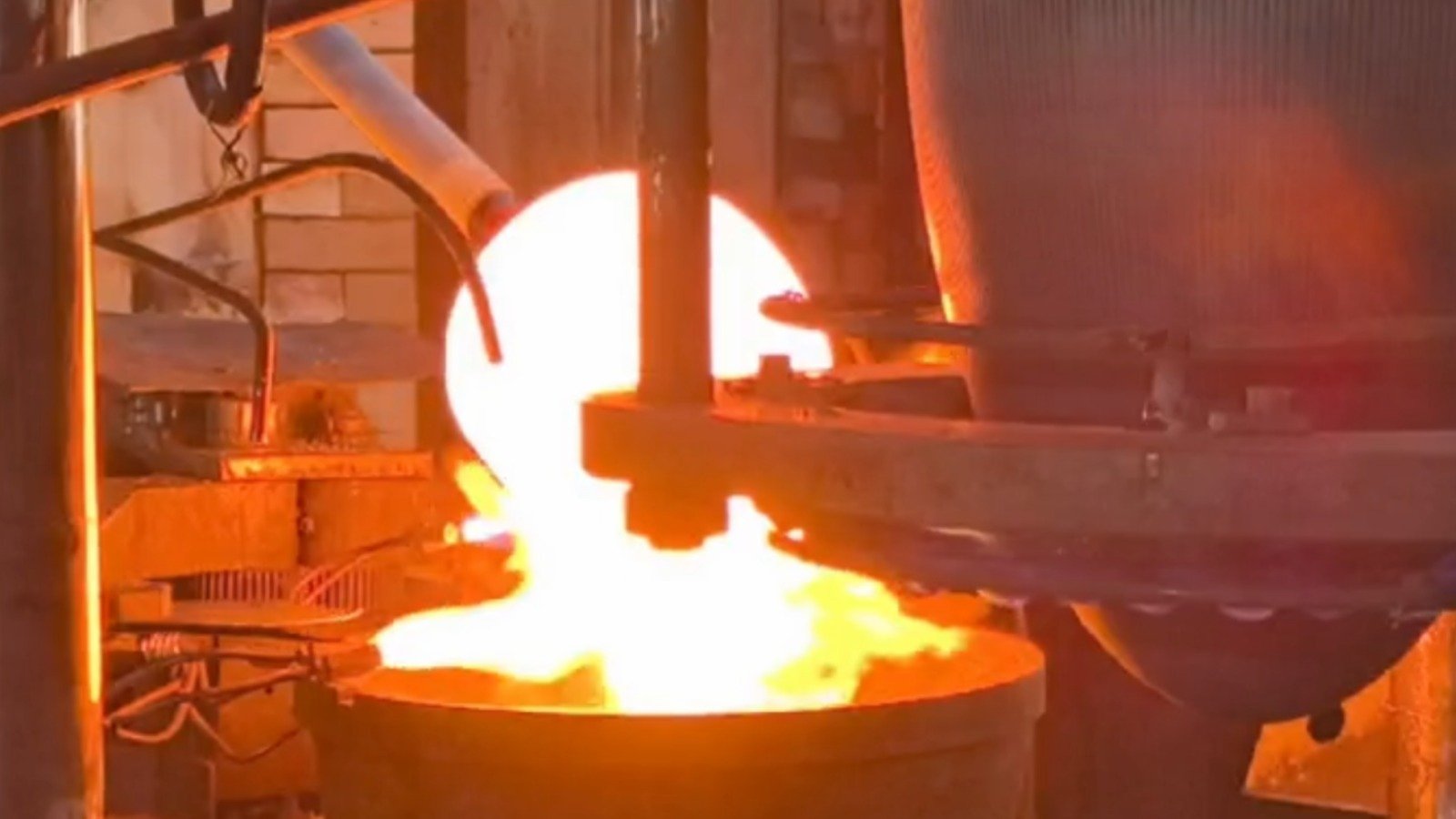
Glass Pressing
Conditioned glass is pressed in matched molds to reproduce the required wall sections, ribs, prisms, rim and flange geometry.
Controlled Annealing
The formed shade passes through a controlled annealing cycle to reduce residual stress around rims, ribs and section transitions.

Secondary Finishing
Compatible parts can be drilled, sandblasted, coated or strengthened according to the approved process route.
Applications
- Automotive and motorcycle lighting: molded lamp glass with defined optical or decorative surfaces
- Outdoor and industrial fixtures: domes and covers with repeatable housing interfaces
- Architectural lighting: ribbed, patterned and diffusing shades
- Equipment lighting: heat-exposed or protected lamp covers developed to the assembly
Pressed Glass Lamp Shade FAQs
Why use pressed glass for a lamp shade?
Matched molds can reproduce detailed surfaces, rims, flanges and optical textures more consistently than a free-formed process.
Can Lampoptics reproduce an existing pressed shade?
Yes. An approved sample can be measured and used with the mating fixture to define the mold and production drawing.
Can a pressed shade include ribs or prisms?
Yes. Ribbed, fluted and prismatic surfaces can be incorporated into tooling when the release and wall design are suitable.
Can pressed lamp glass be tempered?
Physical and chemical tempering are available processes. The suitable route is confirmed after the glass grade, wall distribution and shape are reviewed.
Which dimensions need the tightest control?
The mounting opening, flange, seating face and optical alignment features normally require separate tolerances from the decorative body.