Custom Conical Glass Lamp Shades
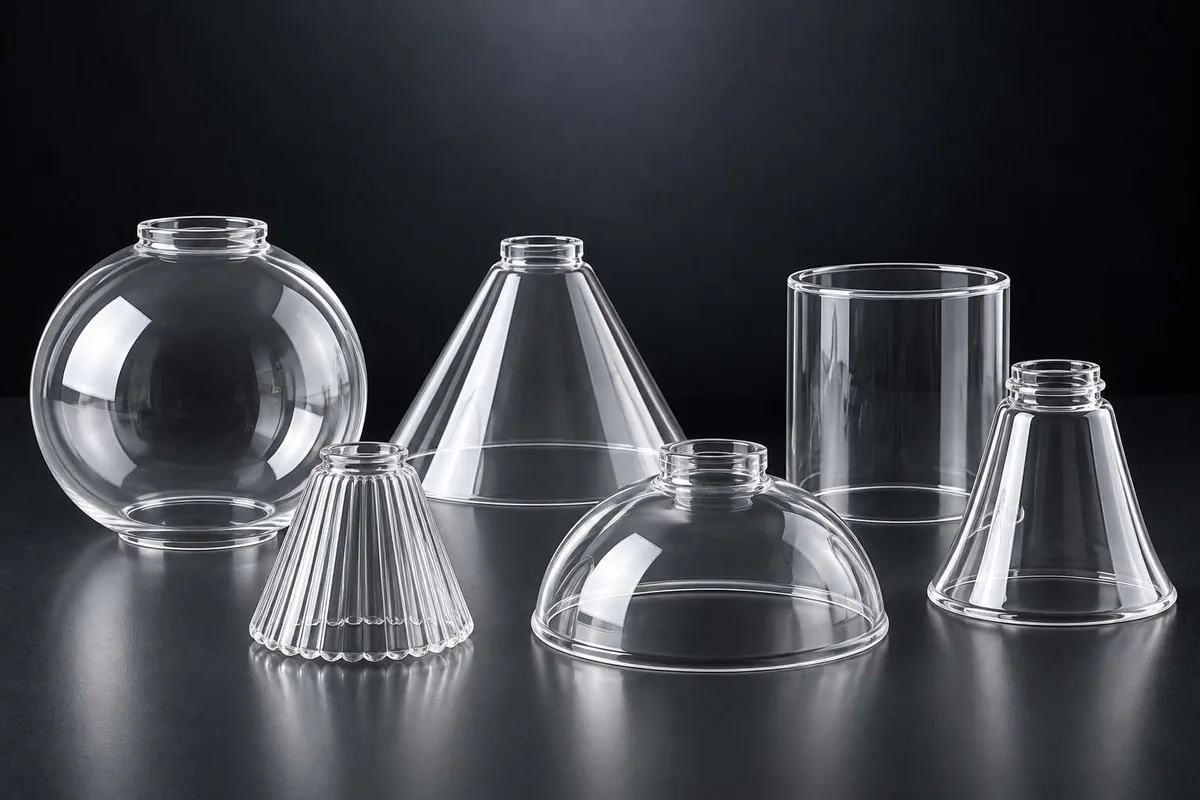
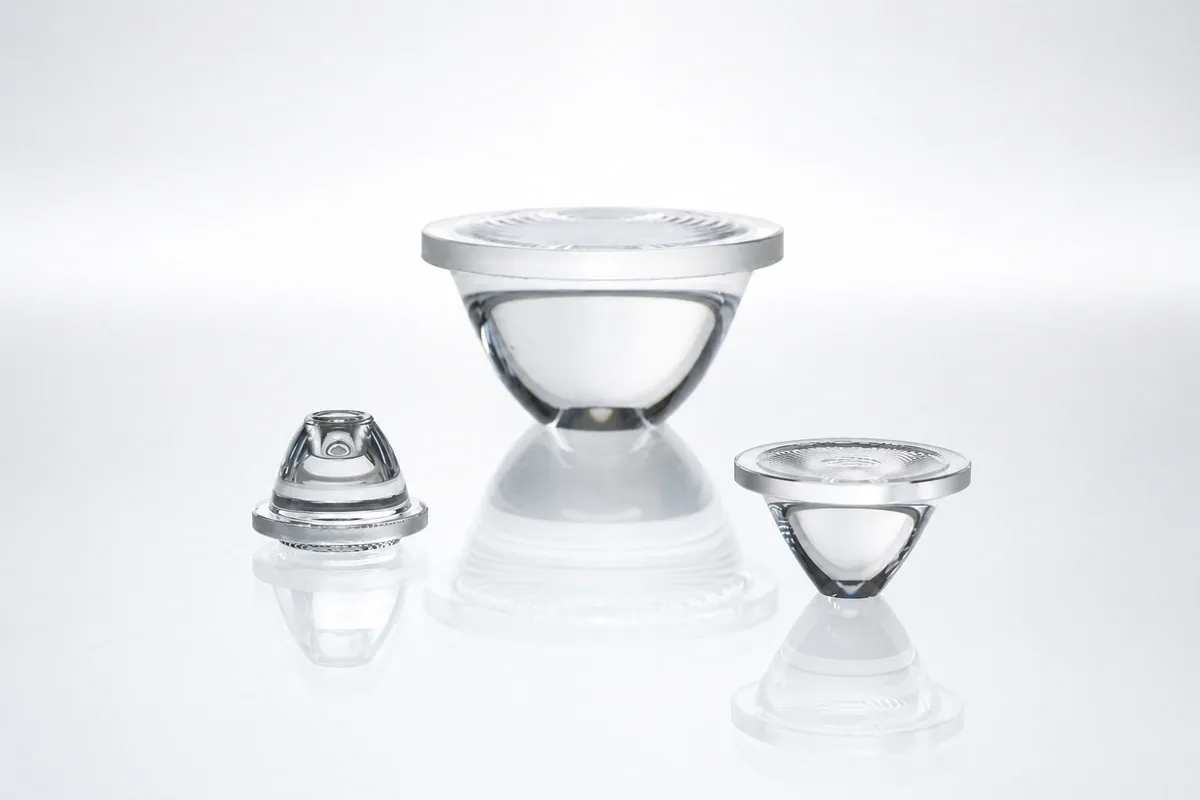
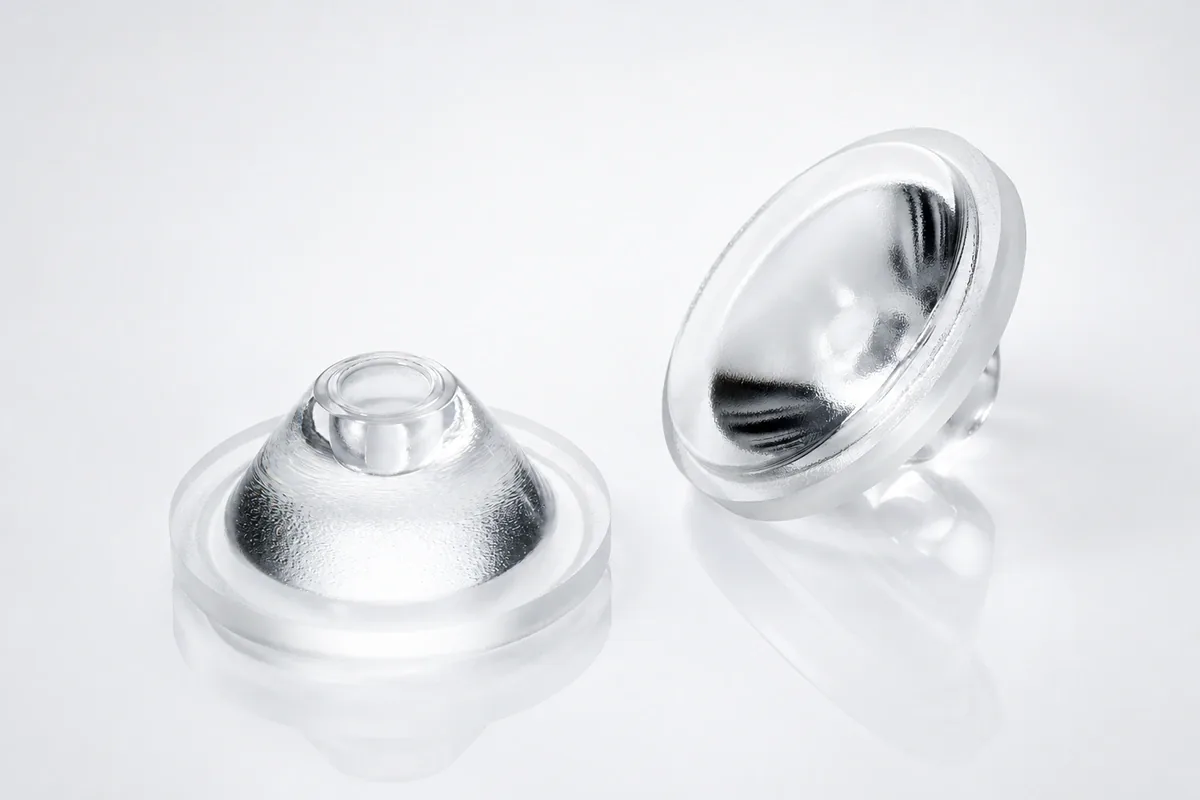
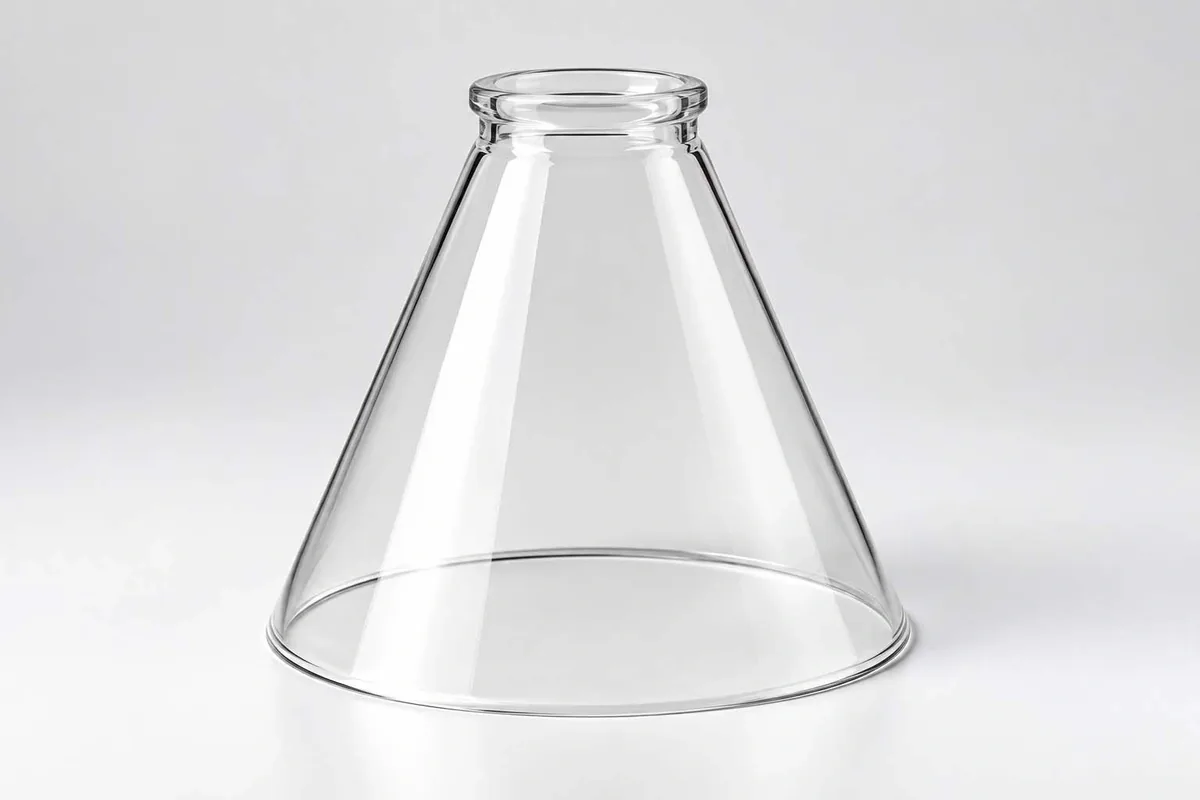
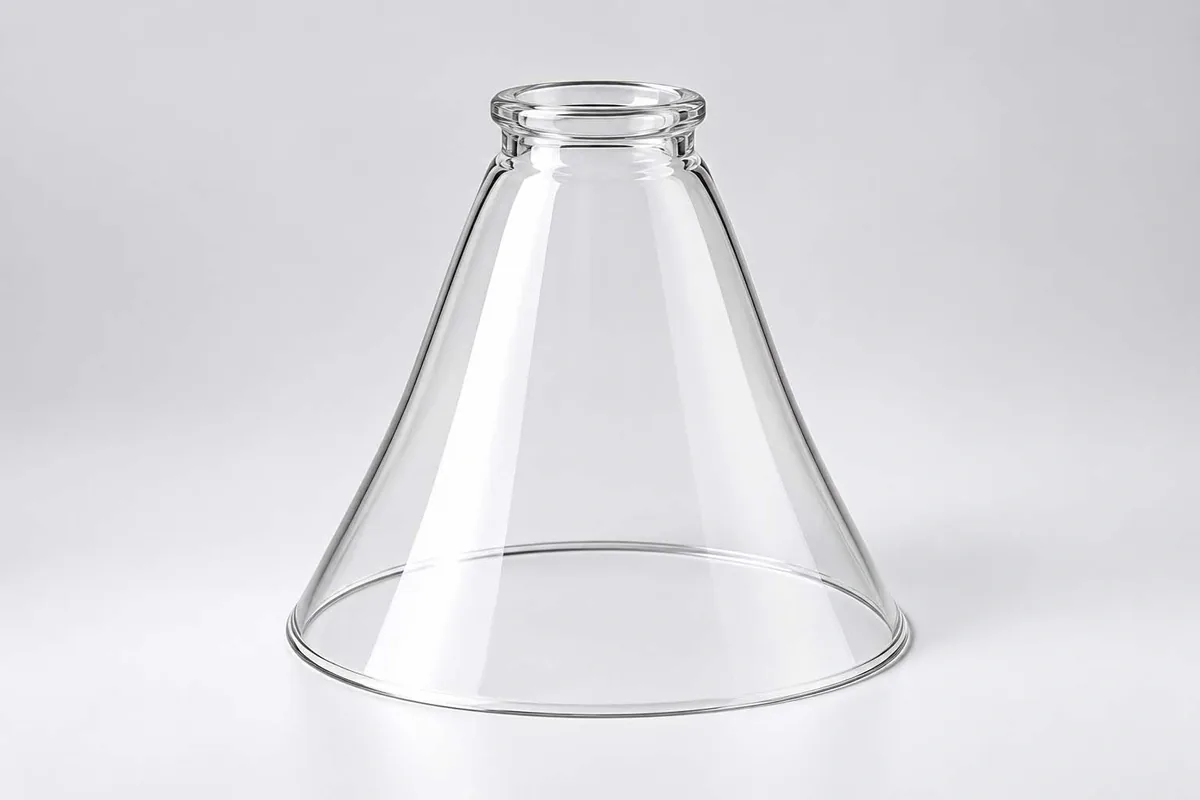
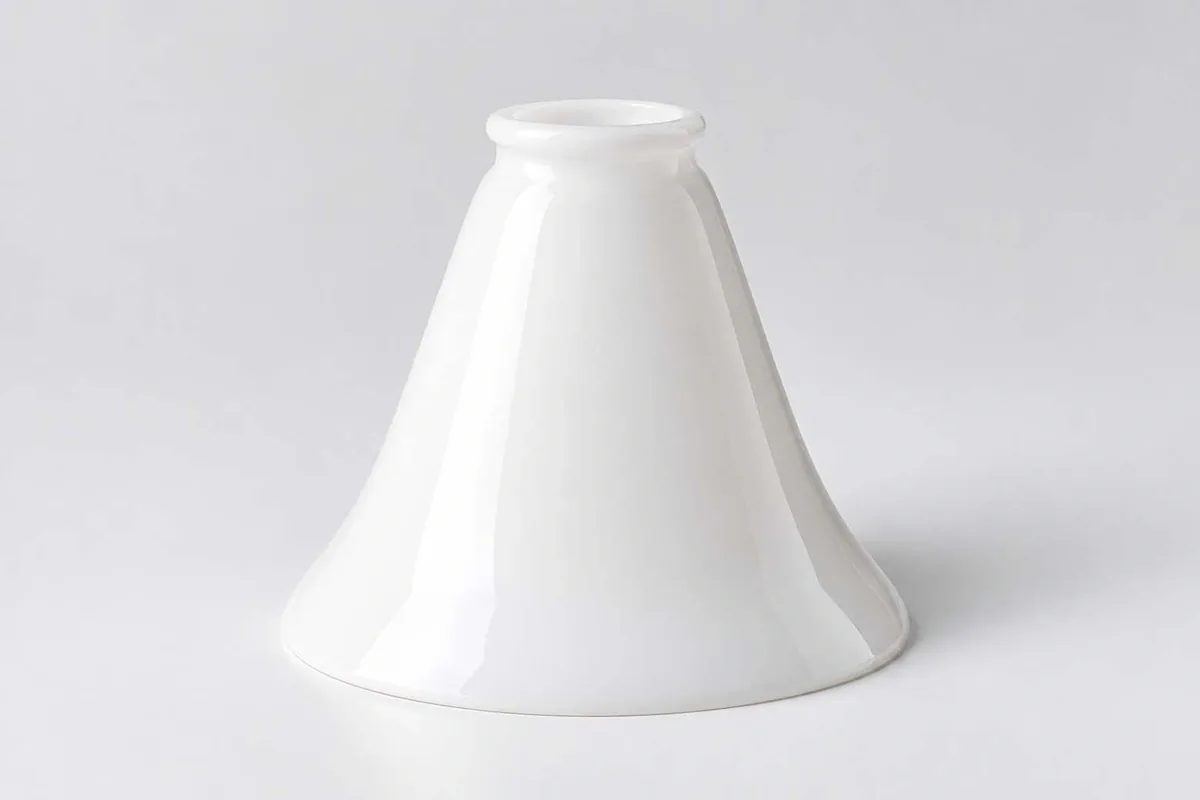
Conical glass lamp shades use a widening profile to direct the open side of the shade toward the illuminated area. Straight cones create a precise contemporary form, while curved or bell-shaped tapers produce a softer decorative profile.
China Lampoptics develops the cone around four linked dimensions: top diameter, bottom diameter, height and mounting opening. The light effect then depends on whether the glass is clear, opal, frosted, colored, ribbed or otherwise textured.
Specification note: Numerical ranges shown on this page are preliminary engineering references for project screening. The quotation and approved drawing define the final material, dimensions, tolerances, processing route and inspection method.
Cone and Bell Profiles
| Profile | Geometry | Typical use |
|---|---|---|
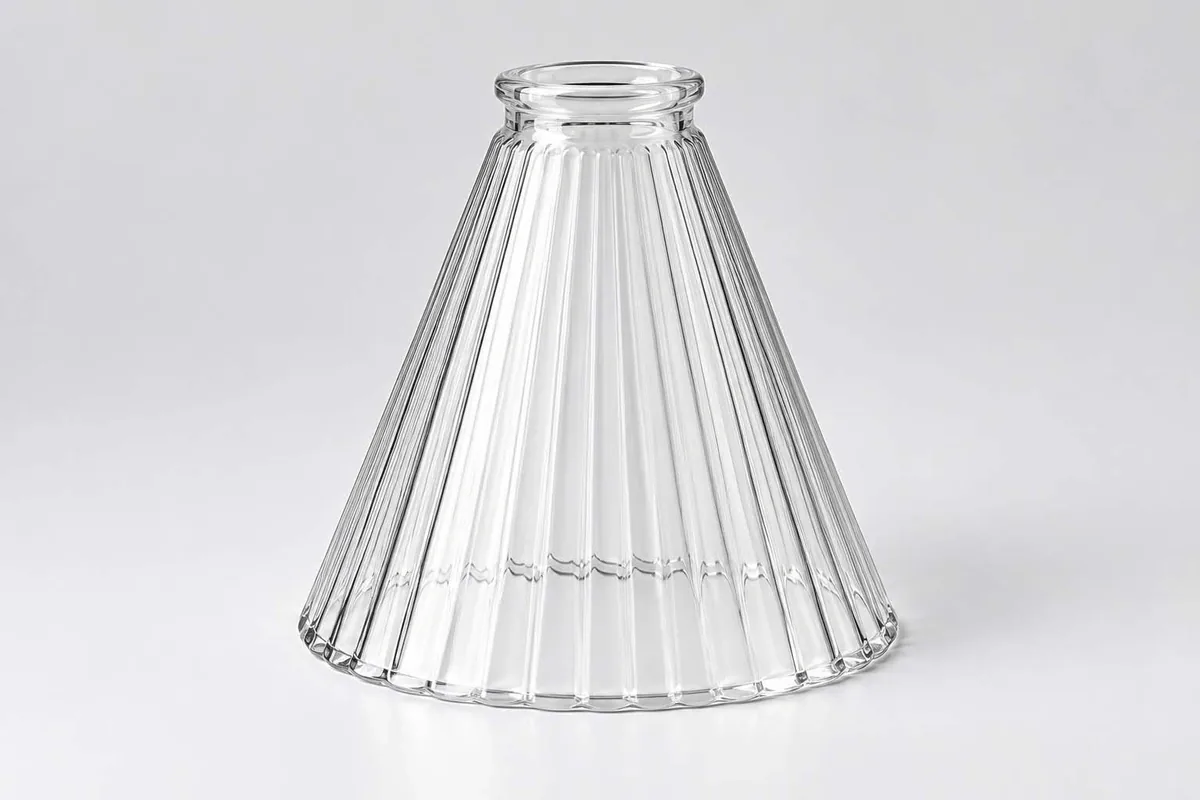
| Straight cone | Linear taper between top and bottom diameters | Modern pendants and downlights |
| Truncated cone | Flat or open top with a wider lower rim | Ceiling, table and pendant fixtures |
| Bell-shaped taper | Curved wall that opens toward the lower rim | Decorative and traditional lighting |
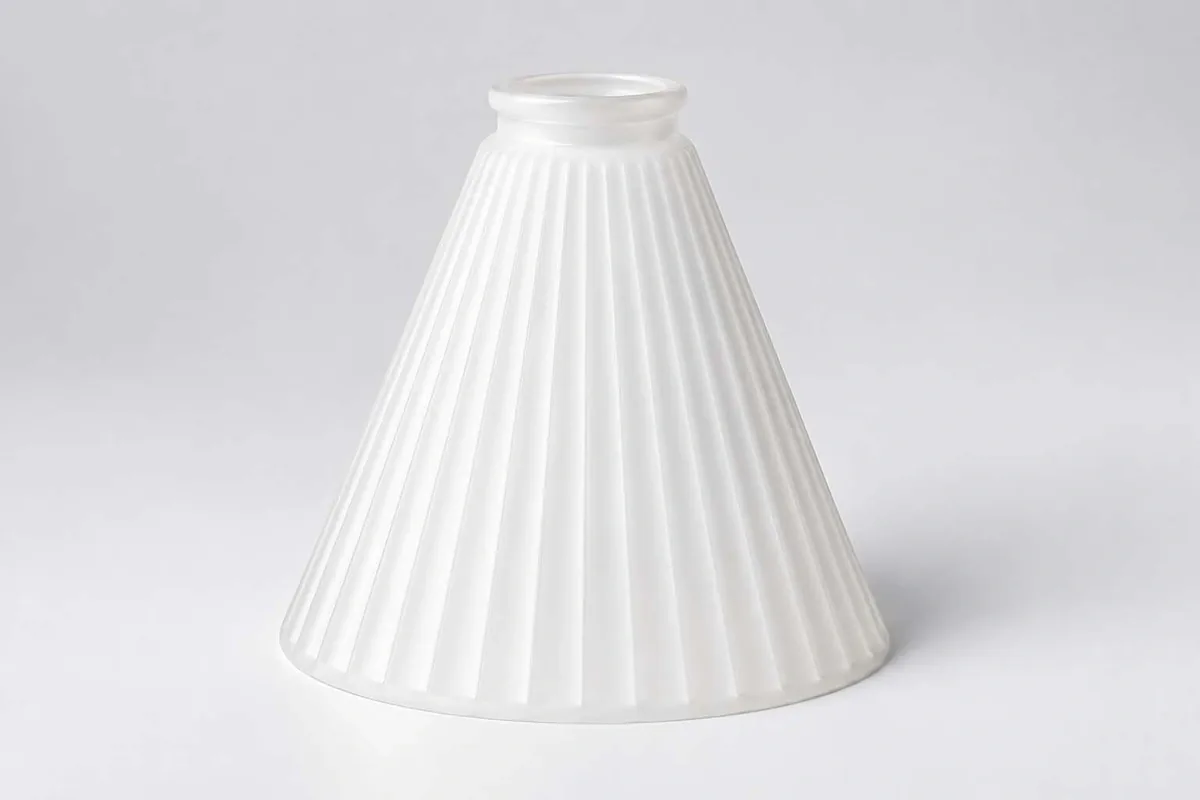
| Ribbed cone | Tapered body with vertical or radial ribs | Industrial, vintage and textured lighting |
| Project-specific taper | Asymmetric or compound profile | OEM and replacement fixture programs |
Conical Shade Specifications
| Top outside diameter | Drawing-controlled within the reviewed forming envelope, preliminarily Ø40–400 mm overall |
|---|---|
| Bottom outside diameter | Drawing-controlled within the reviewed forming envelope, preliminarily Ø40–400 mm overall |
| Overall height | Made to the approved drawing; production limit confirmed after tooling review |
| Mounting opening | Project-specific; controlled by drawing or mating fixture |
| Nominal wall | 3–8 mm reference range; 4–5 mm is common for machine-pressed lighting glass |
| Taper / profile | Confirmed after drawing, sample and process review |
| Rim or neck | Defined by the housing interface and approved drawing |
| Dimensional tolerance | Typical formed-part consistency ±0.3–1.0 mm; taper and mounting datums are quoted separately |
| Glass and surface finish | Clear, opal or textured; sandblasting and coating available by project |
For a curved cone or bell shade, a section profile is required in addition to the end diameters. It defines the visible silhouette and determines mold release, wall flow and final fixture clearance.
Glass and Light Distribution
- Clear glass: keeps the source visible and allows reflections from the inner wall
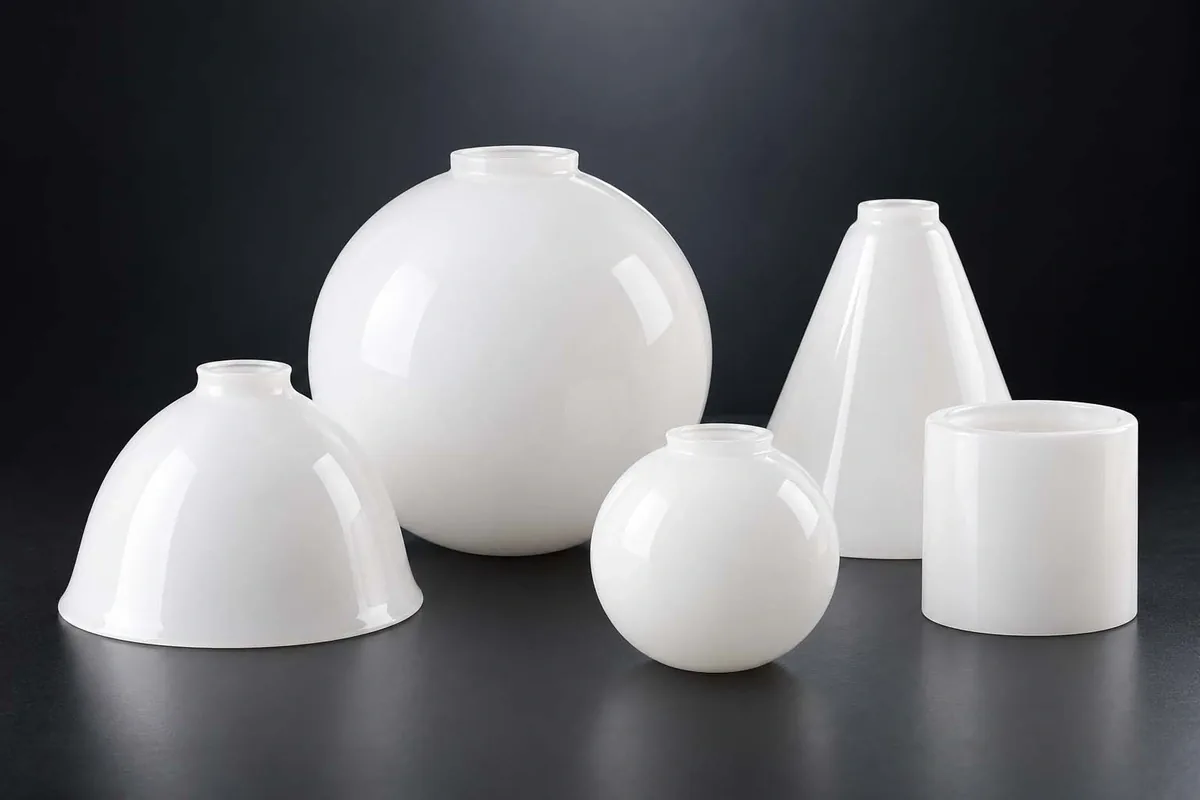
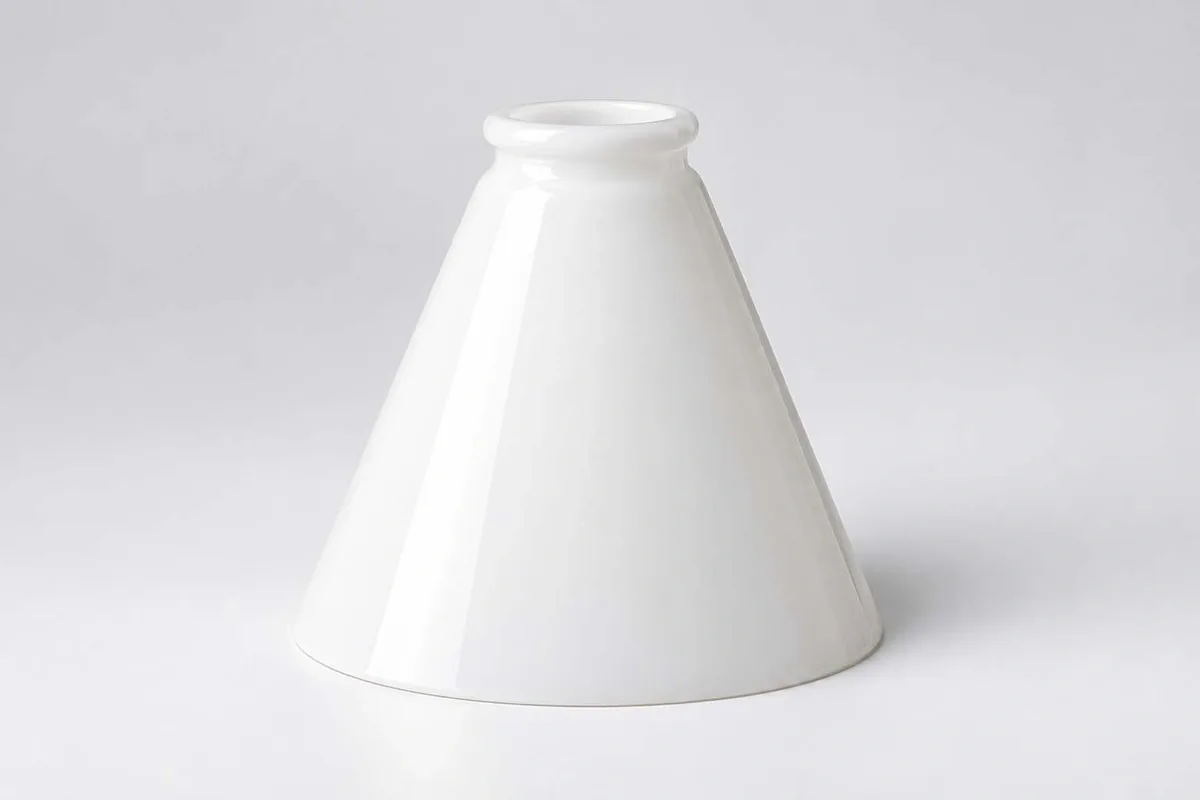
- Opal glass: softens the source and produces a brighter diffusing body
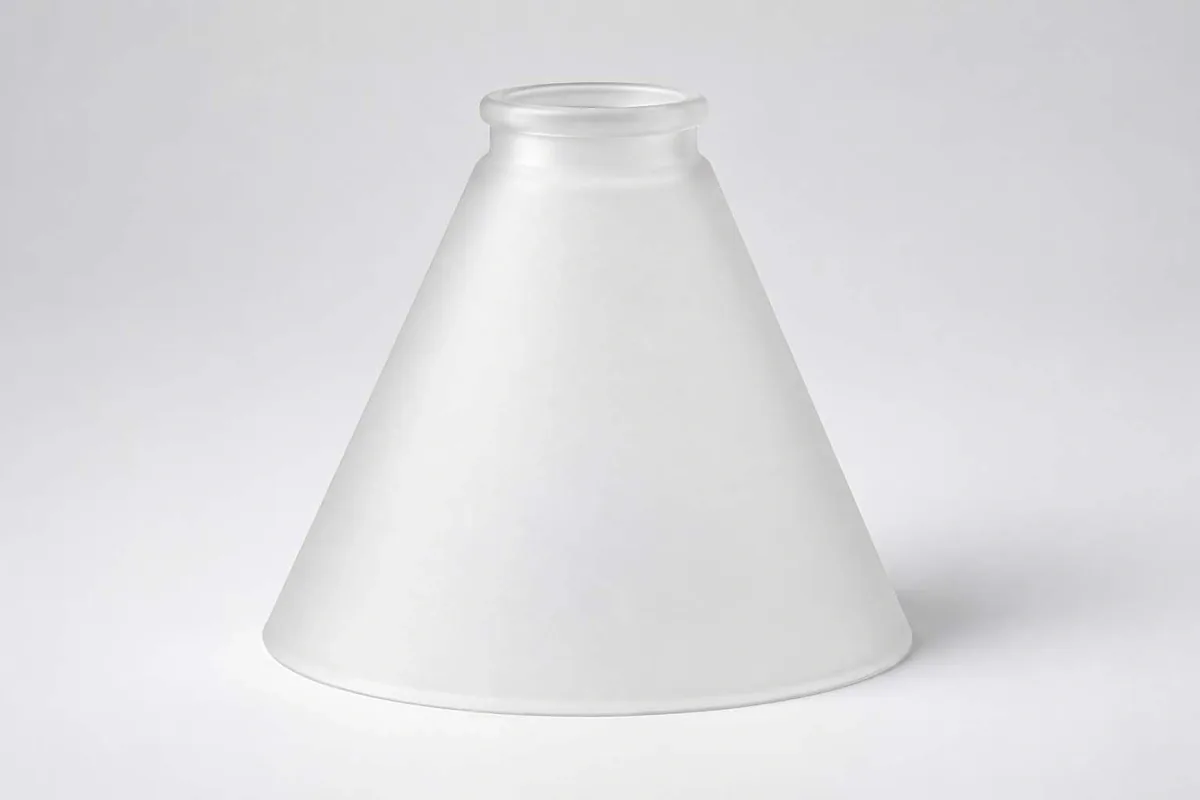
- Frosted surface: adds diffusion while retaining a translucent glass appearance
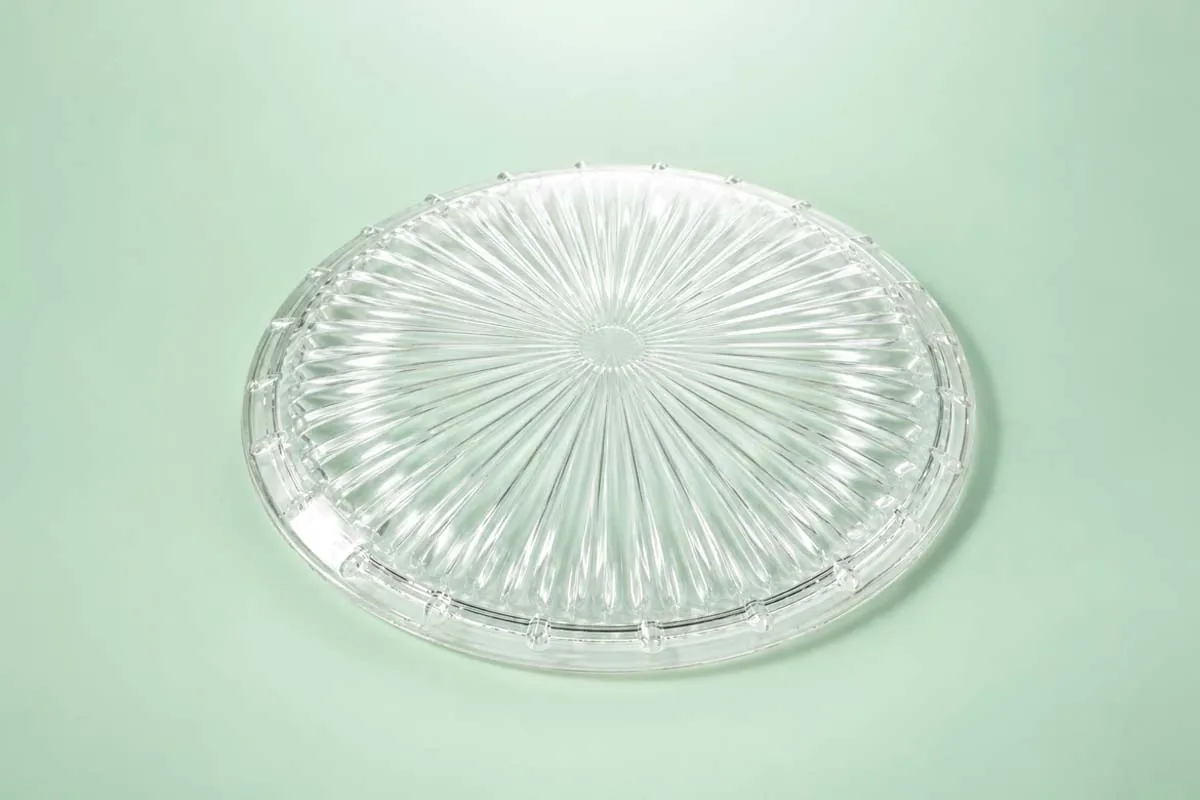
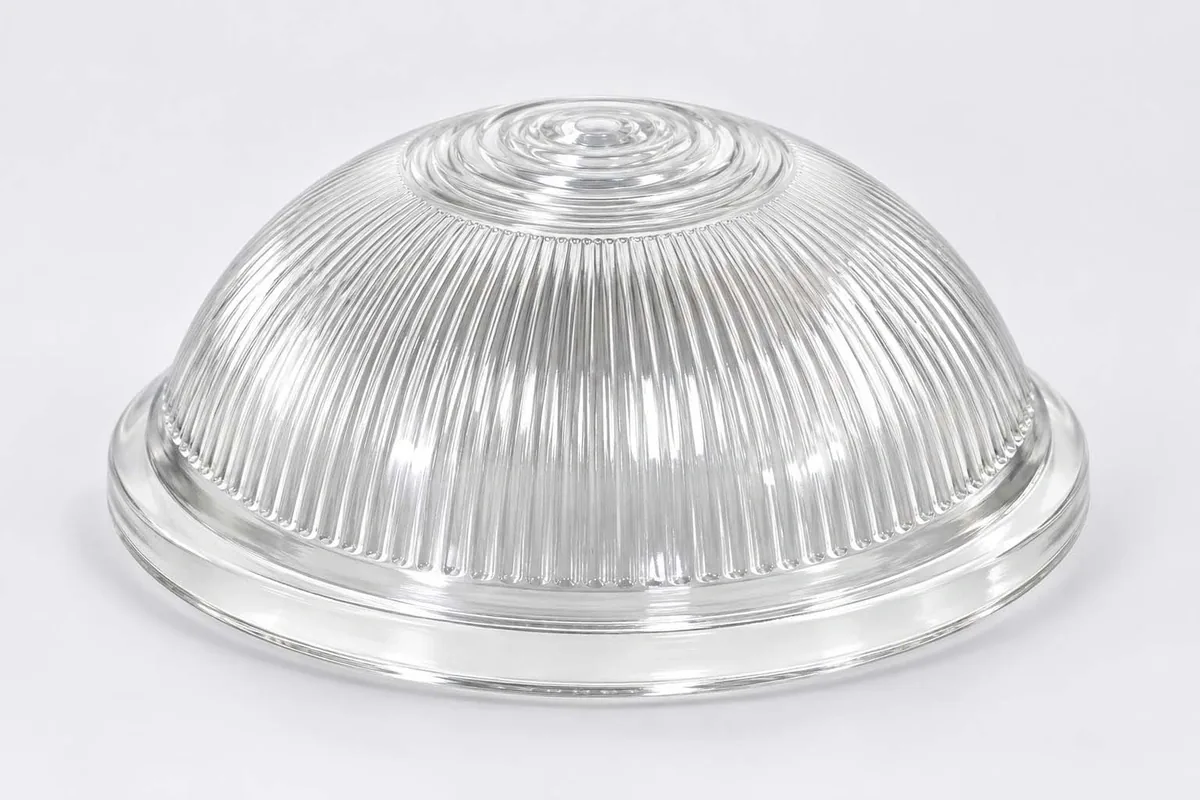
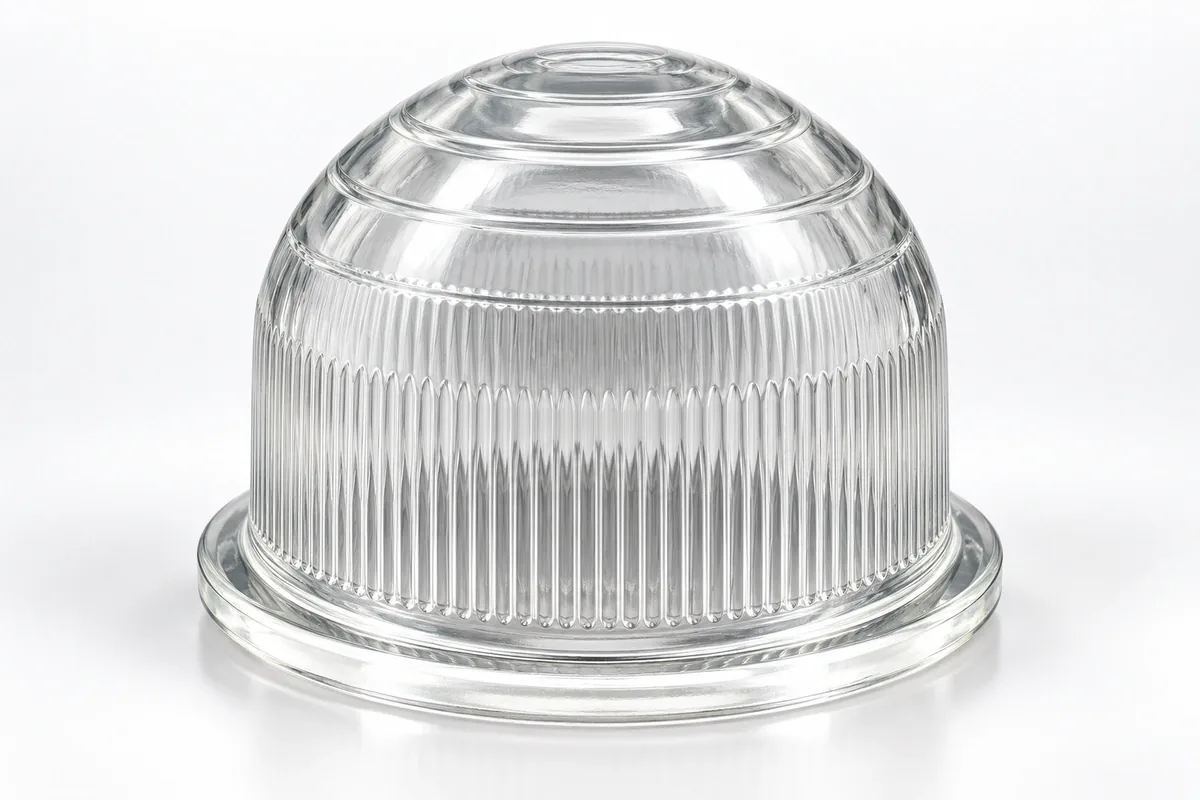
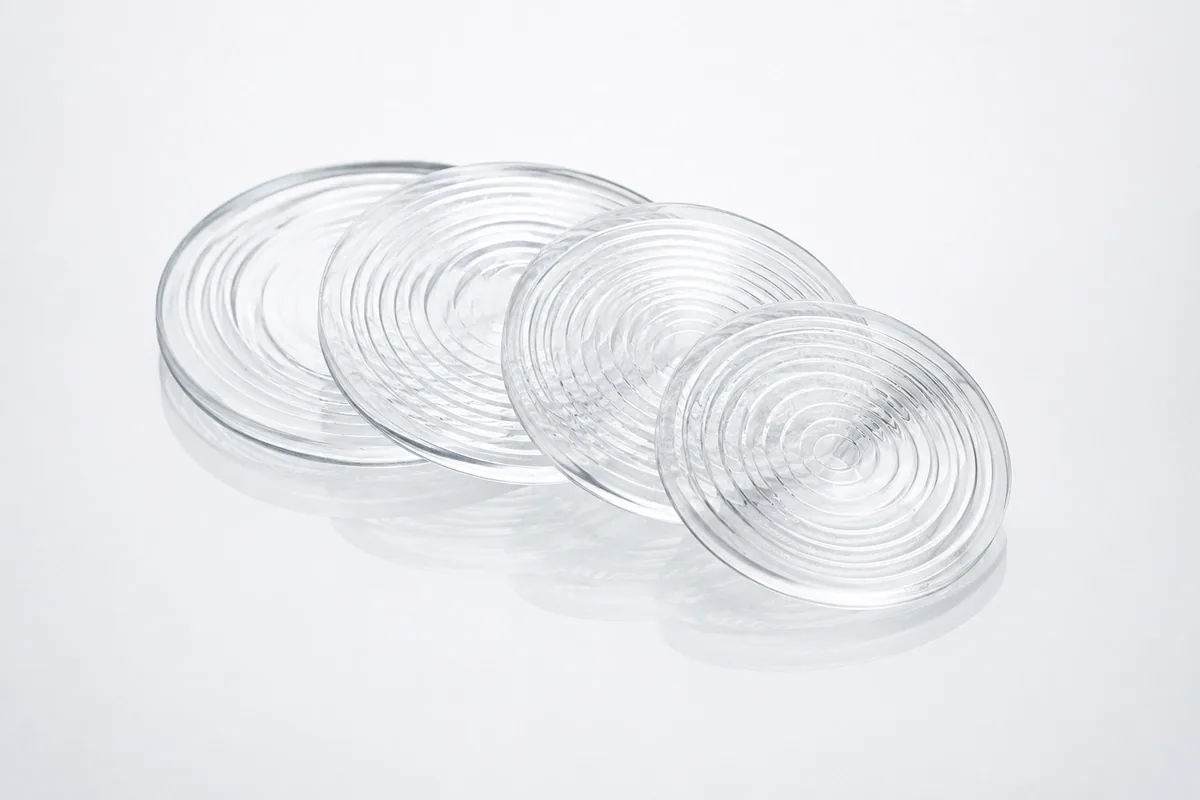
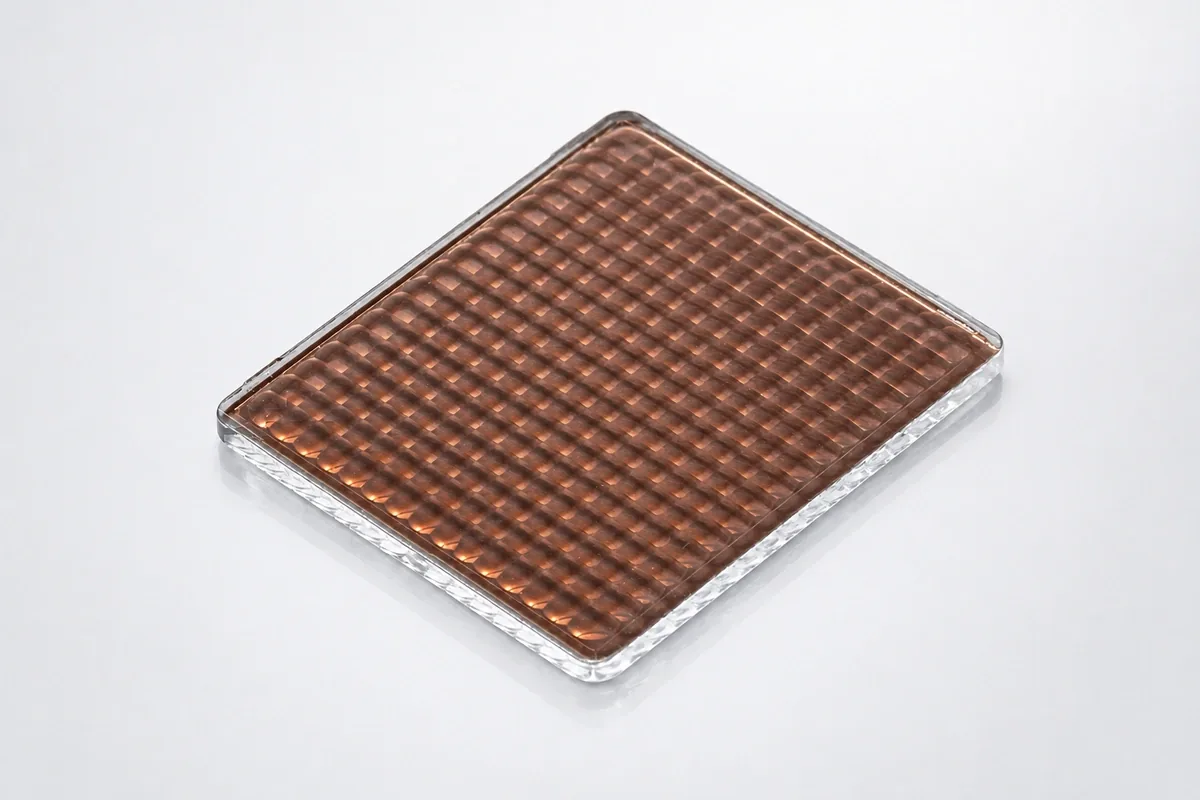
- Ribbed or prismatic surface: changes the visible texture and redirects portions of the beam
- Special color or coating: reviewed separately against an approved sample and stated performance target
Custom Development and Production
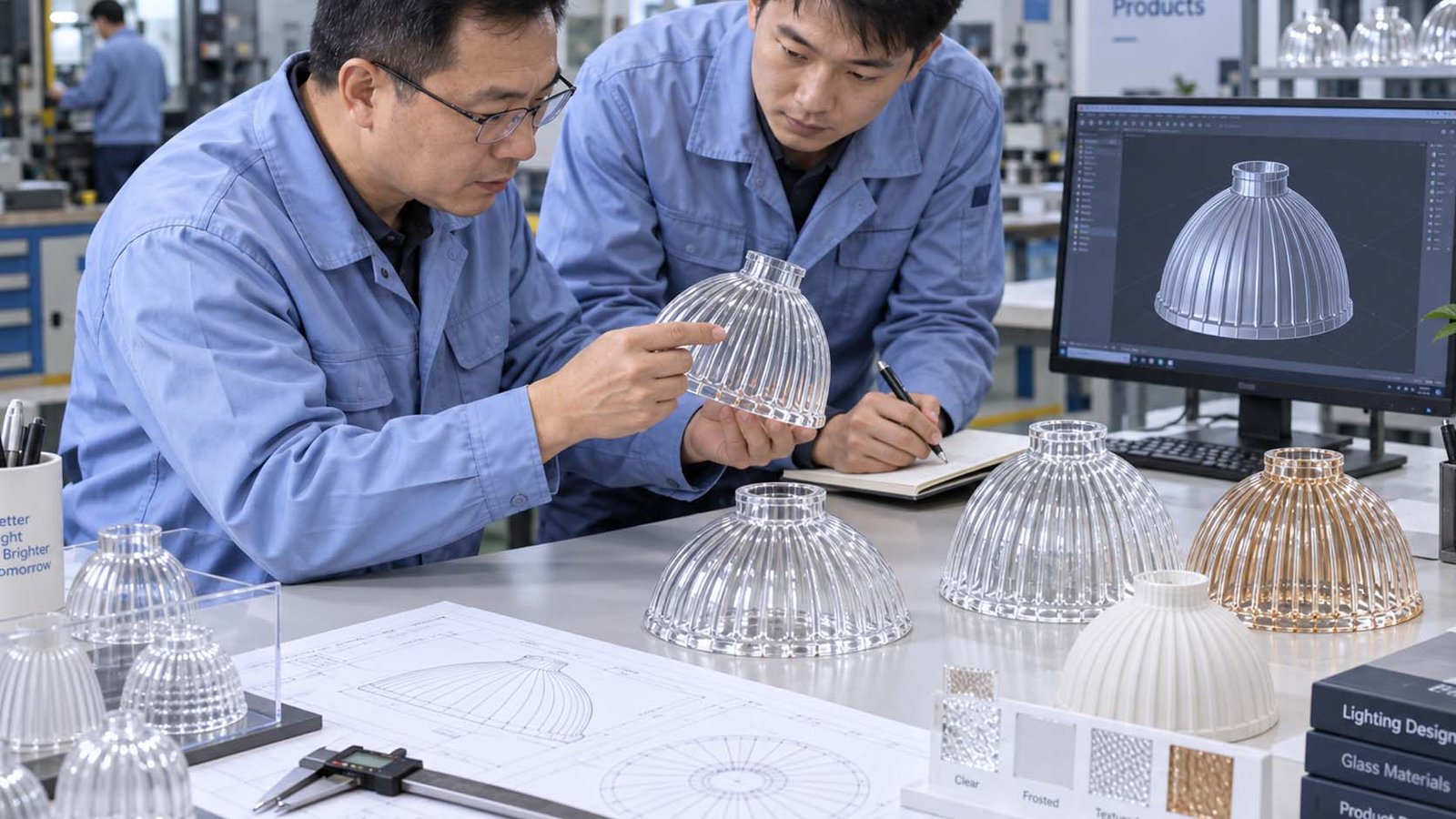
Lampoptics can develop forming molds and inspection fixtures in its mold workshop. Dedicated lamp-glass production, controlled annealing and three automatic production lines support repeatable molded lighting parts.
Secondary processing includes sandblasting, coating, drilling, physical tempering and chemical tempering where the selected glass and profile permit.
Conical Glass Shade Processing
Profile and Mold Design
Top diameter, bottom diameter, height, taper and mounting geometry are fixed in the approved tooling drawing.
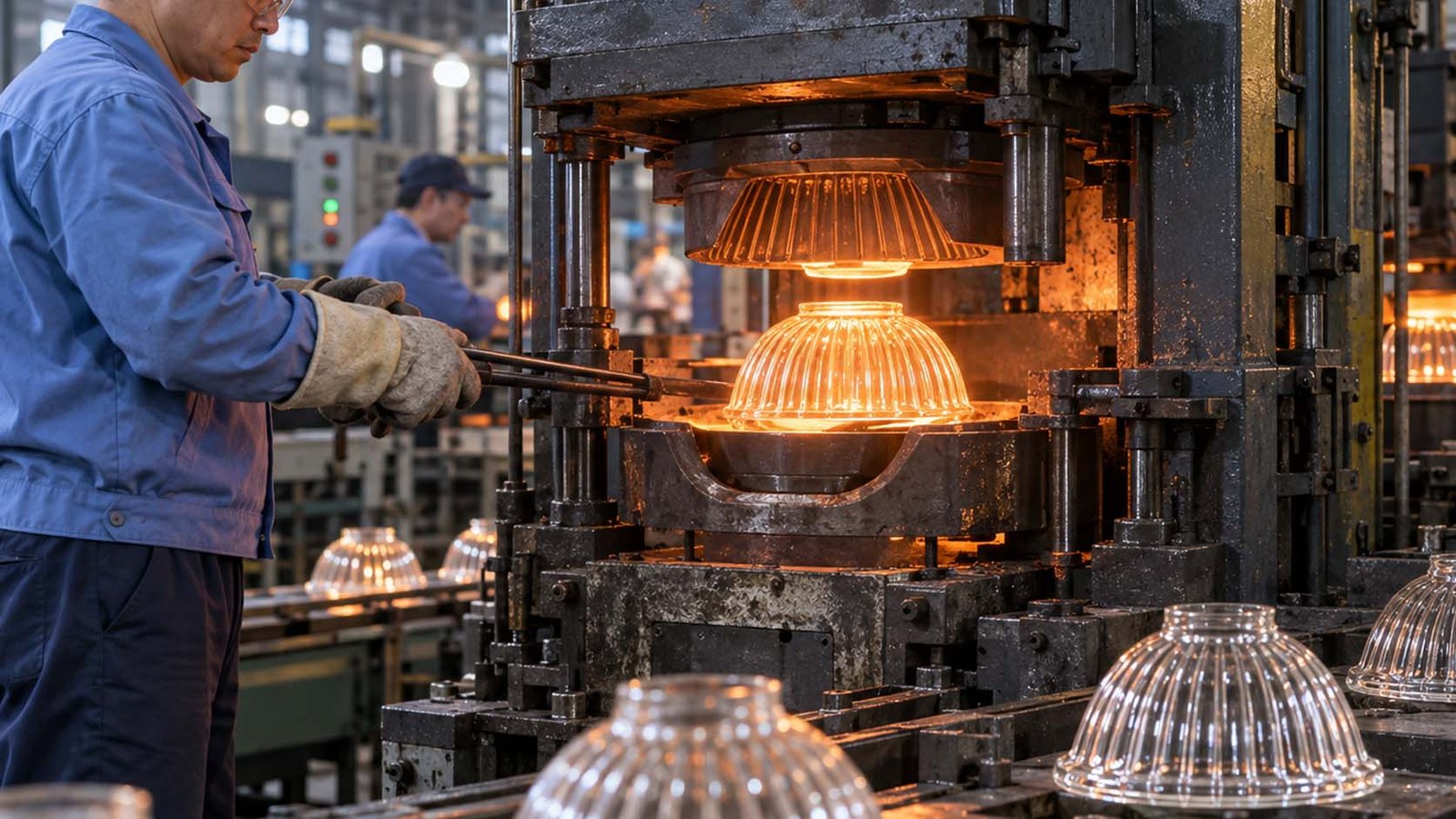
Cone Forming
Glass is formed to maintain the taper, wall distribution and any ribs or flutes along the conical body.
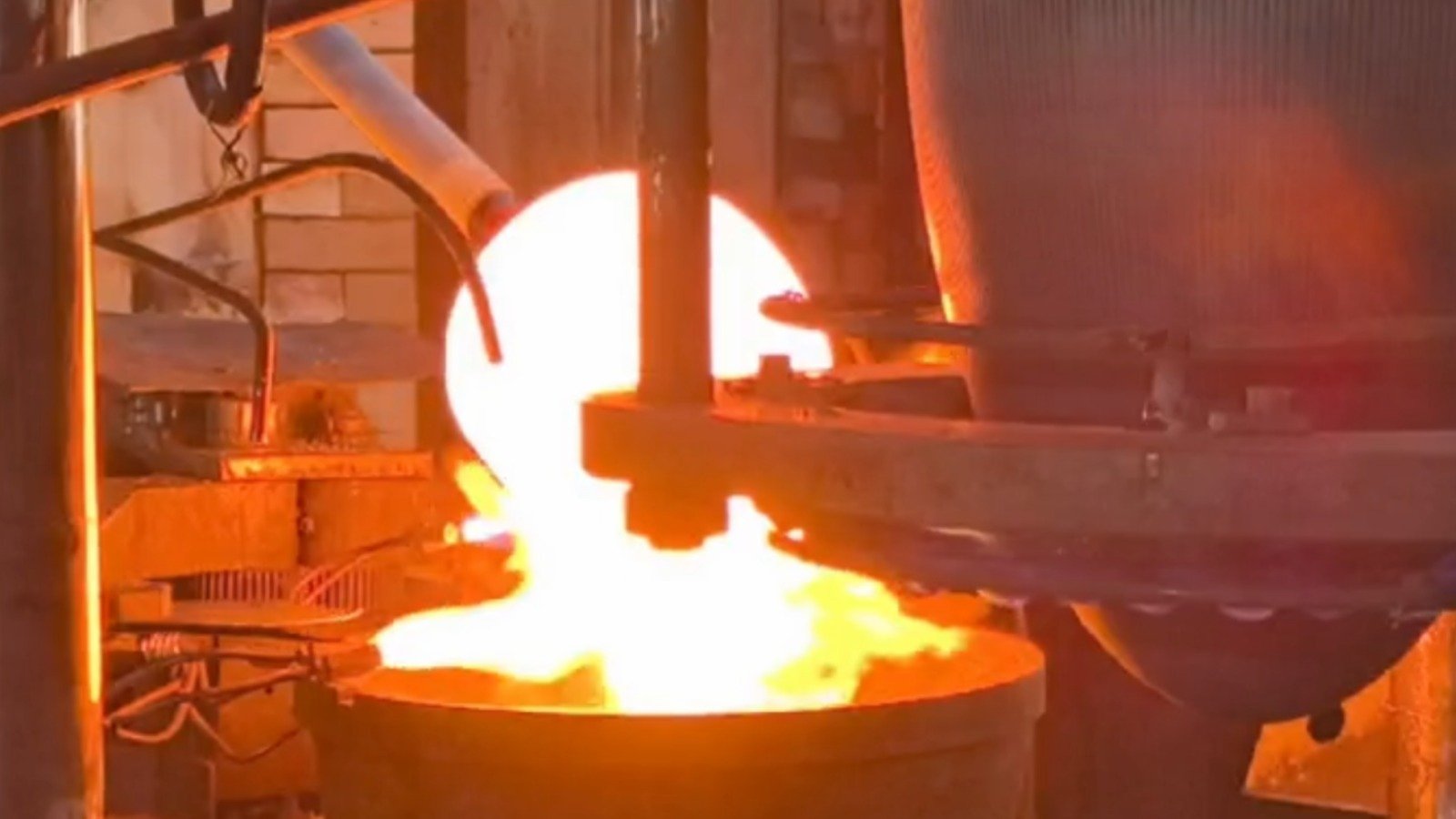
Controlled Annealing
The shade is cooled through a controlled cycle to reduce stress at the rim, neck and changing wall sections.

Edge and Surface Finishing
Openings and rims can be finished for assembly, followed by compatible frosting, coating, drilling or strengthening.
Applications
- Pendant lights: clear, opal or colored tapered shades
- Downlights: cones that frame or redirect the source
- Table and floor lamps: bell and truncated-cone replacement glass
- Hospitality lighting: coordinated decorative shade families
- Industrial and utility lights: ribbed or heavy-wall tapered covers
Conical Glass Lamp Shade FAQs
Which dimensions define a conical shade?
Top diameter, bottom diameter, height, opening, wall thickness and the complete side profile define the part.
Can the side wall be curved instead of straight?
Yes. Bell and compound profiles can be developed from a section drawing or approved sample.
Can conical shades be opal or frosted?
Body-opal or compatible surface-diffusion routes can be reviewed. The final glass and finish are confirmed against an illuminated sample.
Can ribs be molded into the cone?
Ribs or other textures may be integrated into the mold when draft, wall flow and release are suitable.
Can Lampoptics reproduce a replacement cone?
Yes. The old shade and fixture dimensions can be used to define the profile, rim and mounting opening.