Custom Glass Lens Arrays
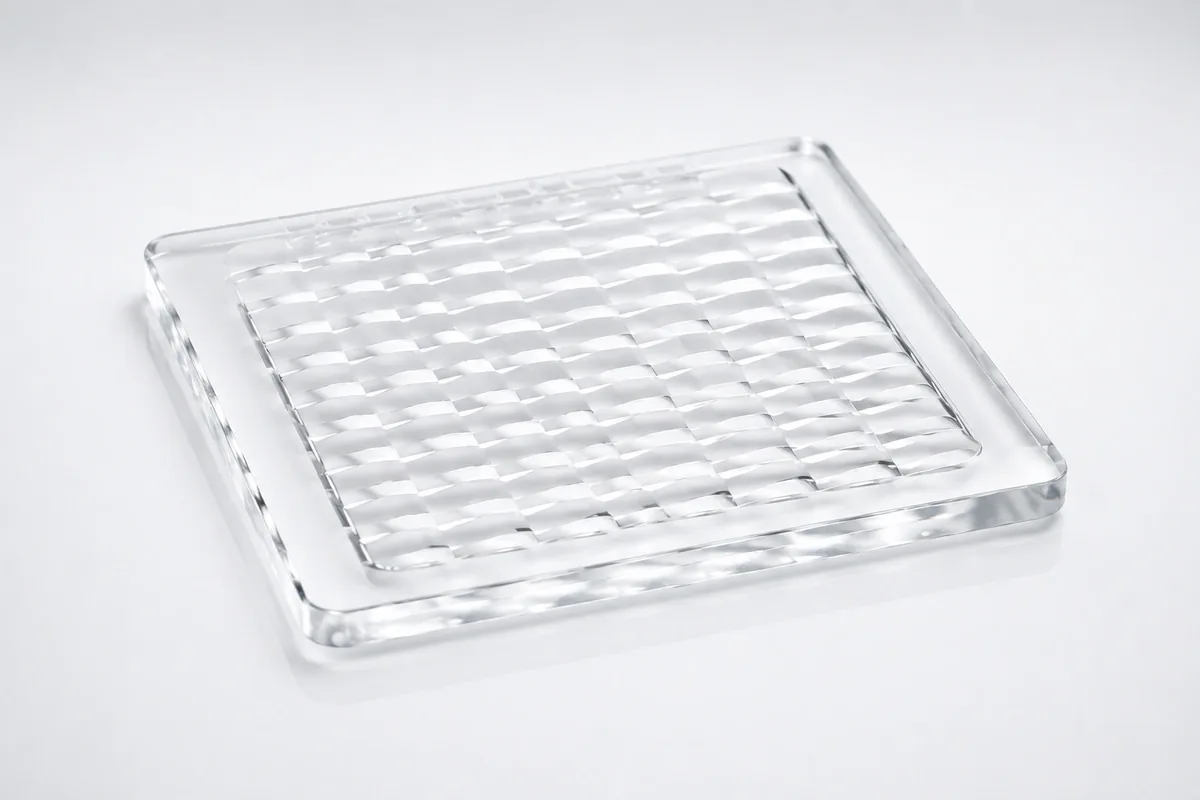
A glass lens array places multiple optical elements on one molded substrate. The array fixes lenslet spacing and orientation, reduces the number of parts in the assembly and maintains optical registration under vibration or handling.
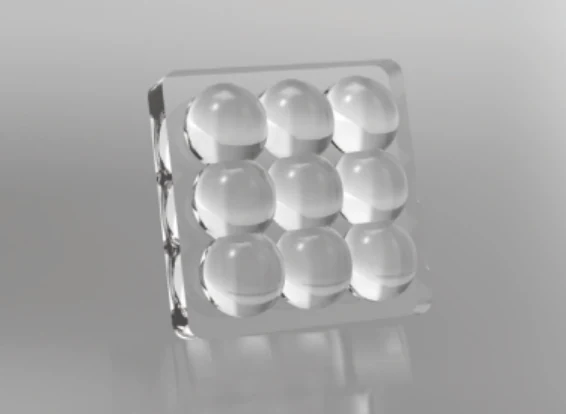
Arrays may be linear, rectangular, square, circular, hexagonal or application-specific. Each lenslet can be spherical, cylindrical, aspheric, concave or freeform depending on whether the array collects, distributes, images or homogenizes light.
Specification note: Numerical ranges shown on this page are preliminary engineering references for project screening. The quotation and approved drawing define the final material, dimensions, tolerances, processing route and inspection method.
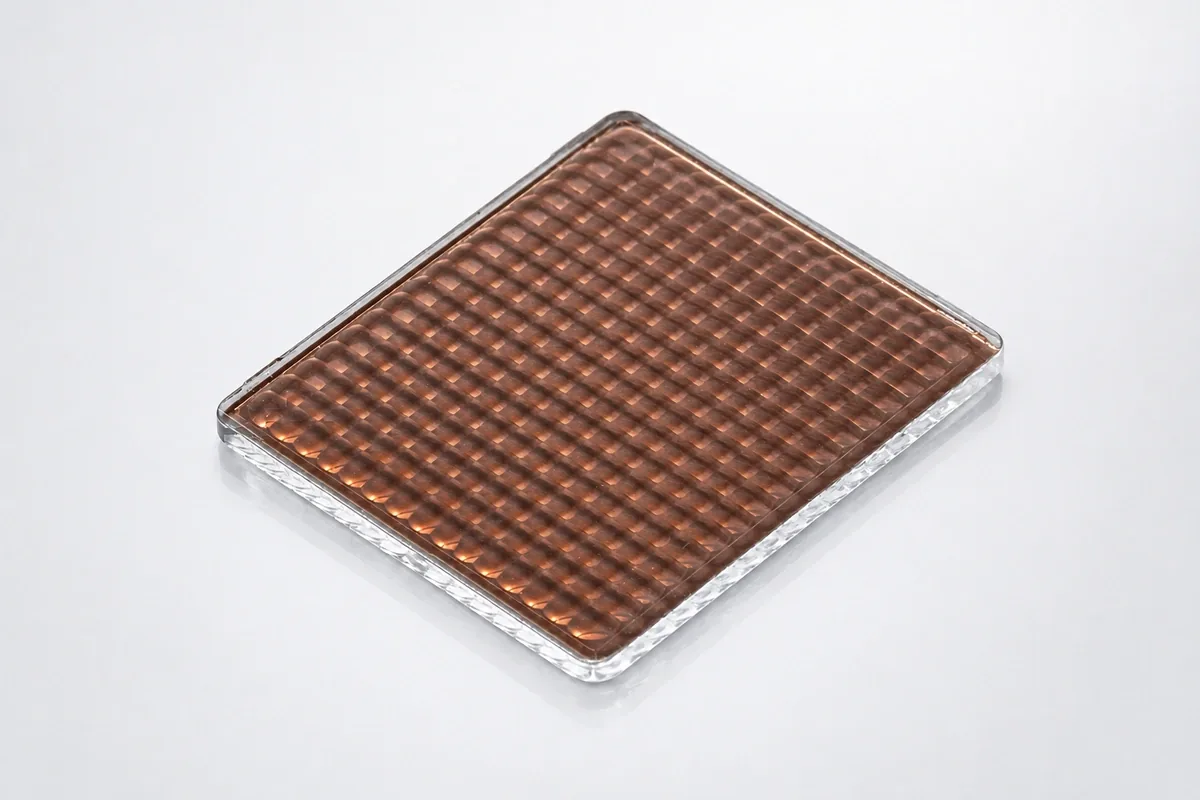
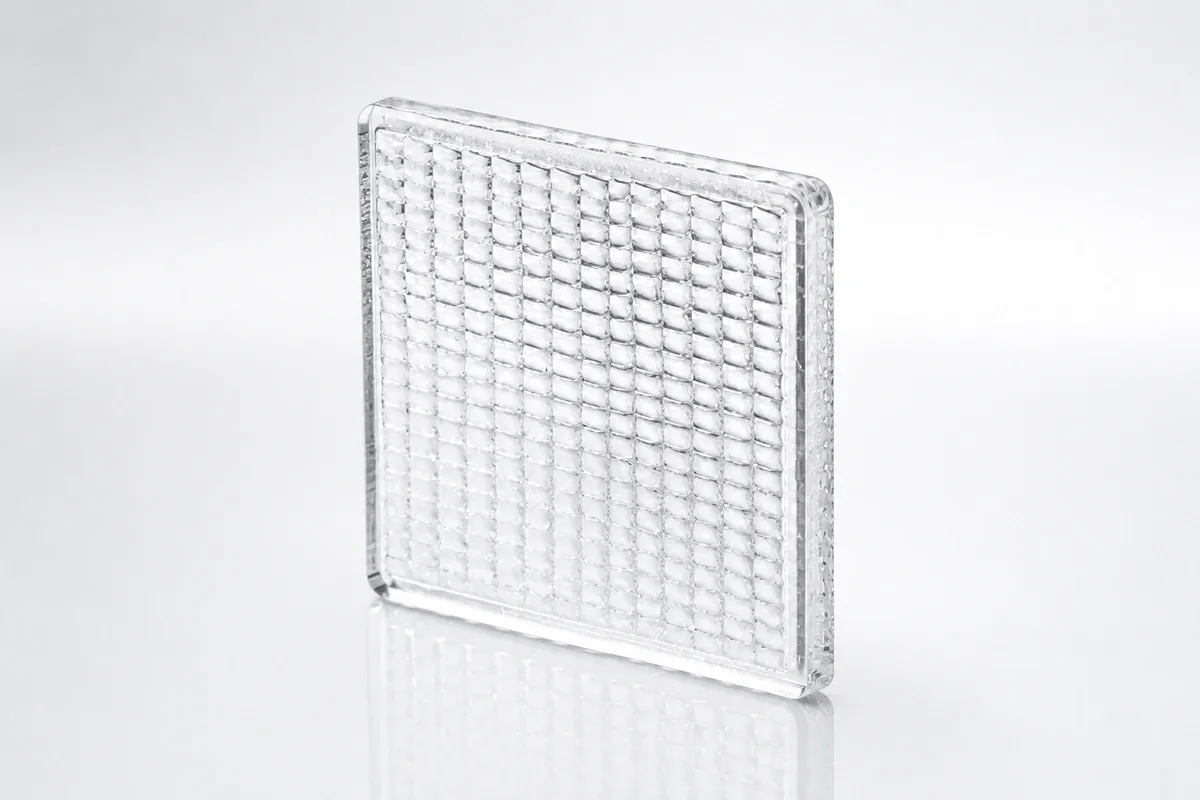
Array Layouts
| Layout | Main characteristic | Typical use |
|---|---|---|
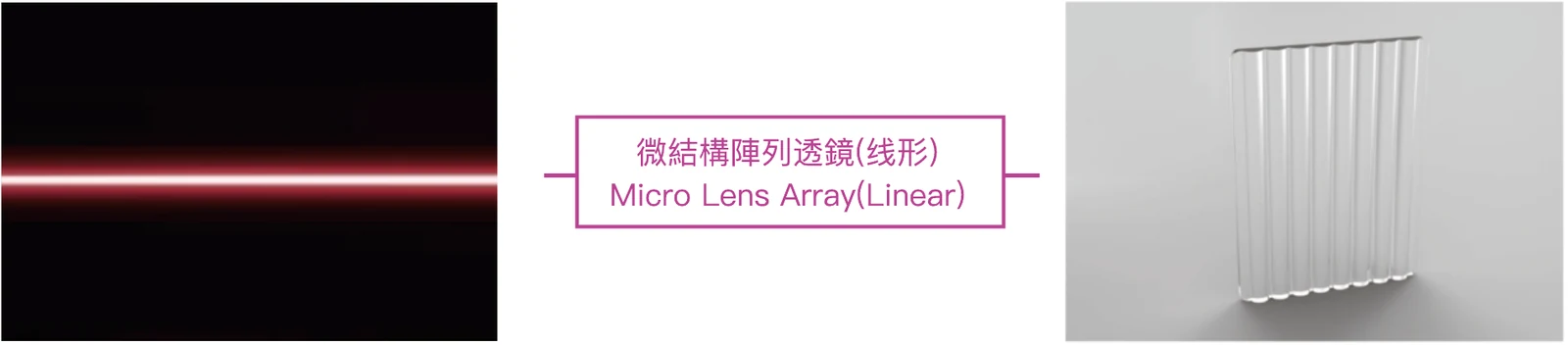
| 1D linear array | Lenslets repeated along one axis | Line lighting, scanning and elongated sources |
| 2D rectangular array | Rows and columns on controlled X/Y pitch | LED boards, stage lights and illumination |
| Circular or radial array | Lenslets arranged around an optical center | Round luminaires and instrument optics |
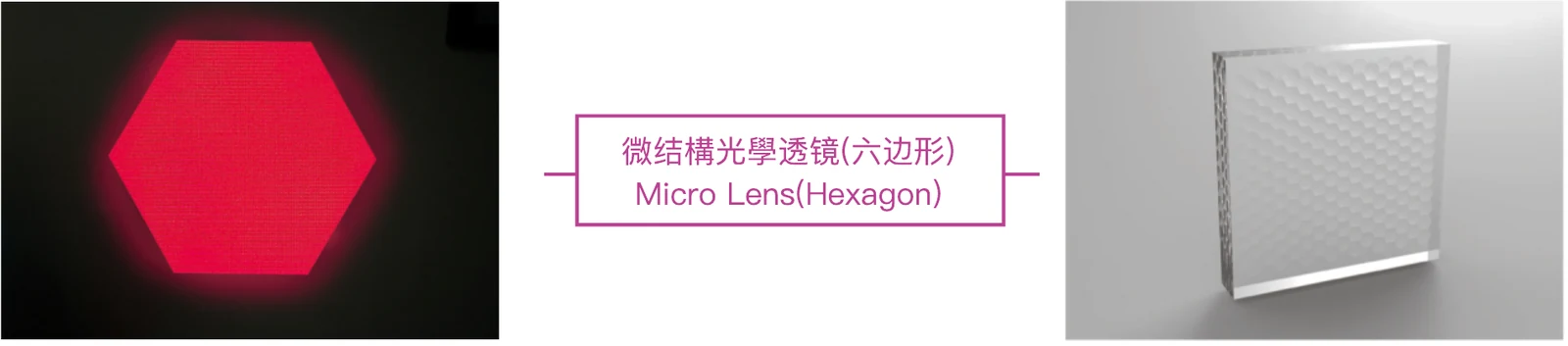
| Hexagonal array | Dense packing with sixfold neighborhood | Homogenizers and high-fill-factor fields |
| Mixed-function array | Different lenslets or zones on one substrate | Application-specific beam distributions |
Lenslet and Array Specifications
| Lenslet aperture | Engineering reference 0.125–3.0 mm |
|---|---|
| Lenslet radius / asphere | Defined in the released optical prescription |
| Lenslet sag | Defined by the released optical prescription; feasibility confirmed during tooling review |
| Lenslet focal length | Engineering reference EFL 0.25–5.0 mm; target tolerance under 1% requires confirmation |
| Pitch X / Y | Engineering reference 0.125–4.0 mm; pitch and cumulative error are drawing-controlled |
| Pitch tolerance / cumulative error | Reference target under 2 µm over 25 mm; confirmed against the selected tooling and inspection route |
| Active area | Engineering reference up to about 45 × 45 mm |
| Substrate size and thickness | Made to the approved drawing; production limit confirmed after tooling review |
| Array flatness / form | Reference form accuracy under 250 nm and center-thickness accuracy under 20 µm; quoted values require metrology review |
| Clear aperture and edge exclusion | Reference dead-zone target under 10 µm; usable aperture remains design-specific |
Pitch and registration are system dimensions. The optical origin, row direction and mechanical datum must be identified so the array aligns with the LED board, second array or downstream optics.
Cylindrical Microlens Array Model Reference
A cylindrical microlens array uses repeated cylindrical optical surfaces to focus light into a line, alter the aspect ratio of an illuminated field or homogenize energy along one axis. This configuration is relevant to laser-line generation, optical imaging, illumination systems, barcode scanning and holographic illumination.
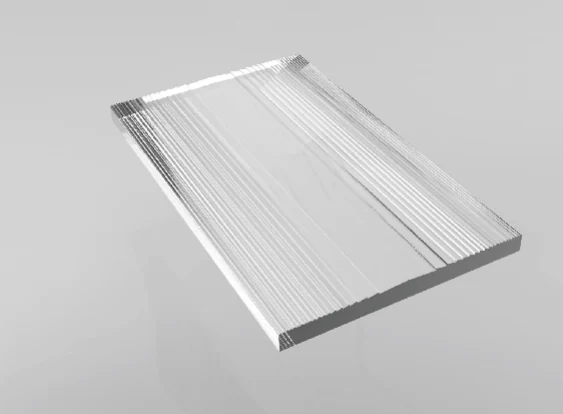
| Array construction | Primarily single-sided cylindrical arrays, with one double-sided reference model |
|---|---|
| Material wavelength reference | 193–3000 nm for the stated silica-glass family; verify finished-part transmission per project |
| Lenslet pitch reference | 50–200 µm for the stated MLA family; the model table also contains larger and diameter-defined pitch entries |
| Array outlines | Rectangular, square, hexagonal and circular directions |
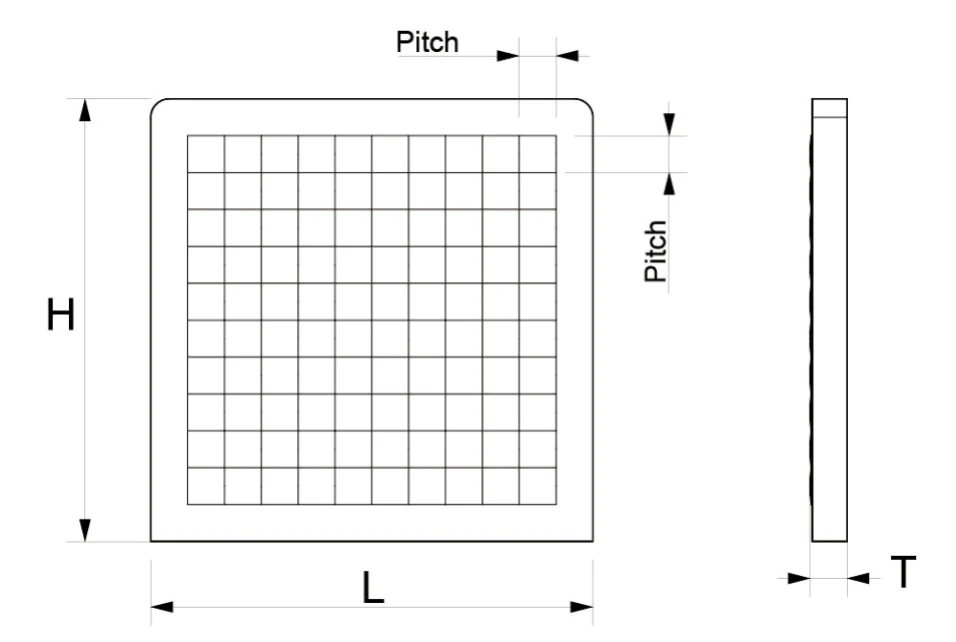
Table notes: Dimensions are in millimeters. Pitch describes lenslet spacing; BFL is back focal length. Model selection depends on the operating wavelength, source geometry and spacing within the optical system.
Cylindrical microlens array models (37)
| Model | L × H/Ø × T | Pitch | BFL | Optical surfaces |
|---|---|---|---|---|
| LA0303010S | 3.40 × 3.40 × 1.00 mm | 0.10 mm | 0.27 mm | Single |
| LA0606022S | 6.80 × 6.80 × 2.25 mm | 0.10 mm | 0.27 mm | Single |
| LA1212020S | 12.00 × 12.00 × 2.00 mm | 1.00 mm | 1.40 mm | Single |
| LA1313020S | 13.65 × 13.65 × 2.00 mm | 0.65 mm | 9.77 mm | Single |
| LA1410045S | 14.75 × 10.00 × 4.50 mm | 0.05 mm | 0.08 mm | Single |
| LA1515020S | 15.00 × 15.00 × 2.00 mm | 1.00 mm | 10.45 mm | Single |
| LA1515040D | 15.00 × 15.00 × 4.00 mm | 1.00 mm | 9.77 mm | Double |
| LA1717020S02 | 17.00 × 17.00 × 2.00 mm | 2.00 mm | 20.91 mm | Single |
| LA1717020S03 | 17.50 × 17.50 × 2.00 mm | 1.50 mm | 146.52 mm | Single |
| LA1717020S04 | 17.50 × 17.50 × 2.00 mm | 1.50 mm | 15.70 mm | Single |
| LA1717020S05 | 17.50 × 17.50 × 2.00 mm | 0.65 mm | 9.77 mm | Single |
| LA1717025S | 17.50 × 17.50 × 2.50 mm | 2.50 mm | 5.97 mm | Single |
| LA1811020S | 18.30 × 11.10 × 2.00 mm | 1.25 mm | 1.44 mm | Single |
| LA2020020S | 20.00 × 20.00 × 2.00 mm | 2.00 mm | 20.91 mm | Single |
| LA2525020S | 25.00 × 25.00 × 2.00 mm | 1.30 mm | 19.53 mm | Single |
| LA2727020S02 | 27.30 × 27.30 × 2.00 mm | 1.30 mm | 19.53 mm | Single |
| LA3030020S | 30.00 × 30.00 × 2.00 mm | 1.30 mm | 19.53 mm | Single |
| LA3030030S | 30.00 × 30.00 × 3.00 mm | 3.00 mm | 31.40 mm | Single |
| LA3434020S | 34.88 × 34.78 × 2.00 mm | 1.30 mm | 19.53 mm | Single |
| LA3428020S | 34.90 × 28.00 × 2.00 mm | 0.80 mm | 20.23 mm | Single |
| LA3535020S | 35.00 × 35.00 × 2.00 mm | 1.00 mm | 1.40 mm | Single |
| LA3535025S | 35.00 × 35.00 × 2.50 mm | 2.50 mm | 5.97 mm | Single |
| LA3622016S | 36.75 × 22.25 × 1.60 mm | 2.50 mm | 2.88 mm | Single |
| LA5553025S | 55.00 × 53.50 × 2.50 mm | 2.50 mm | 5.97 mm | Single |
| LA0006020S | Ø6.49 × 2.00 mm | 0.90 mm | — mm | Single |
| MLA0040110S | Ø40 × 11.00 mm | — mm | — mm | Single |
| MLA1717020S01 | 17.00 × 17.00 × 2.00 mm | — mm | — mm | Single |
| MLA5654049S | 56.00 × 54.00 × 4.90 mm | — mm | — mm | Single |
| MLA0806025S | 8.00 × 6.00 × 2.50 mm | 0.90 mm | 3.34 mm | Single |
| MLA1404019S | 14.56 × 4.55 × 1.90 mm | 1.10 mm | — mm | Single |
| MLA0303010S | 3.00 × 3.00 × 1.00 mm | Ø0.25 mm | 0.81 mm | Single |
| MLA2222020S01 | 22.00 × 22.00 × 2.00 mm | Ø1.00 mm | 1.74 mm | Single |
| MLA2222020S02 | 22.00 × 22.00 × 2.00 mm | Ø1.00 mm | 1.74 mm | Single |
| MLA2220025S | 22.00 × 22.00 × 2.50 mm | Ø1.00 mm | −1.89 mm | Single |
| MLA2727011S01 | 27.00 × 27.00 × 1.10 mm | Ø0.20 mm | 0.98 mm | Single |
| MLA2727020S02 | 27.00 × 27.00 × 2.00 mm | Ø0.20 mm | 0.98 mm | Single |
| MLA4029102S | 40.50 × 29.50 × 10.25 mm | Ø2.00 mm | 12.02 mm | Single |
Registration and Mounting
- Datum edges: locate the array in X, Y and rotation
- Mounting holes or seats: reference the optic to the luminaire or optical bench
- Fiducials: support camera measurement and array-to-source alignment
- Orientation mark: prevents a rectangular or mixed-function array from being installed backwards
- Thermal clearance: allows the holder and glass to move without stressing the substrate
Tooling and Production Route
Lampoptics has disclosed production experience with stage-light fly-eye glass and maintains separate optical-lens and mold workshops. Precision tooling controls the local lenslet surfaces together with global pitch and mechanical features.
Lenslet size, pitch, array envelope, glass grade and inspection method are confirmed after design review. Coating is considered only where geometry and measurable performance justify it.
Glass Lens Array Processing
Array Layout Review
Lenslet pitch, count, array outline, source map and mechanical datum scheme are confirmed.
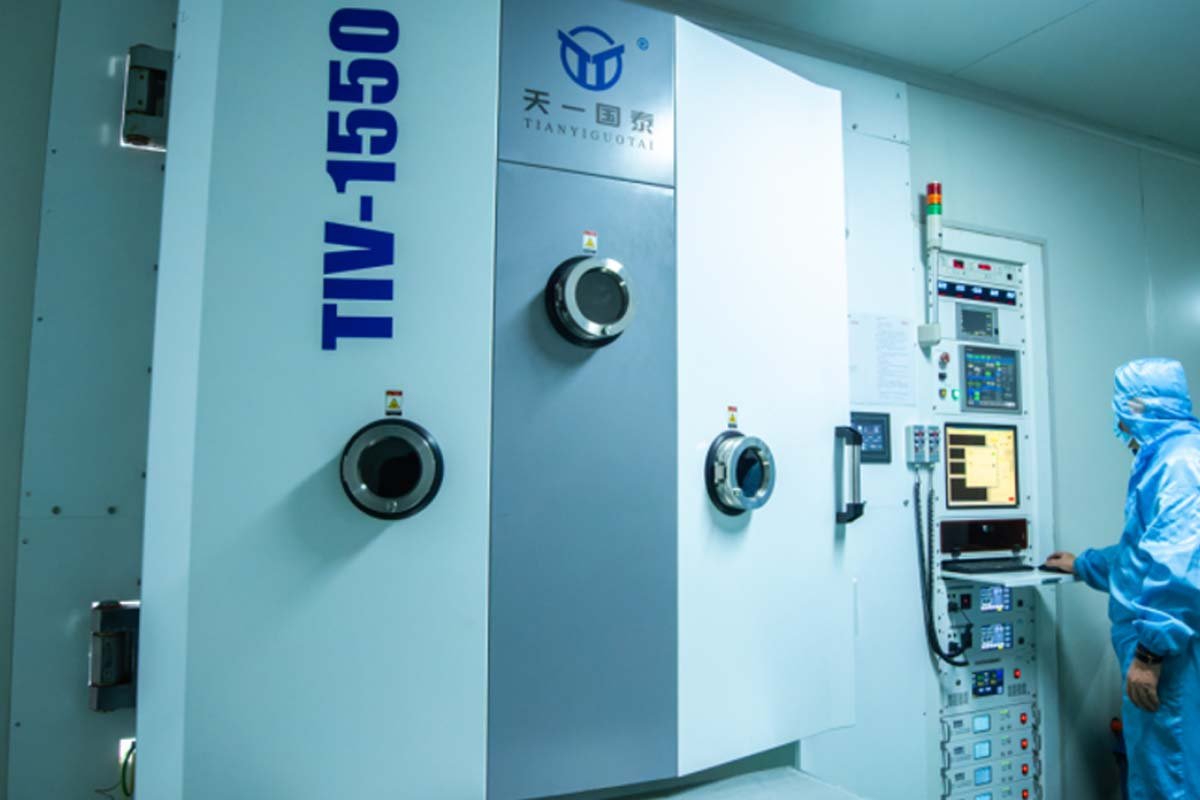
Multi-Cavity Optical Tooling
The complete lenslet pattern is produced in one tool with controlled pitch and registration.

Array Molding and Annealing
The array is molded as a single glass component and cooled to limit warpage across the full footprint.

Registration and Beam Inspection
Lenslet geometry, overall flatness, mounting position and combined light distribution are evaluated.
Applications
- Stage lighting: fly-eye and multi-lens arrays for beam mixing
- LED luminaires: registered arrays over repeated LED layouts
- Projection and illumination: multi-channel collection and field shaping
- Sensors and imaging: repeated focusing or sampling elements
- Automotive and signal lighting: compact repeated optical functions
Glass Lens Array FAQs
What is the difference between a lens array and separate lenses?
An array fixes multiple lenslets on one substrate, reducing assembly parts and controlling relative pitch and orientation.
Can each lenslet have a different shape?
A mixed-function array is possible when the prescription, tooling and inspection method support the required local surfaces.
How is pitch specified?
Define X and Y pitch, origin, row direction, local tolerance and allowable cumulative error across the active area.
Can Lampoptics make fly-eye arrays?
Lampoptics produces stage-light fly-eye glass. Feasible array and lenslet dimensions are confirmed from the optical drawing and tooling review.
How is an array functionally tested?
Testing may measure focal position, beam distribution or field uniformity depending on the array's intended function.