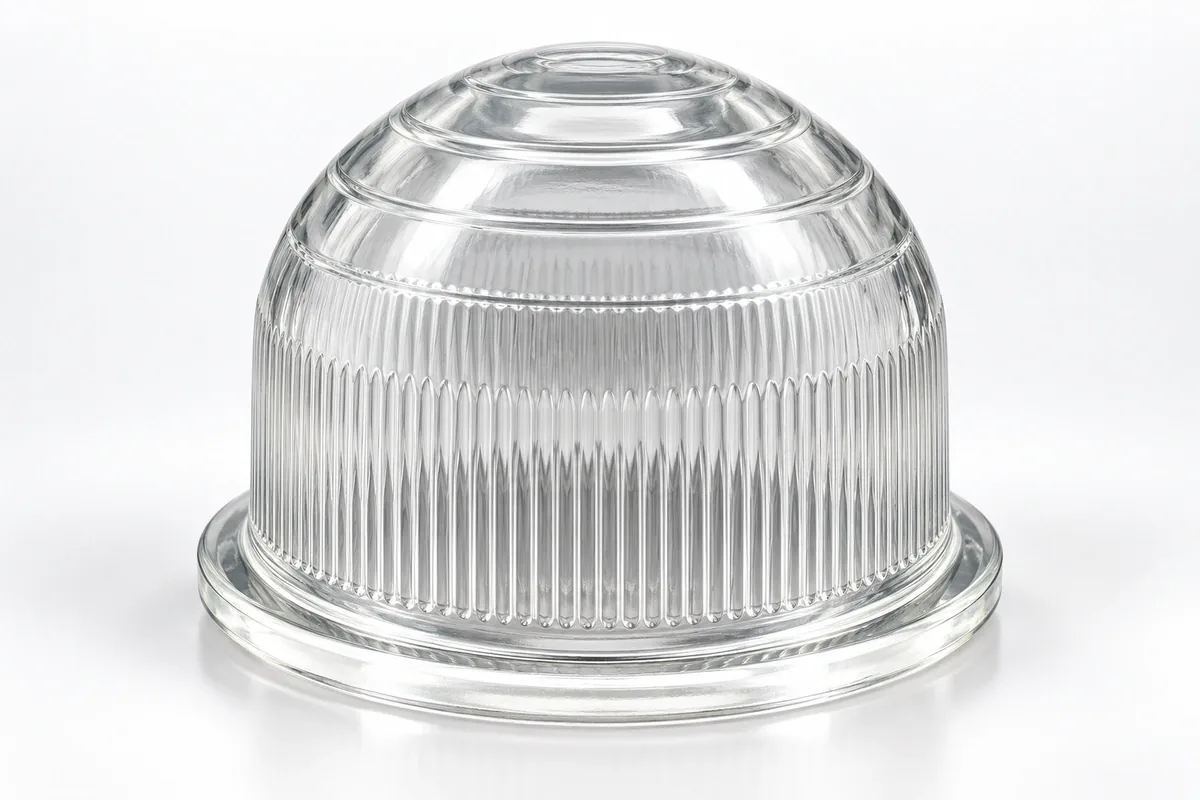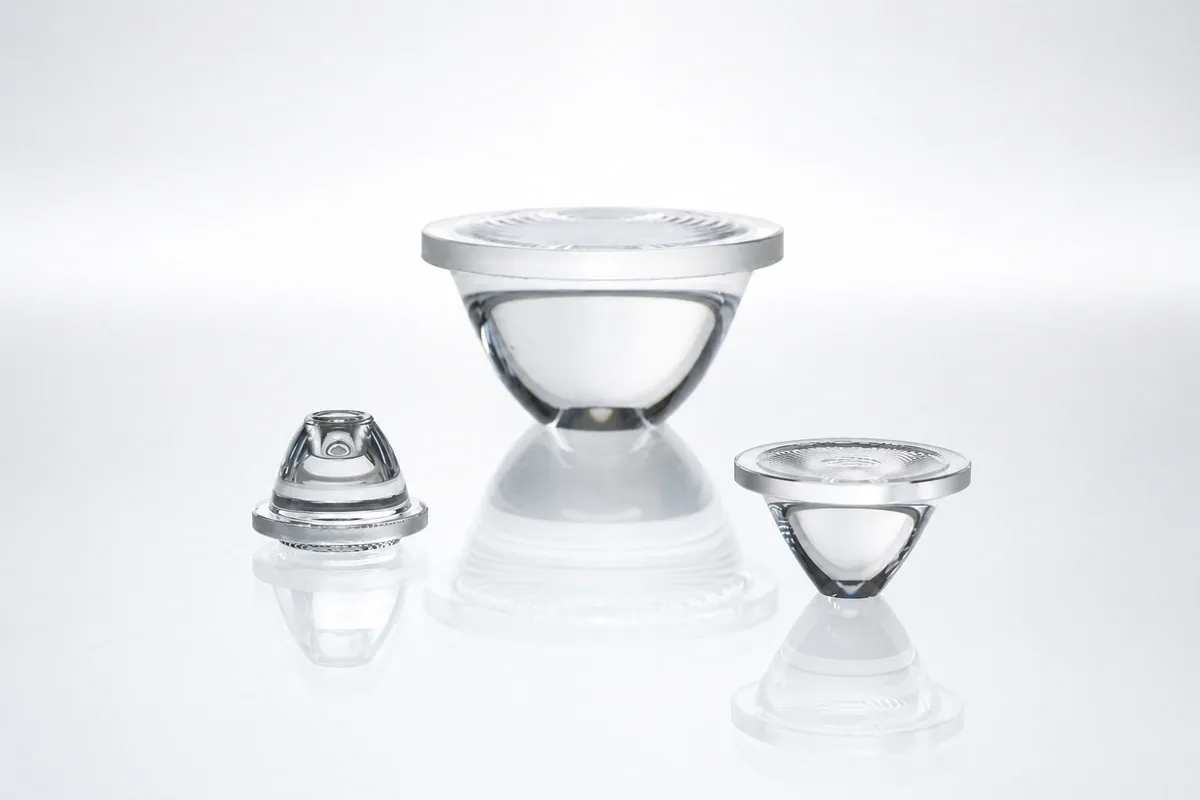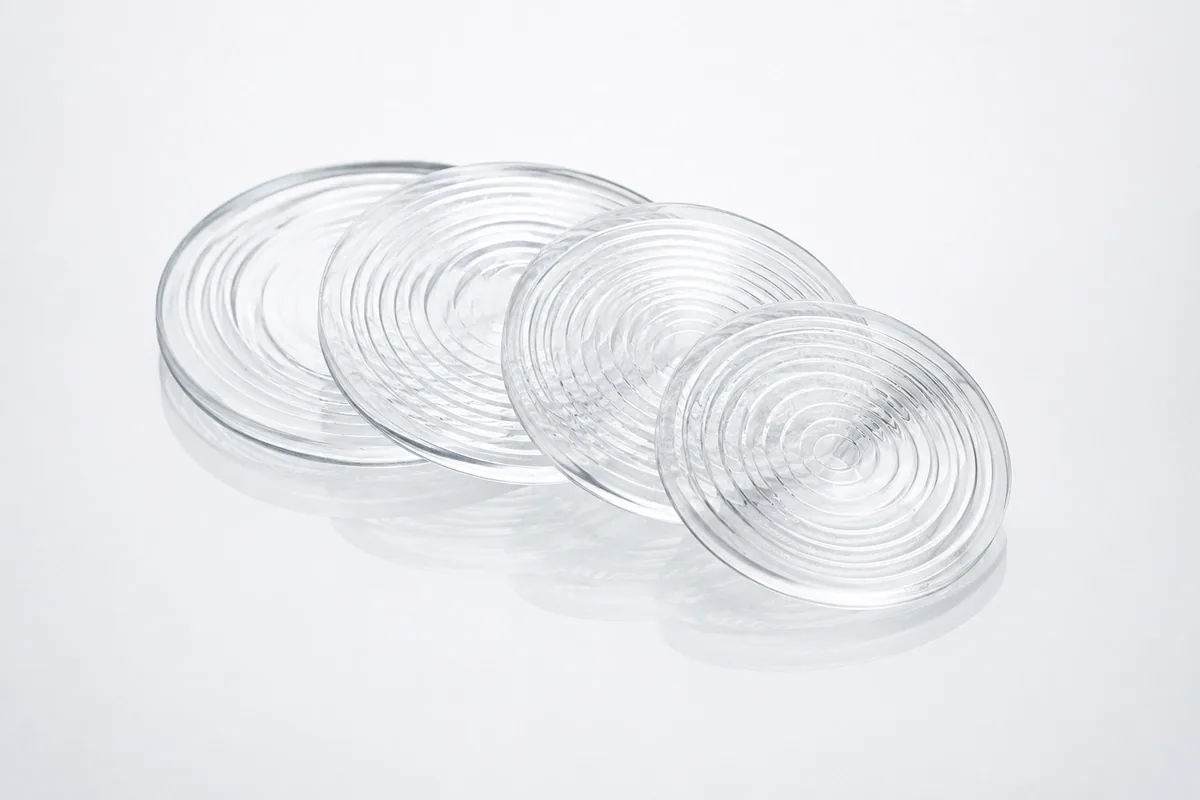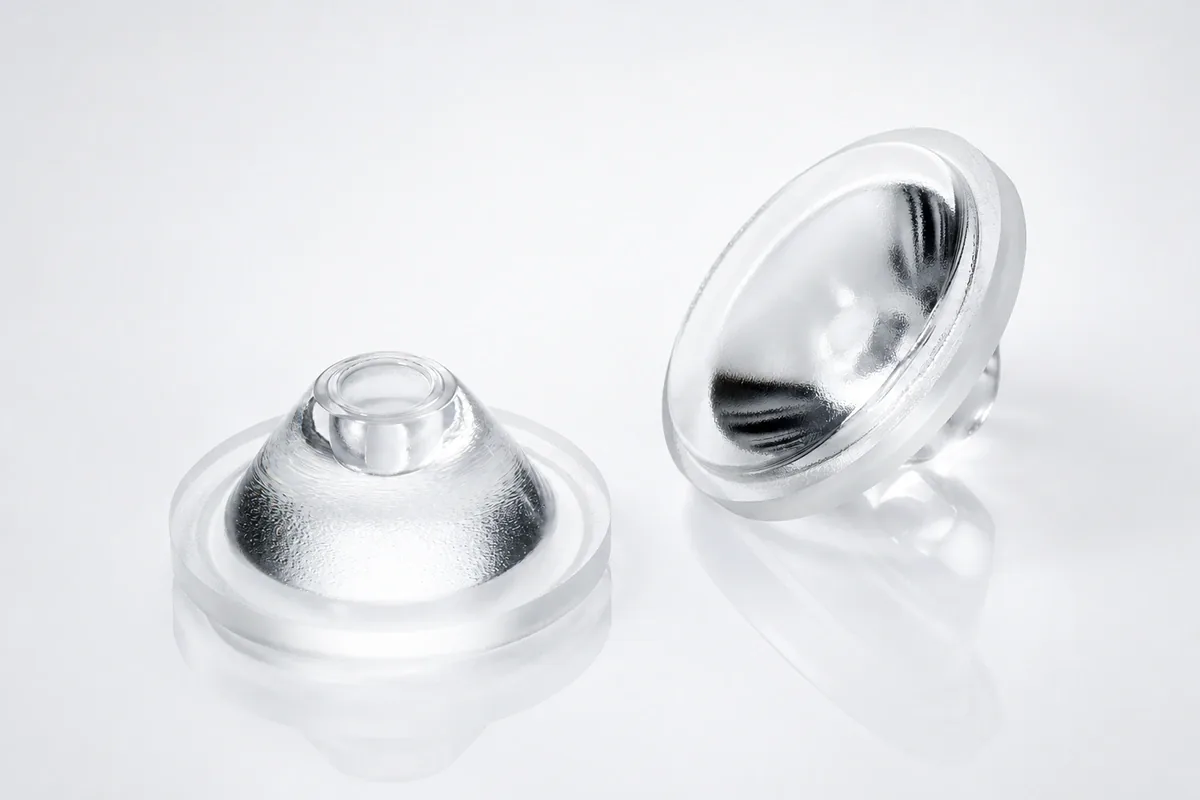
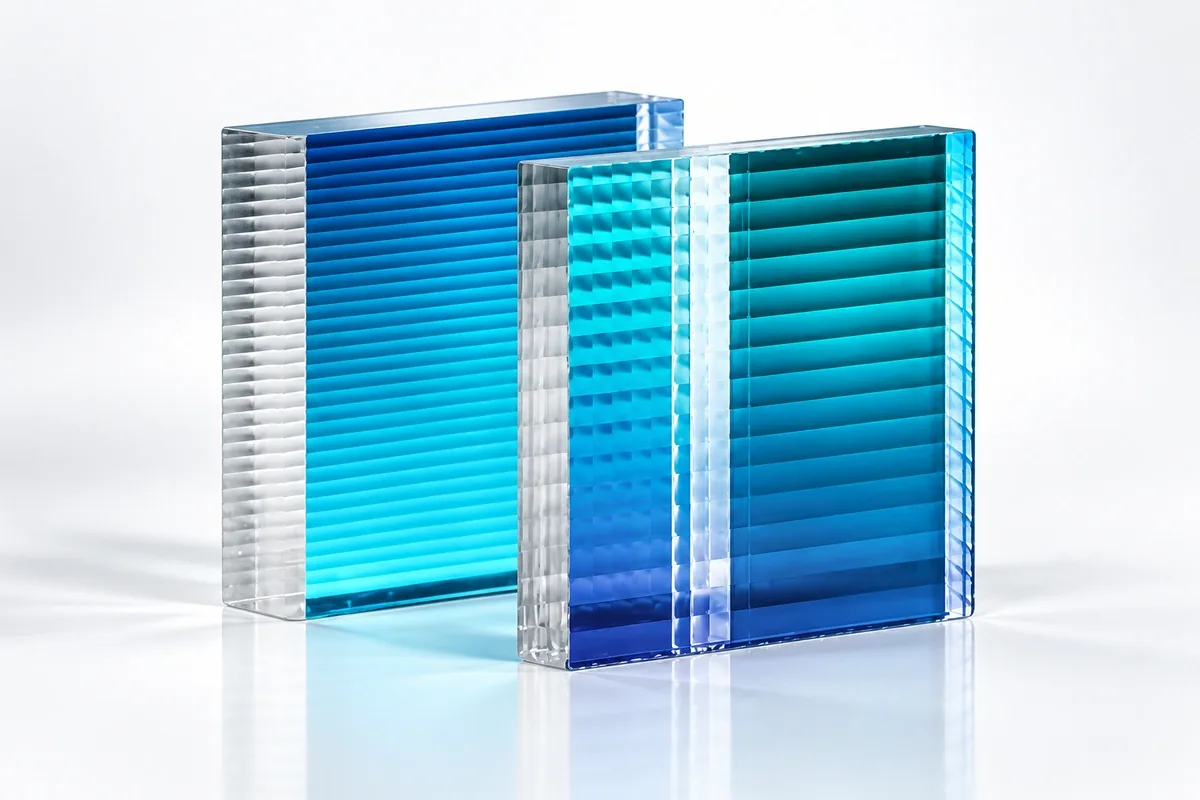
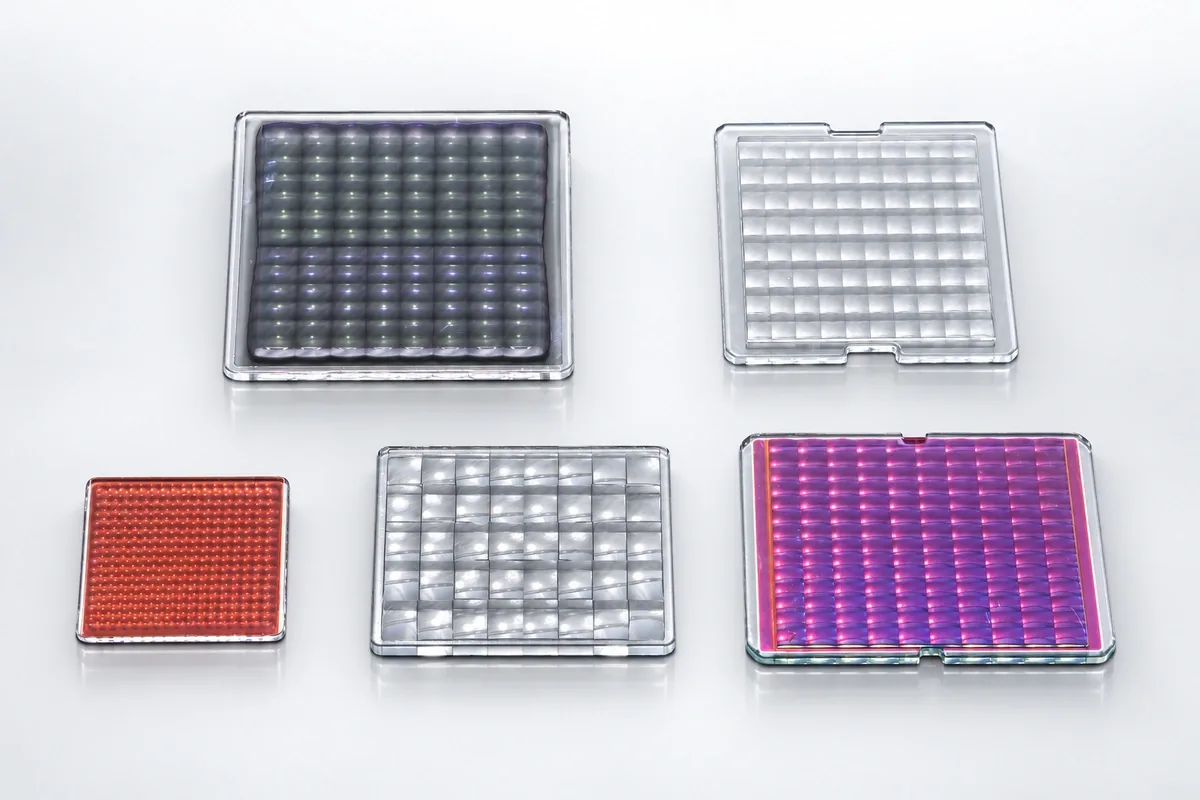
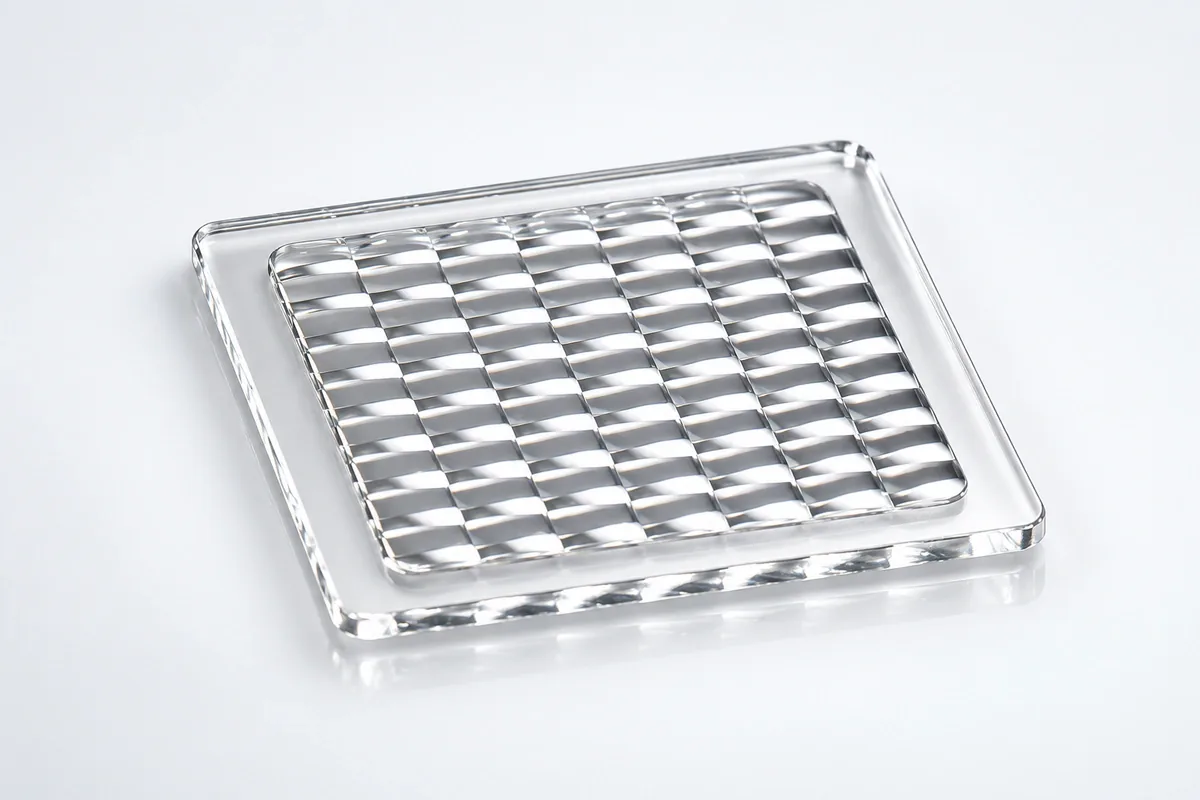
Custom Fly-Eye Glass Lenses
A fly-eye lens is a two-dimensional array of small lenslets used to divide and remix light. In an illumination system, the lenslets create multiple images of the source that overlap at a target or pupil plane, reducing hot spots and improving field uniformity.
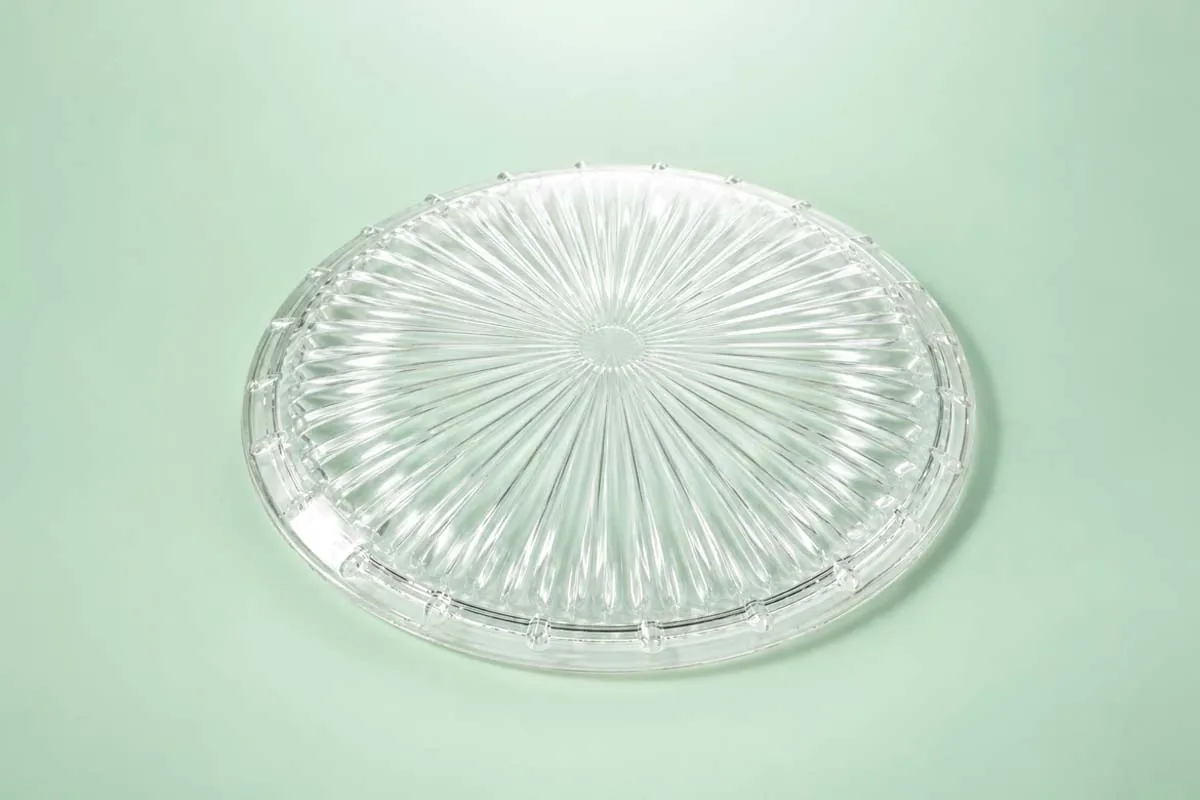
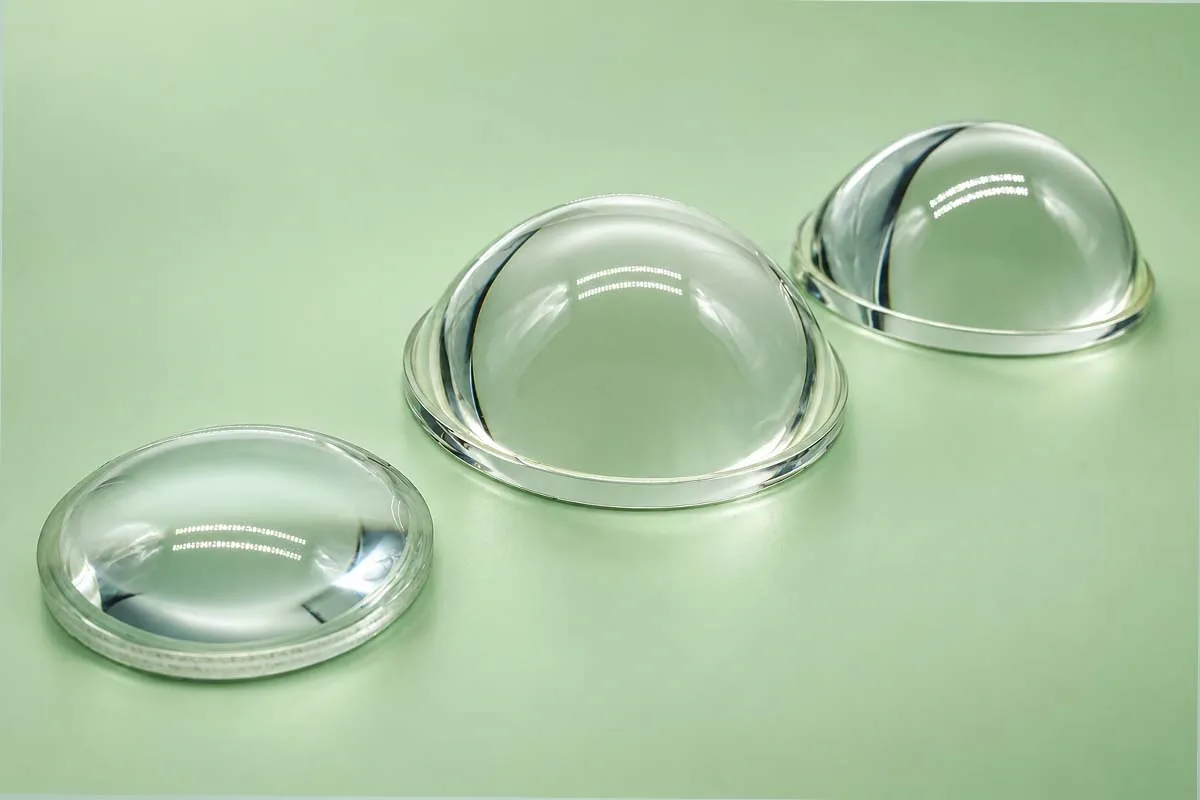
China Lampoptics has disclosed production experience with stage-light fly-eye glass. The array is defined by lenslet geometry, pitch, active area and its position relative to the source, condenser and target plane.
Specification note: Numerical ranges shown on this page are preliminary engineering references for project screening. The quotation and approved drawing define the final material, dimensions, tolerances, processing route and inspection method.
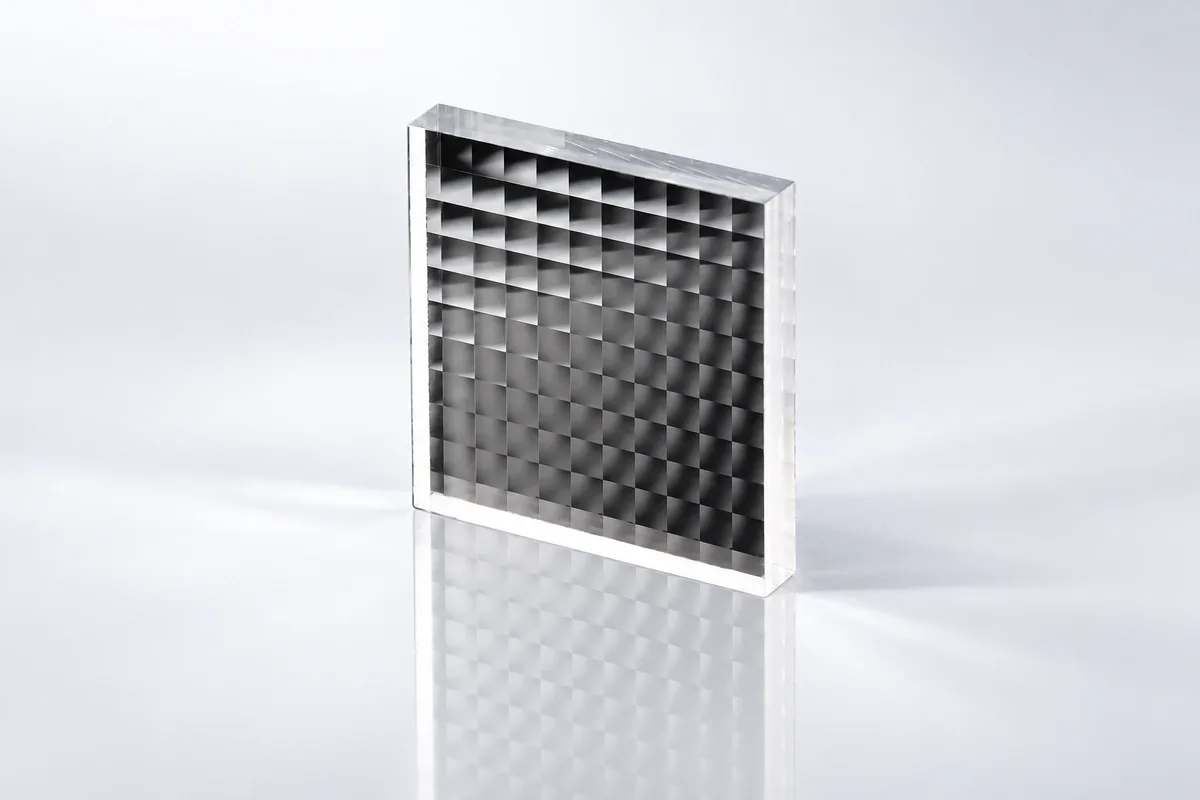
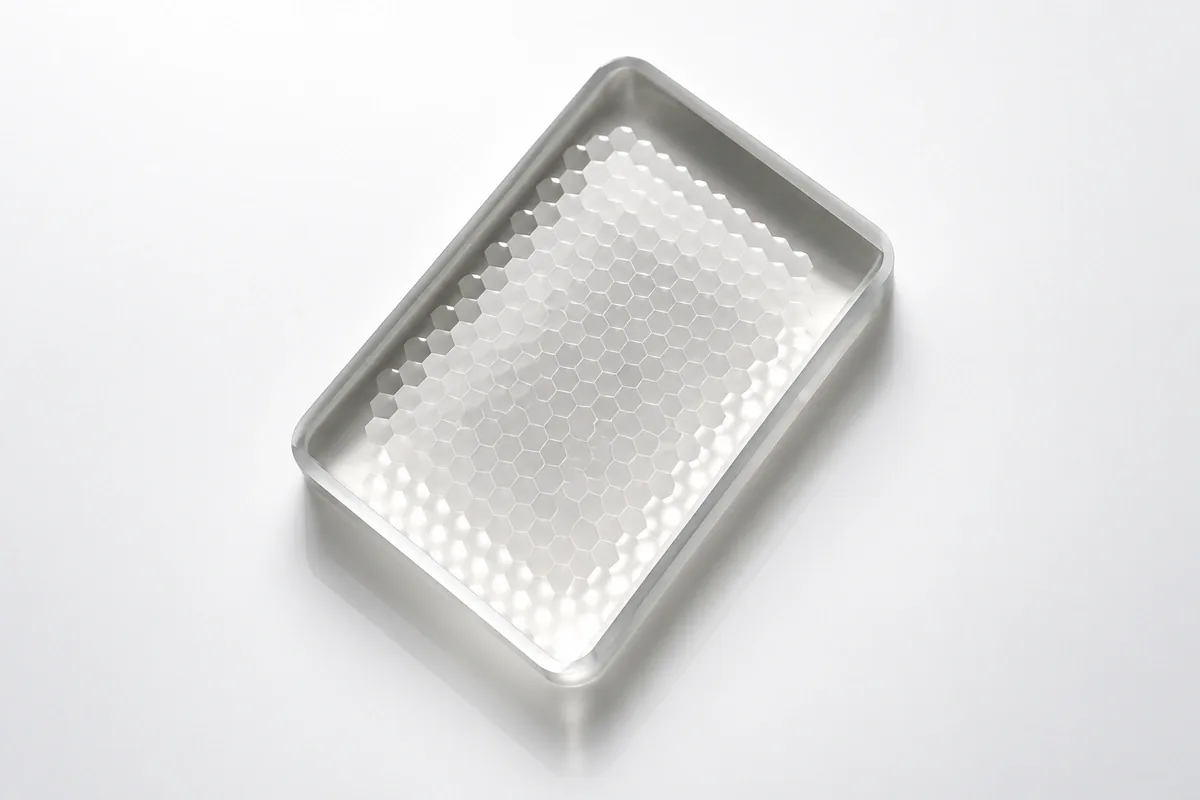
Fly-Eye Optical Function
- Source division: each lenslet samples a portion of the incoming beam
- Angular redistribution: lenslet focal power redirects each sampled portion
- Field overlap: a second array or condenser overlaps the sub-images
- Homogenized output: the target plane receives a more uniform illuminated field
Array Configurations
| Configuration | System role | Typical use |
|---|---|---|
| Single fly-eye array | Redistributes a source where the downstream optics complete the mixing | Compact lighting systems |
| Matched array pair | Controls both sampling and angular overlap | Projection and stage illumination |
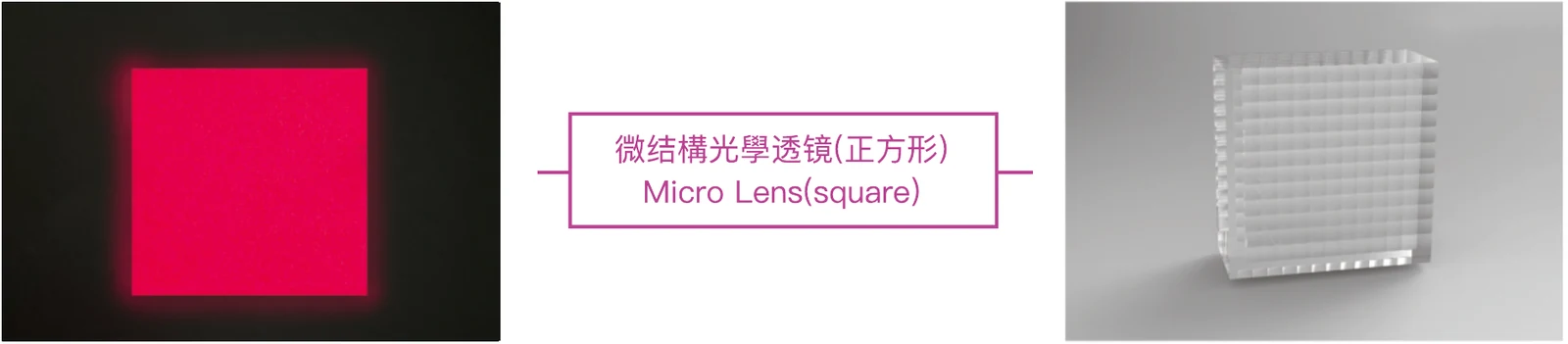
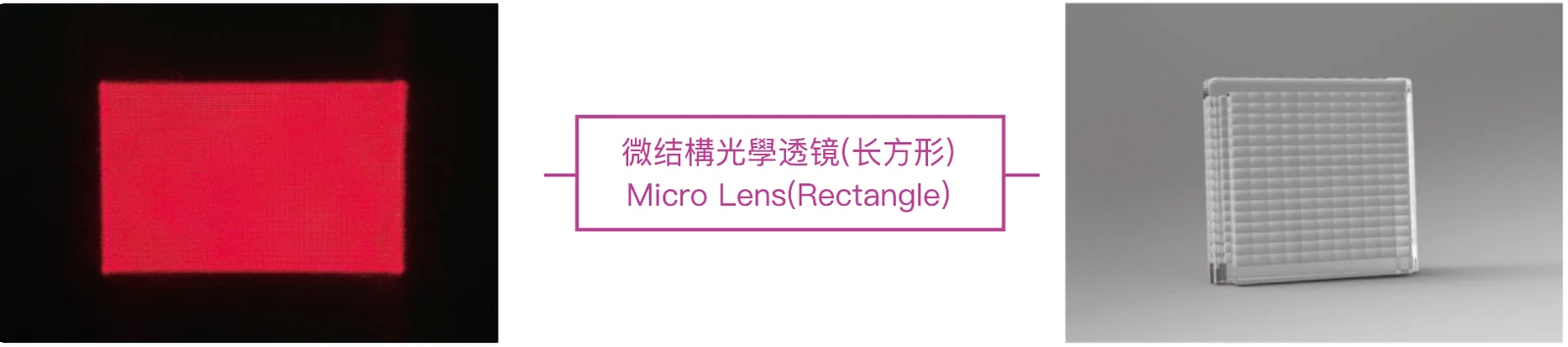
| Rectangular lenslet grid | Matches square or rectangular illuminated fields | Projectors and stage fixtures |
| Circular array | Fits a round optical barrel or beam | Spotlights and instruments |
| Cylindrical fly-eye array | Homogenizes mainly in one axis | Line and slit illumination |
Fly-Eye Lens Specifications
| Source size and divergence | Defined by the selected source and optical model |
|---|---|
| Lenslet aperture | Made to the approved drawing; production limit confirmed after tooling review |
| Pitch X / Y | Made to the approved drawing; production limit confirmed after tooling review |
| Lenslet sag / profile | Defined in the released optical prescription |
| Lenslet focal length | Defined in the released optical prescription |
| Active area | Confirmed after drawing, sample and process review |
| Substrate thickness | Made to the approved drawing; production limit confirmed after tooling review |
| Array-to-array spacing | Defined by the homogenizer system design |
| Target plane and field size | Specified measurement plane and usable field |
| Uniformity metric and limit | Agreed metric and acceptance limit for the target plane |
Uniformity must be measured at the specified plane and field size. A photograph taken at an arbitrary distance cannot replace a defined spatial-uniformity measurement.
Fused Silica Fly-Eye Lens Model Reference
Fused-silica fly-eye lenses are available in single-sided and double-sided array configurations for beam homogenization and illumination shaping. Reference models range from compact micro-optics to approximately 52 mm substrates. Array outlines include square, rectangular, circular and hexagonal forms.
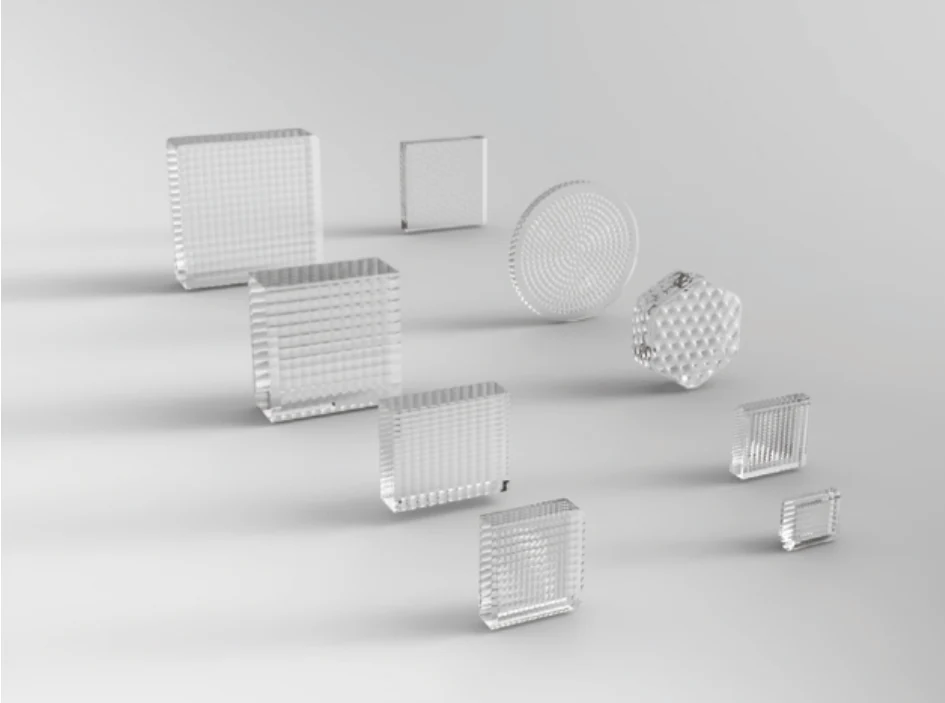
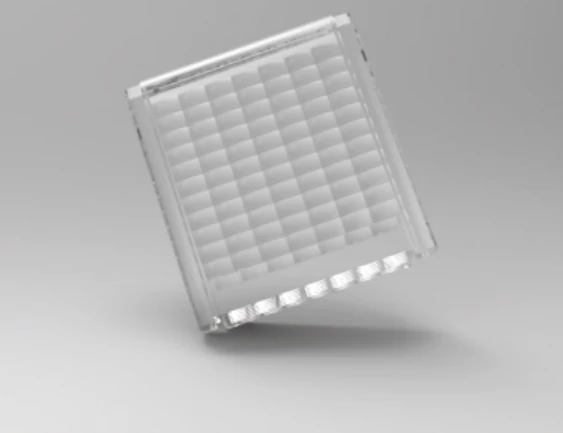
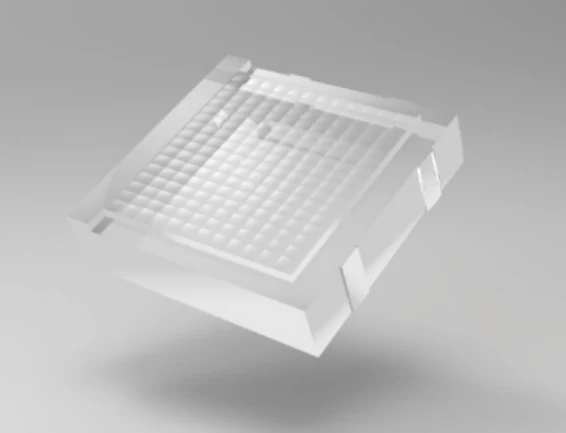
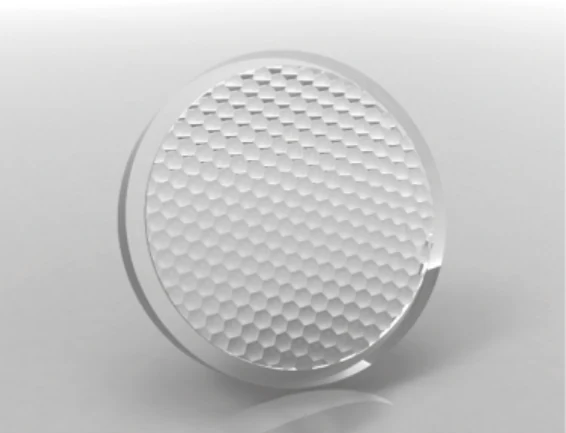
| Array configurations | Single-sided and double-sided lenslet arrays |
|---|---|
| Material wavelength reference | 193–3000 nm for the stated fused-silica material family; finished-part transmission depends on grade, thickness, surface and coating |
| Lenslet size and pitch | Fly-eye reference 0.2–5.0 mm; individual catalog models include pitches from 0.13 mm to 4.10 mm |
| Typical applications | Micro-projection, vehicle HUD illumination, 3D-printing optics, photolithography illumination, wavefront sensing, laser and LED beam homogenization |
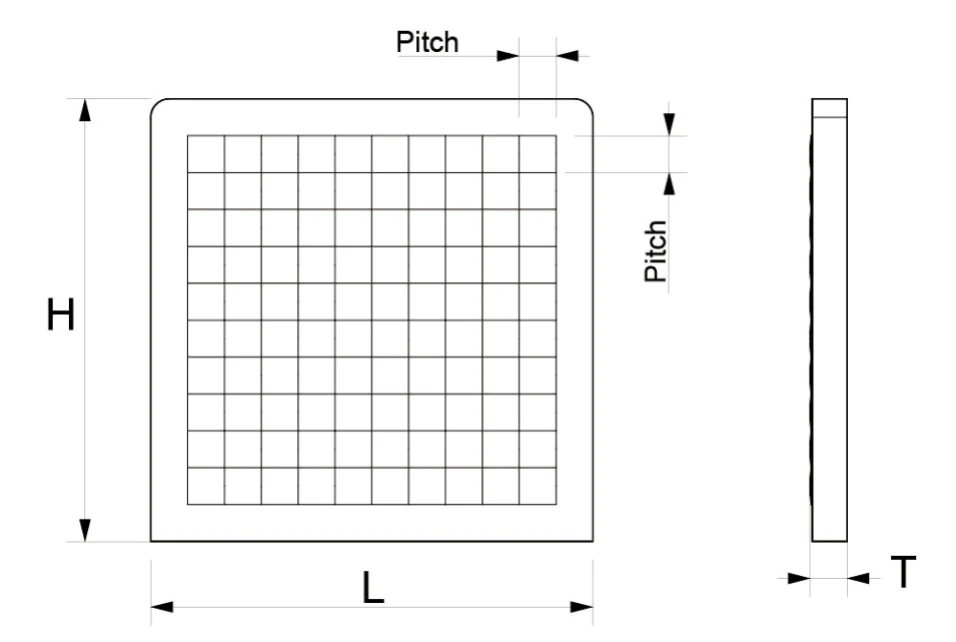
Table notes: Dimensions are in millimeters. Pitch describes lenslet spacing; BFL is back focal length. Model selection depends on the operating wavelength, source geometry and spacing within the optical system.
Double-sided fly-eye models (41)
| Model | L × H/Ø × T | Pitch | BFL | Optical surfaces |
|---|---|---|---|---|
| FE0505016D | 5.00 × 5.00 × 1.60 mm | 0.38 × 0.28 mm | 1.10 mm | Double |
| FE0606012D | 6.50 × 6.50 × 1.25 mm | 0.22 × 0.12 mm | 0.87 mm | Double |
| FE0808021D | 8.10 × 8.06 × 2.13 mm | 0.30 × 0.19 mm | 1.50 mm | Double |
| FE0808046D | 8.13 × 8.13 × 4.64 mm | 0.63 × 0.63 mm | 1.46 mm | Double |
| FE0808037D | 8.13 × 8.00 × 3.75 mm | 0.63 × 0.63 mm | 2.57 mm | Double |
| FE0908030D | 9.00 × 8.00 × 3.00 mm | 0.42 × 0.22 mm | 2.08 mm | Double |
| FE0908029D | 9.16 × 8.58 × 2.90 mm | 0.44 × 0.25 mm | 1.99 mm | Double |
| FE1010012D | 10.00 × 10.00 × 1.25 mm | 0.13 × 0.13 mm | 1.11 mm | Double |
| FE1109040D | 11.07 × 9.98 × 4.04 mm | 0.71 × 0.581 mm | 2.77 mm | Double |
| FE1110050D | 11.36 × 11.36 × 5.00 mm | 0.99 × 0.71 mm | 3.42 mm | Double |
| FE1110044D | 11.40 × 10.39 × 4.44 mm | 0.86 × 0.57 mm | 3.04 mm | Double |
| FE1212024D | 12.00 × 12.00 × 2.48 mm | 0.43 × 0.43 mm | 2.77 mm | Double |
| FE1412056D | 14.10 × 12.10 × 5.65 mm | 0.50 × 0.25 mm | 3.89 mm | Double |
| FE1515070D | 15.00 × 15.00 × 7.00 mm | 0.50 × 0.50 mm | 4.80 mm | Double |
| FE1514070E | 15.00 × 14.00 × 7.00 mm | 0.54 × 0.29 mm | −1.40 mm | Double |
| FE1616042D | 16.20 × 16.13 × 4.25 mm | 0.60 × 0.38 mm | 2.91 mm | Double |
| FE1616075D | 16.25 × 16.00 × 7.50 mm | 1.25 × 1.25 mm | 5.14 mm | Double |
| FE1717070D | 17.00 × 17.00 × 7.00 mm | 1.00 × 1.00 mm | 6.48 mm | Double |
| FE1716056D | 17.20 × 16.06 × 5.65 mm | 1.46 × 0.86 mm | 3.87 mm | Double |
| FE2020025D | 20.00 × 20.00 × 2.50 mm | 0.25 × 0.25 mm | 2.26 mm | Double |
| FE2019053D | 20.15 × 19.80 × 5.36 mm | 1.32 × 0.66 mm | 3.69 mm | Double |
| FE2014094D | 20.33 × 14.95 × 9.49 mm | 1.07 × 0.61 mm | 6.50 mm | Double |
| FE2020082D | 20.50 × 20.50 × 8.25 mm | 4.10 × 4.10 mm | 14.00 mm | Double |
| FE2222076D | 22.50 × 22.50 × 7.60 mm | 1.25 × 1.25 mm | 5.21 mm | Double |
| FE2424044D | 24.00 × 24.00 × 4.45 mm | 0.25 × 0.25 mm | 3.08 mm | Double |
| FE2424053D | 24.00 × 24.00 × 5.30 mm | 0.25 × 0.25 mm | 3.65 mm | Double |
| FE2424065D | 24.01 × 24.01 × 6.50 mm | 0.86 × 0.86 mm | 4.63 mm | Double |
| FE2424065BD | 24.01 × 24.01 × 6.50 mm | 0.86 × 0.86 mm | 4.96 mm | Double |
| FE2424049D | 24.01 × 24.01 × 4.95 mm | 0.86 × 0.86 mm | 3.38 mm | Double |
| FE2620036D | 26.51 × 20.45 × 3.69 mm | 1.08 × 0.74 mm | 7.09 mm | Double |
| FE2828065D | 28.50 × 28.50 × 6.50 mm | 1.50 × 1.50 mm | 4.46 mm | Double |
| FE3030044D | 30.00 × 30.00 × 4.45 mm | 0.25 × 0.25 mm | 3.08 mm | Double |
| FE3030053D | 30.00 × 30.00 × 5.30 mm | 0.25 × 0.25 mm | 3.65 mm | Double |
| FE3030140D | 30.00 × 30.00 × 14.00 mm | 1.00 × 1.00 mm | 9.59 mm | Double |
| FE3232080E | 32.00 × 32.00 × 8.00 mm | 1.00 × 1.00 mm | −0.83 mm | Double |
| FE3232084D | 32.40 × 32.25 × 8.49 mm | 1.20 × 0.75 mm | 5.82 mm | Double |
| FE3232015D | 32.50 × 32.50 × 15.00 mm | 2.50 × 2.50 mm | 10.28 mm | Double |
| FE3330085E | 33.00 × 30.00 × 8.50 mm | 2.30 mm | 25.59 mm | Double |
| FE3434140D | 34.00 × 34.00 × 14.00 mm | 1.00 × 1.00 mm | 9.59 mm | Double |
| FE3430082E | 34.00 × 30.00 × 8.20 mm | 0.75 × 0.75 mm | 9.19 mm | Double |
| FE5050099D | 50.93 × 50.62 × 9.95 mm | 1.16 × 1.10 mm | 6.82 mm | Double |
Single-sided fly-eye models (22)
| Model | L × H/Ø × T | Pitch | BFL | Optical surfaces |
|---|---|---|---|---|
| FE0808010S | 8.00 × 8.00 × 1.00 mm | 0.50 × 0.50 mm | 14.98 mm | Single |
| FE0908010S | 9.00 × 8.00 × 3.00 mm | 0.48 × 0.30 mm | 2.12 mm | Single |
| FE0908030S | 9.00 × 8.80 × 3.00 mm | 1.00 × 0.40 mm | 9.30 mm | Single |
| FE1010010S | 10.00 × 10.00 × 1.00 mm | 0.13 × 0.13 mm | 1.76 mm | Single |
| FE1111010S | 11.00 × 10.88 × 1.00 mm | 0.70 × 0.48 mm | 2.33 mm | Single |
| FE1111010S | 11.80 × 11.80 × 1.00 mm | 1.73 mm | 8.86 mm | Single |
| FE1212010S | 12.00 × 12.00 × 1.00 mm | 0.13 × 0.13 mm | 1.76 mm | Single |
| FE1212010S | 12.50 × 12.50 × 1.00 mm | 0.40 mm | 3.02 mm | Single |
| FE1716050S | 17.10 × 16.93 × 5.00 mm | 0.68 × 0.43 mm | 2.74 mm | Single |
| FE1717010S | 17.24 × 17.22 × 1.00 mm | 1.51 × 0.51 mm | 8.37 mm | Single |
| FE1817010S | 18.72 × 17.05 × 1.00 mm | 0.79 × 0.39 mm | 2.92 mm | Single |
| FE2014010S | 20.53 × 14.60 × 1.00 mm | 1.09 × 0.60 mm | 4.77 mm | Single |
| FE2011010S | 20.70 × 11.60 × 1.00 mm | 0.85 × 0.60 mm | 5.70 mm | Single |
| FE24240010AS | 24.01 × 24.01 × 1.00 mm | 0.86 × 0.86 mm | 5.93 mm | Single |
| FE24240040BS | 24.01 × 24.01 × 4.00 mm | 0.86 × 0.86 mm | 3.60 mm | Single |
| FE3030010S | 30.00 × 30.00 × 1.00 mm | 1.00 × 1.00 mm | 10.47 mm | Single |
| FE3232020S | 32.50 × 32.50 × 2.00 mm | 1.30 × 1.30 mm | 17.44 mm | Single |
| FE4141020S | 41.00 × 41.00 × 2.00 mm | 4.10 × 4.10 mm | 14.00 mm | Single |
| FE4747020S | 47.00 × 47.00 × 2.00 mm | 3.20 × 1.30 mm | 5.81 mm | Single |
| FE5050020S | 50.93 × 50.62 × 2.00 mm | 1.12 × 1.60 mm | 7.00 mm | Single |
| FE5252020S | 52.00 × 52.00 × 2.00 mm | 4.00 × 4.00 mm | 16.86 mm | Single |
| FE0012021S | Ø12.3 × 2.15 mm | 0.65 mm | 1.65 mm | Single |
Tooling and Production Route
Lampoptics' optical-lens and mold workshops can develop array tooling from the optical prescription and mechanical drawing. Molding must control every local lenslet while maintaining global pitch, array form and the mounting datum.
Lenslet size, pitch, focal tolerance, array envelope and the uniformity acceptance method are confirmed during optical and tooling review.
Fly-Eye Glass Lens Processing
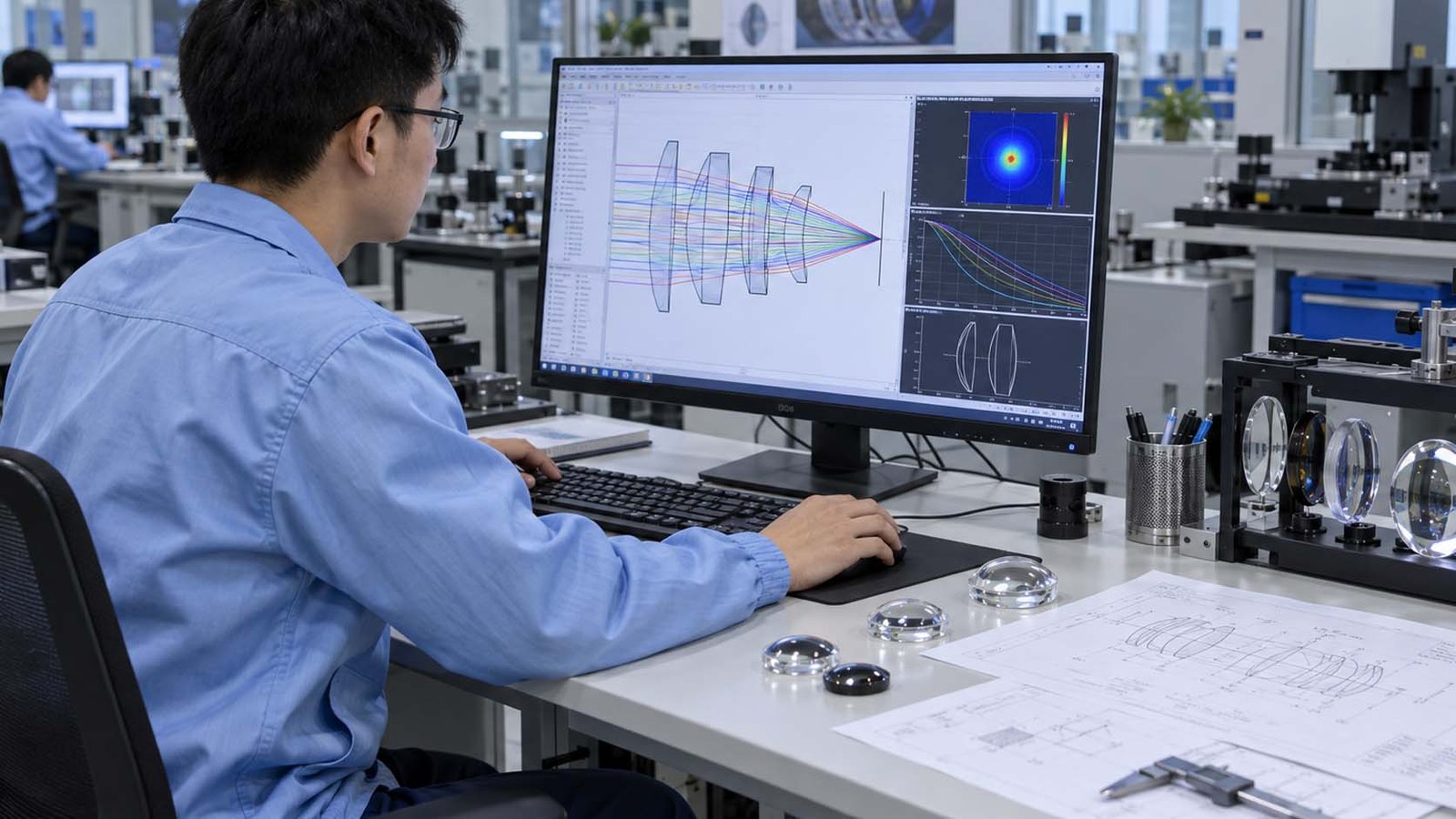
Lenslet Pattern Design
Lenslet pitch, curvature, orientation and array pairing are defined around the required homogenization performance.
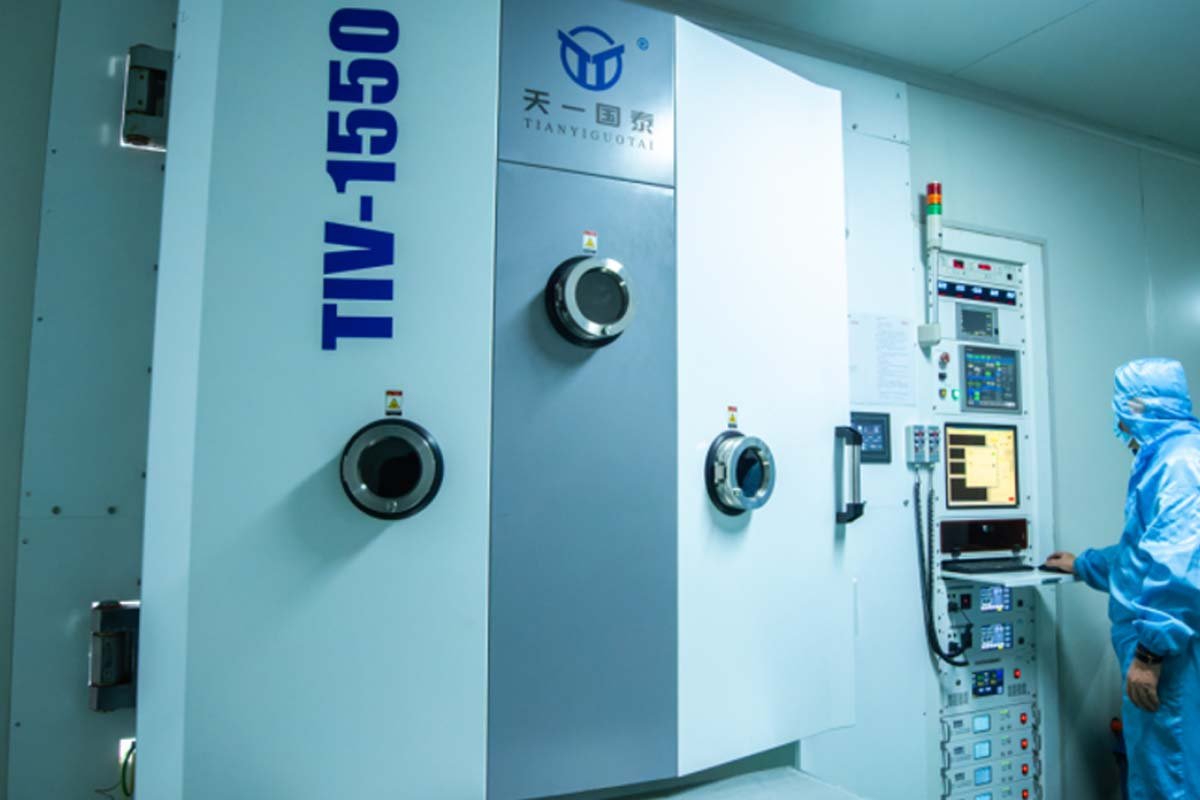
Array Tooling
The repeated fly-eye structure is transferred into tooling while maintaining registration across the active area.

Precision Molding
The full array is molded in glass with controlled lenslet fill, wall distribution and annealing.

Uniformity Inspection
The lenslet pattern, alignment and illuminated field uniformity are checked with the intended optical arrangement.
Applications
- Stage and entertainment lighting: homogenized beams and color mixing
- Projection systems: uniform illumination of a spatial light modulator or image plane
- Laser and LED illumination: reduction of source structure at a defined target
- Inspection and machine vision: uniform fields for repeatable imaging
- Optical instruments: beam integration and pupil shaping
Fly-Eye Glass Lens FAQs
Is a fly-eye lens the same as any lens array?
A fly-eye lens is a lens array specifically used to divide and homogenize an illumination field.
Does the system need two arrays?
Many homogenizers use a matched pair, but some systems combine one array with other condenser optics. The configuration is defined by the optical design.
Which dimensions affect uniformity?
Lenslet pitch, aperture, focal length, array spacing, source size and target distance all affect the result.
Can Lampoptics make custom fly-eye arrays?
Lampoptics produces stage-light fly-eye glass. Custom pitch, lenslet profile and array envelope are reviewed against the supplied optical design.
How should uniformity be approved?
Define the source, drive condition, target plane, field size, sampling grid and numerical uniformity limit.