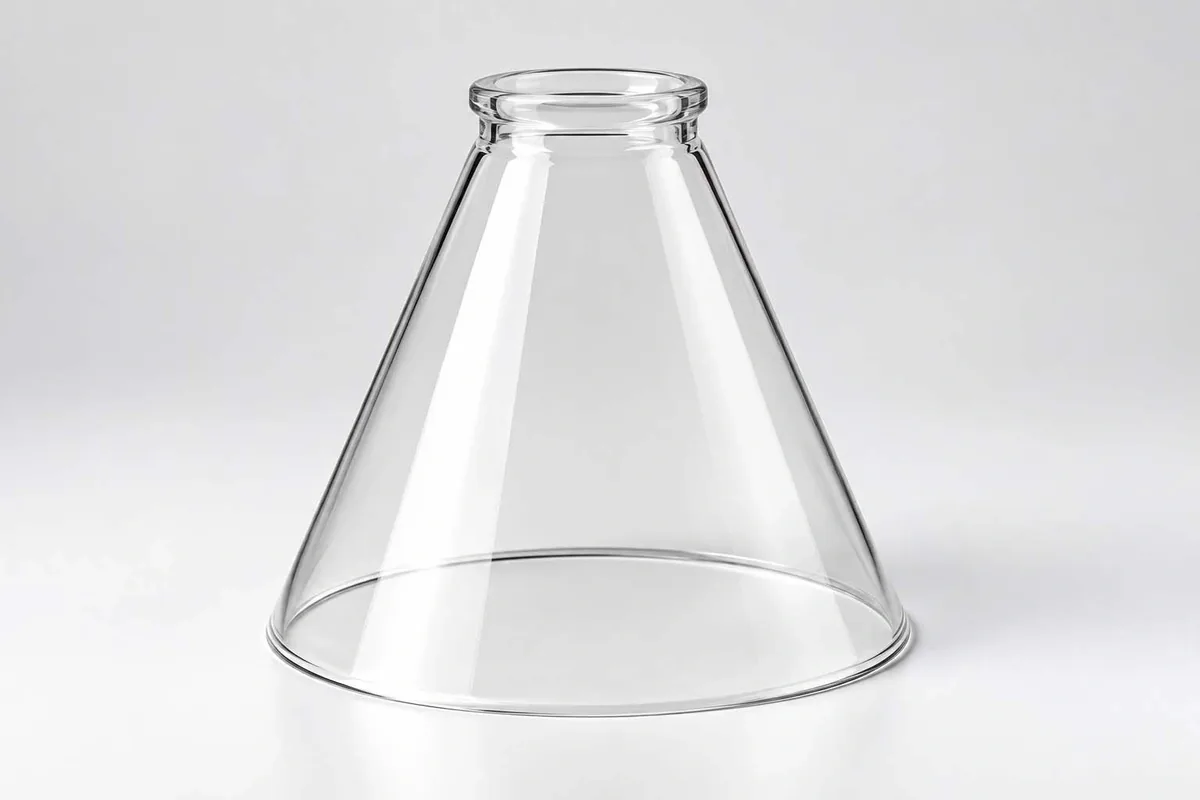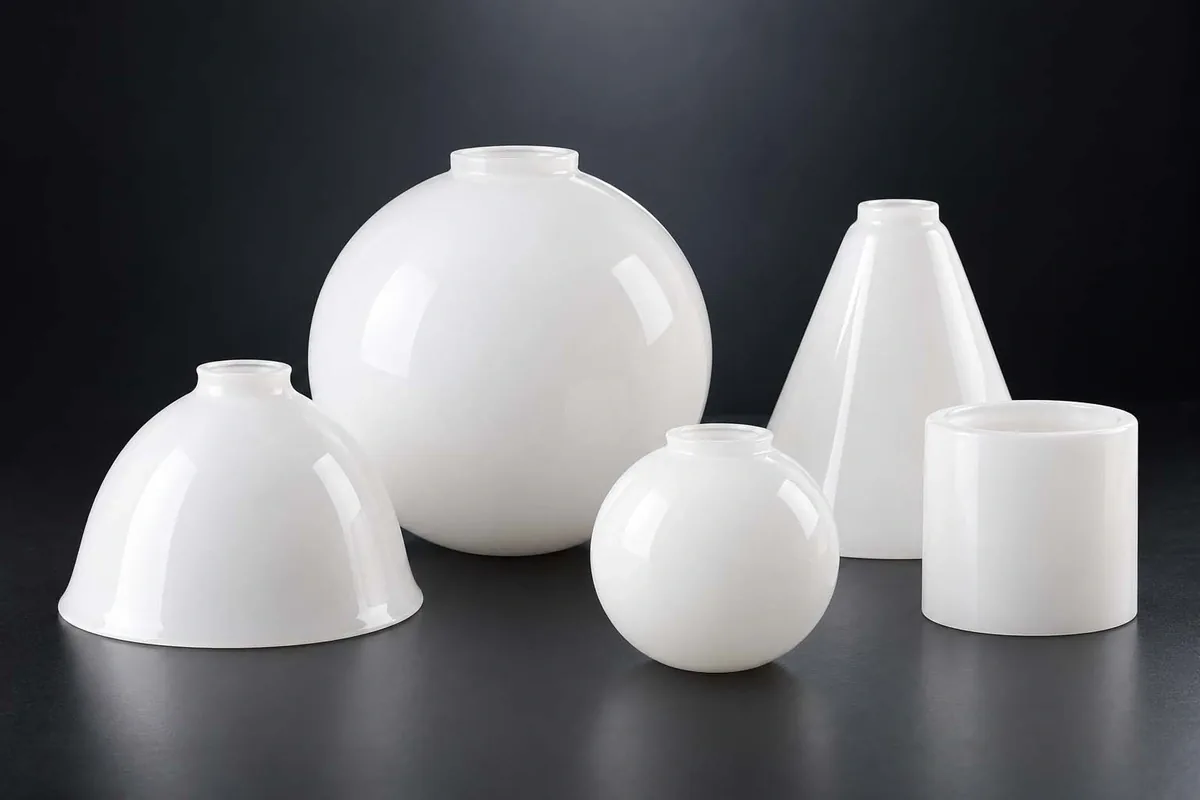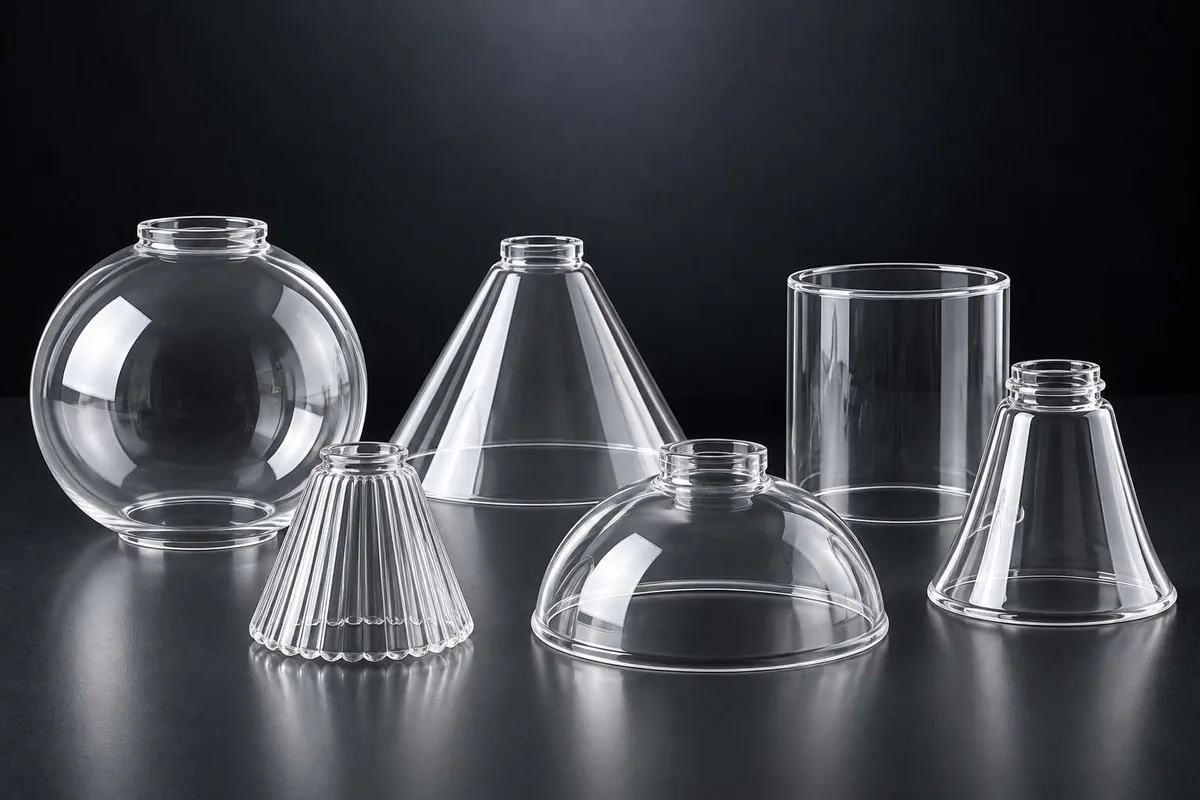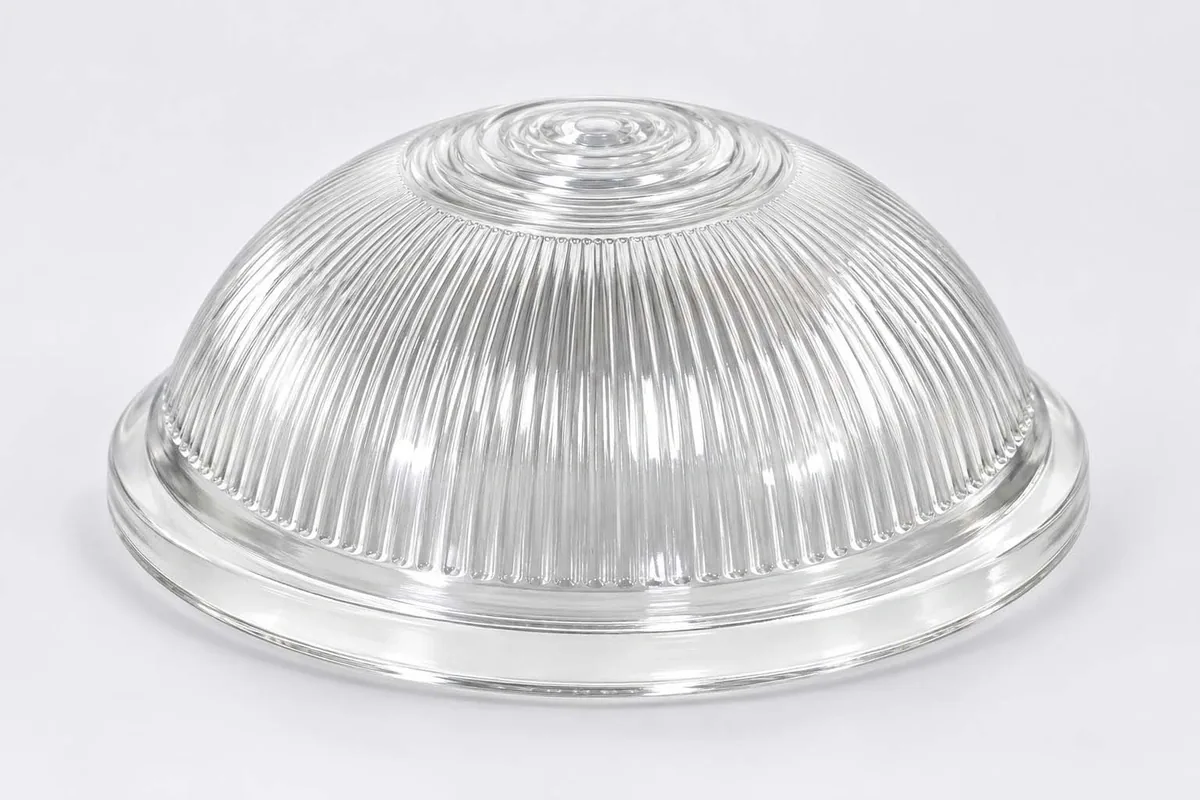
Custom Pressed Glass Components
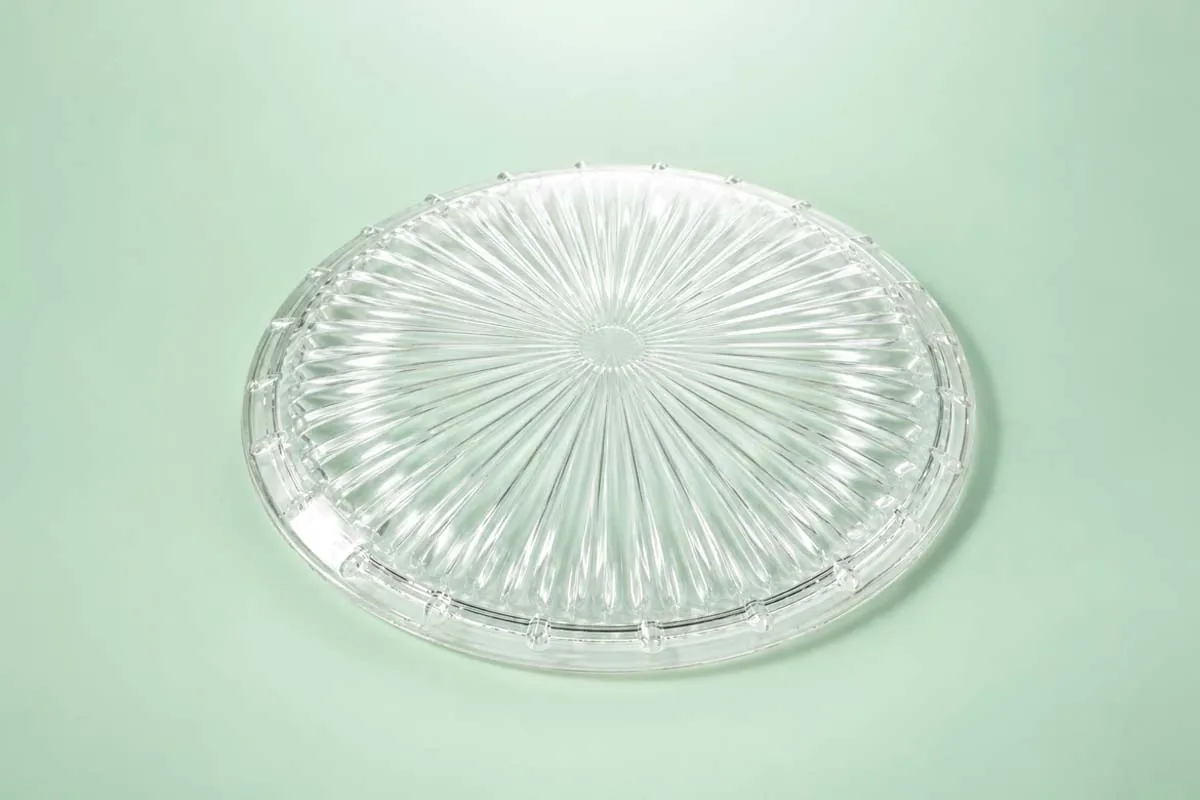
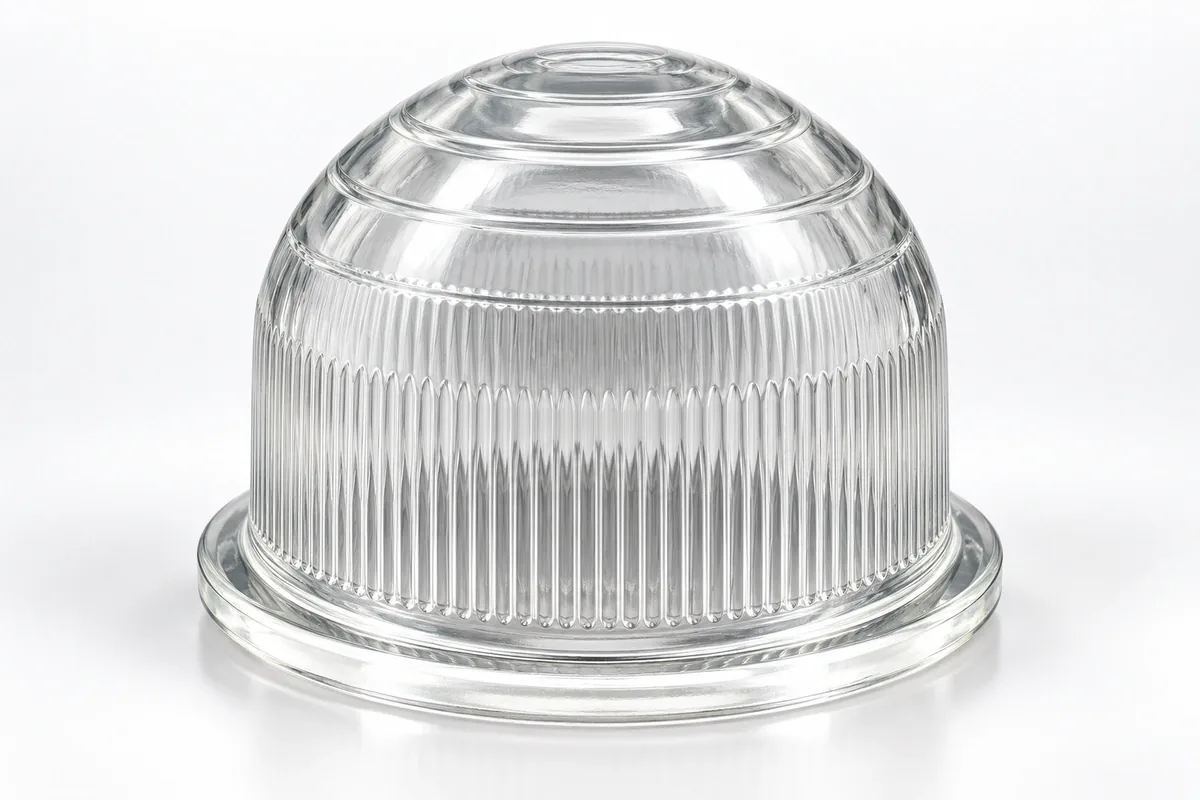
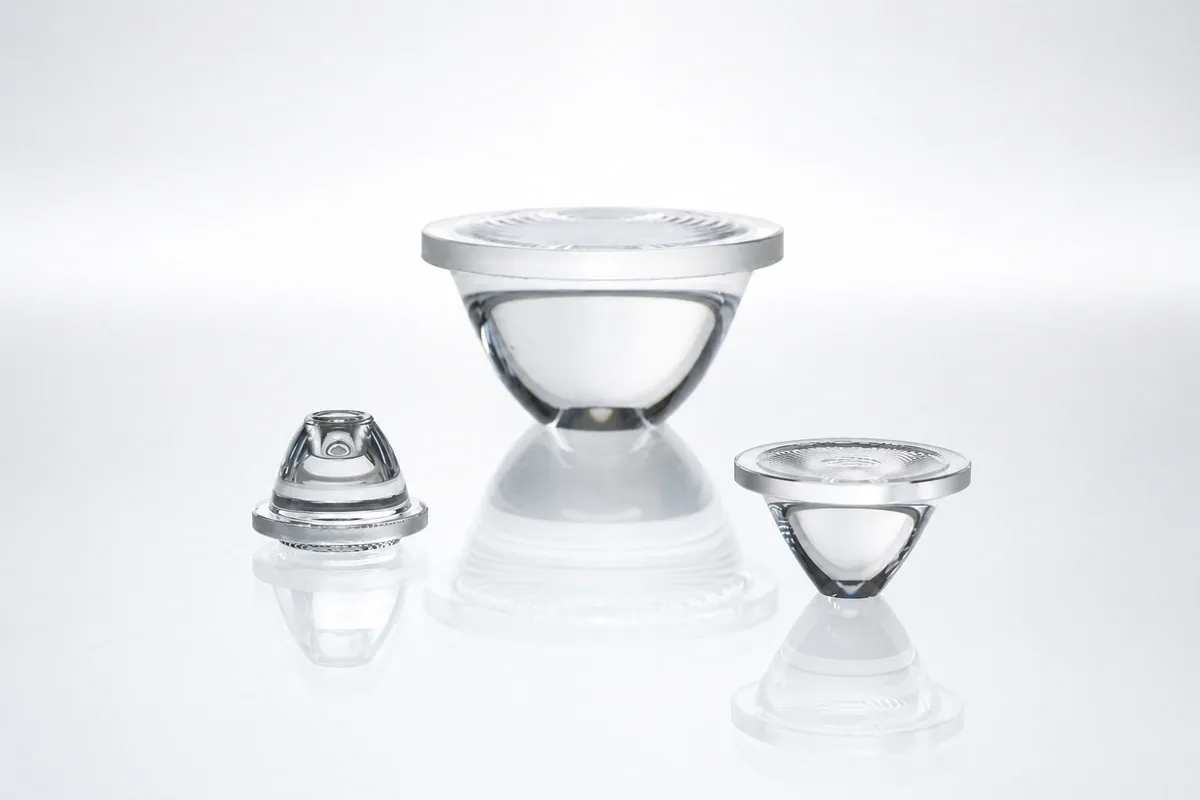
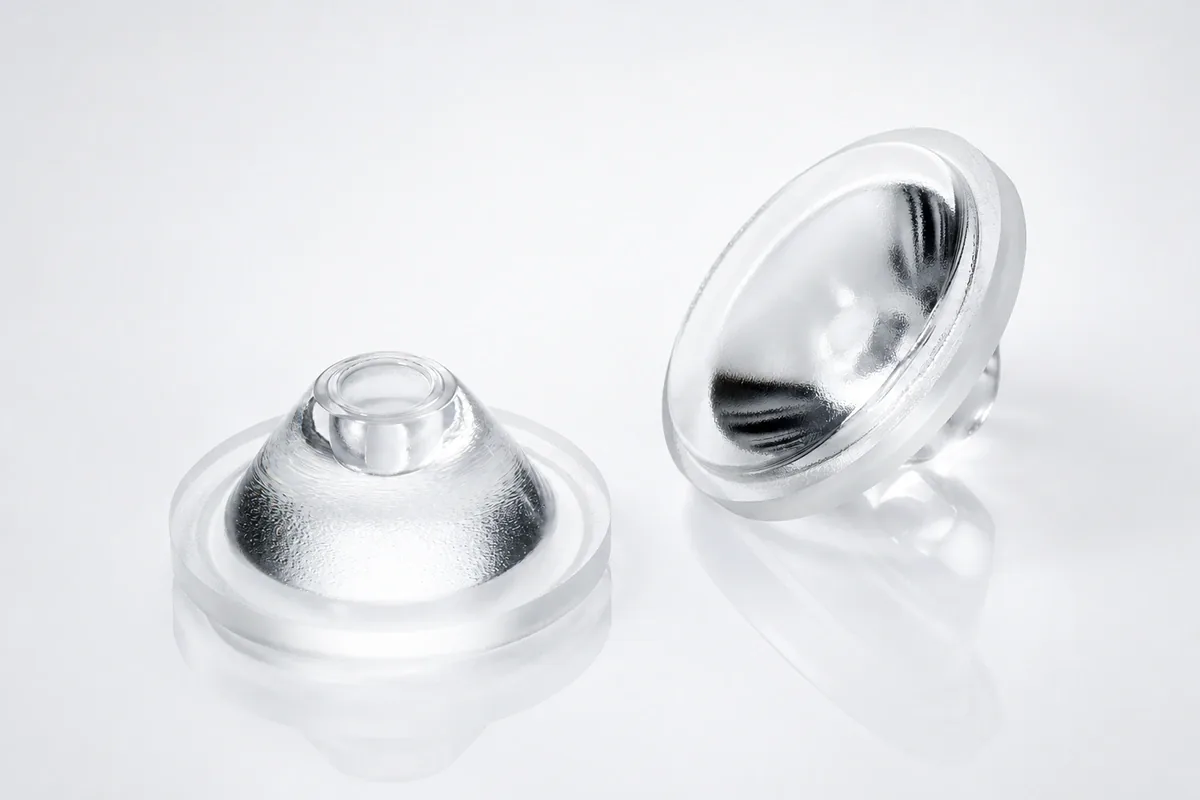
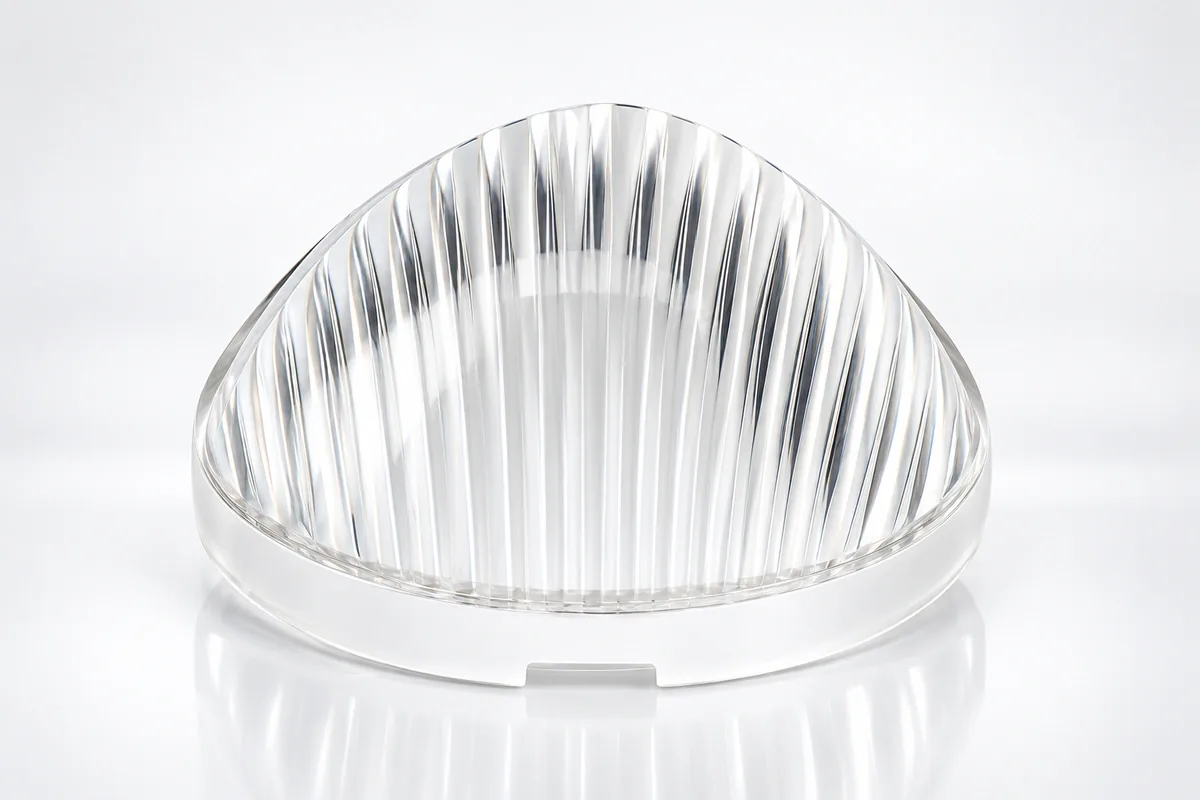
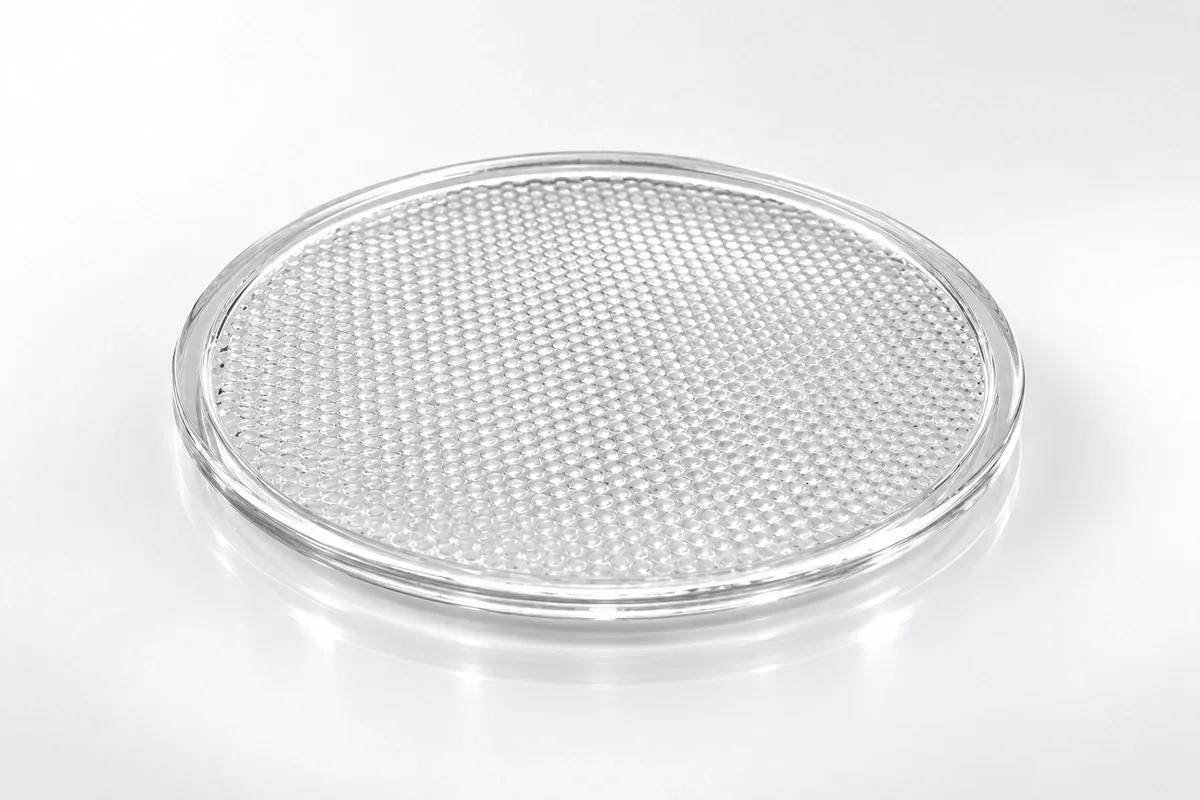
Pressed glass components are formed between precision mold surfaces while the glass is hot. The process can integrate optical surfaces, ribs, prisms, bosses, flanges, seats, textures and other functional geometry into one repeatable part.
China Lampoptics is a medium-sized manufacturer specializing in pressed glass. Product experience includes automotive and motorcycle lamp glass, stage-light fly-eye glass, spotlight and fog-lamp glass, convex lenses, condenser lenses and other molded components.
Specification note: Numerical ranges shown on this page are preliminary engineering references for project screening. The quotation and approved drawing define the final material, dimensions, tolerances, processing route and inspection method.
Pressed Component Families
| Component family | Molded function | Typical use |
|---|---|---|
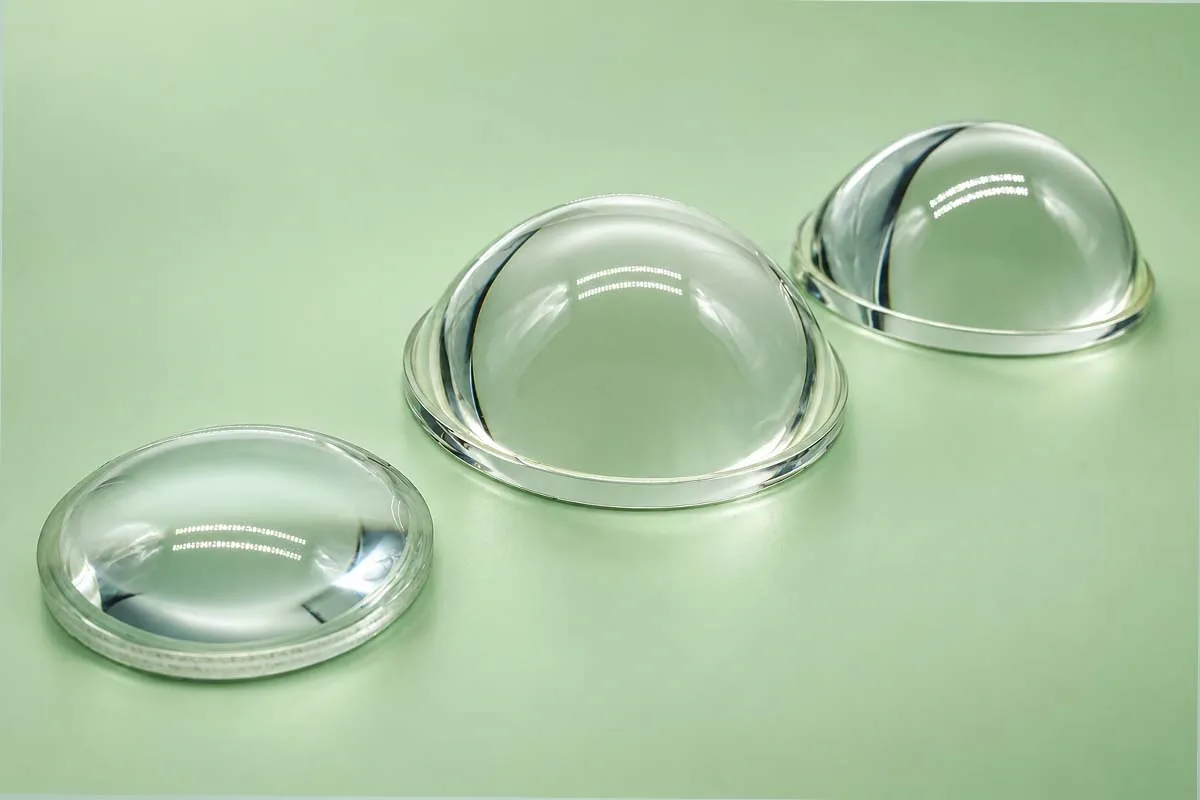
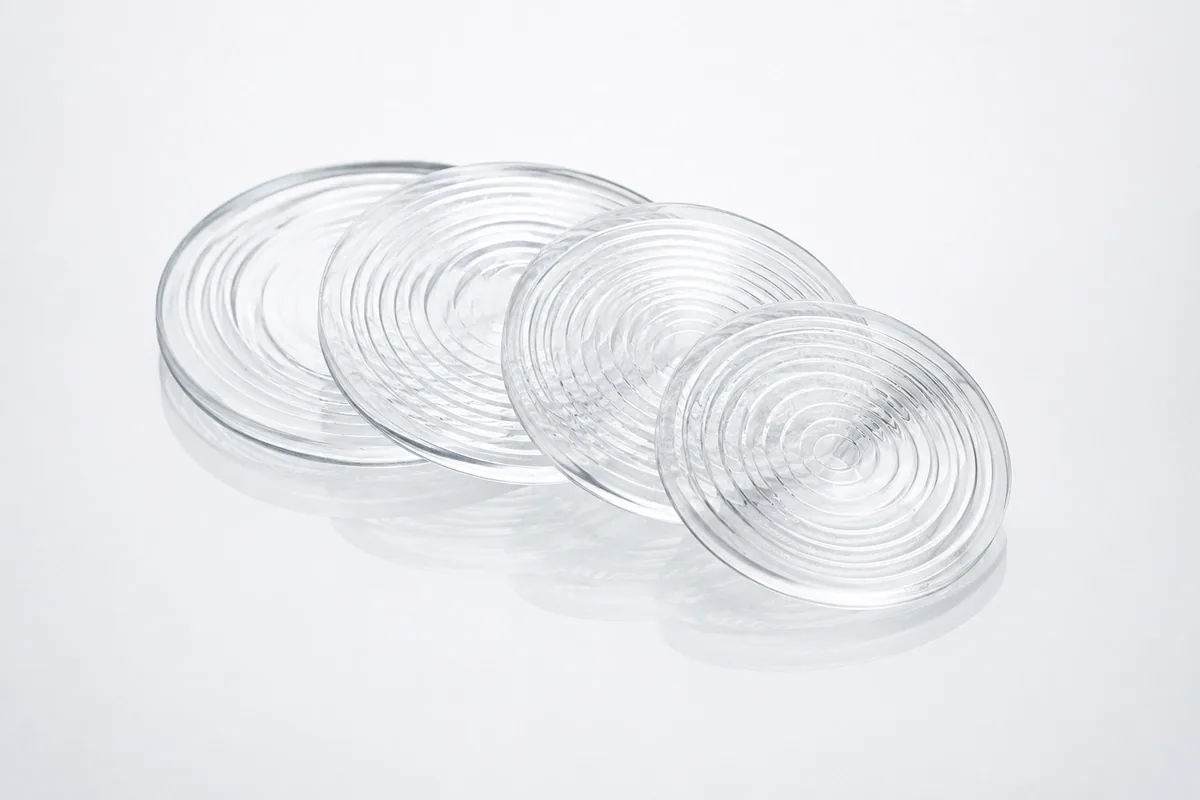
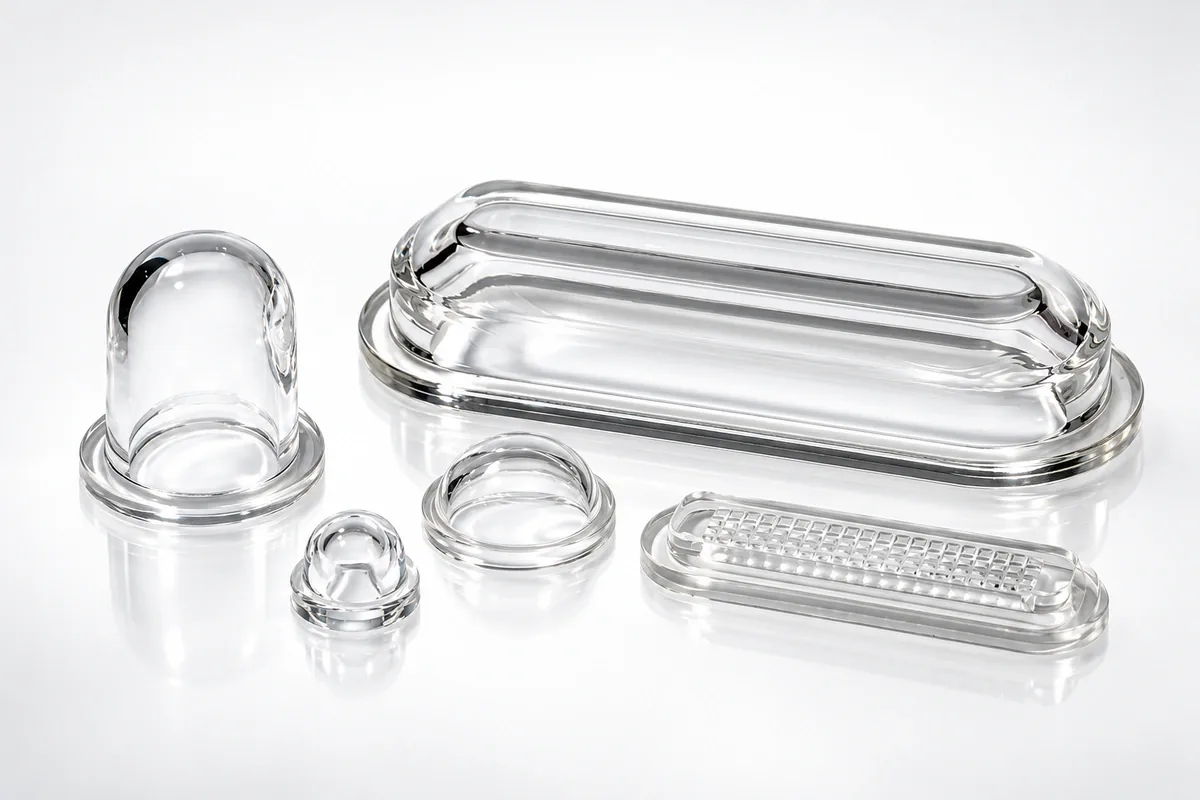
| Lighting lens | Convex, condenser, Fresnel, TIR or textured optical surface | Vehicle, stage, spotlight and industrial lighting |
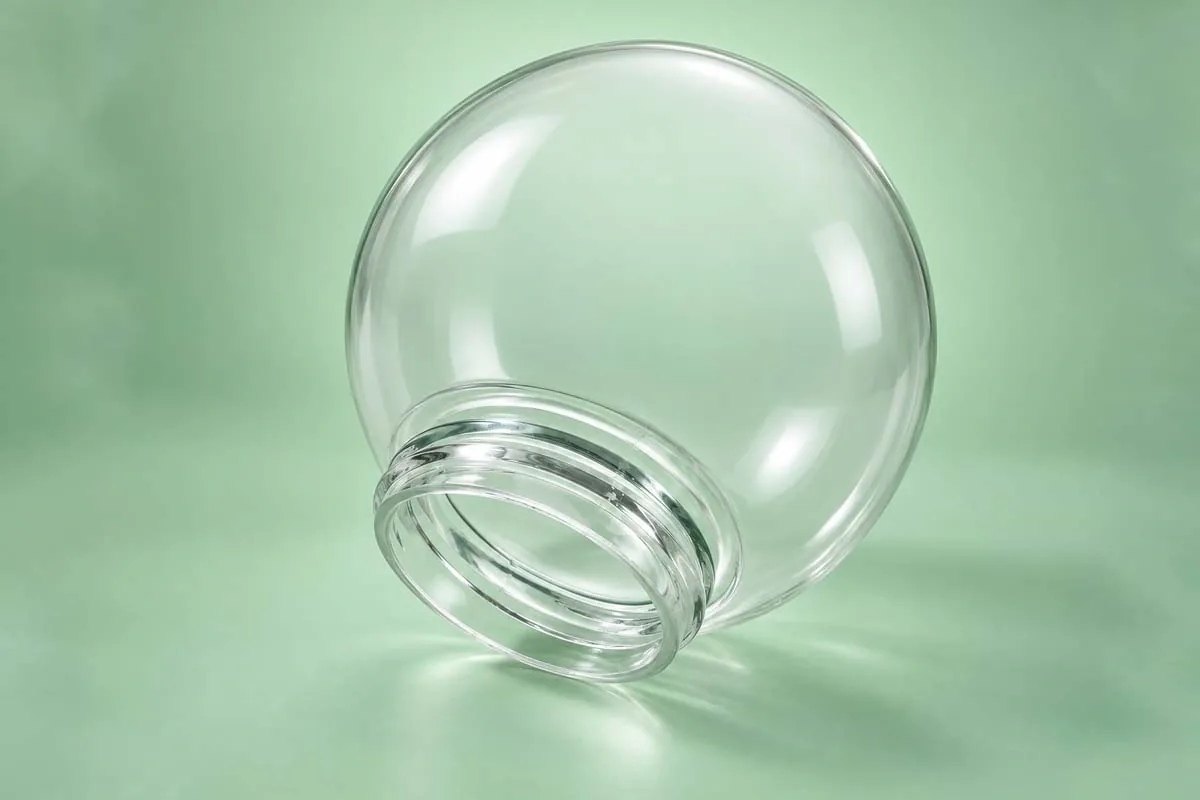
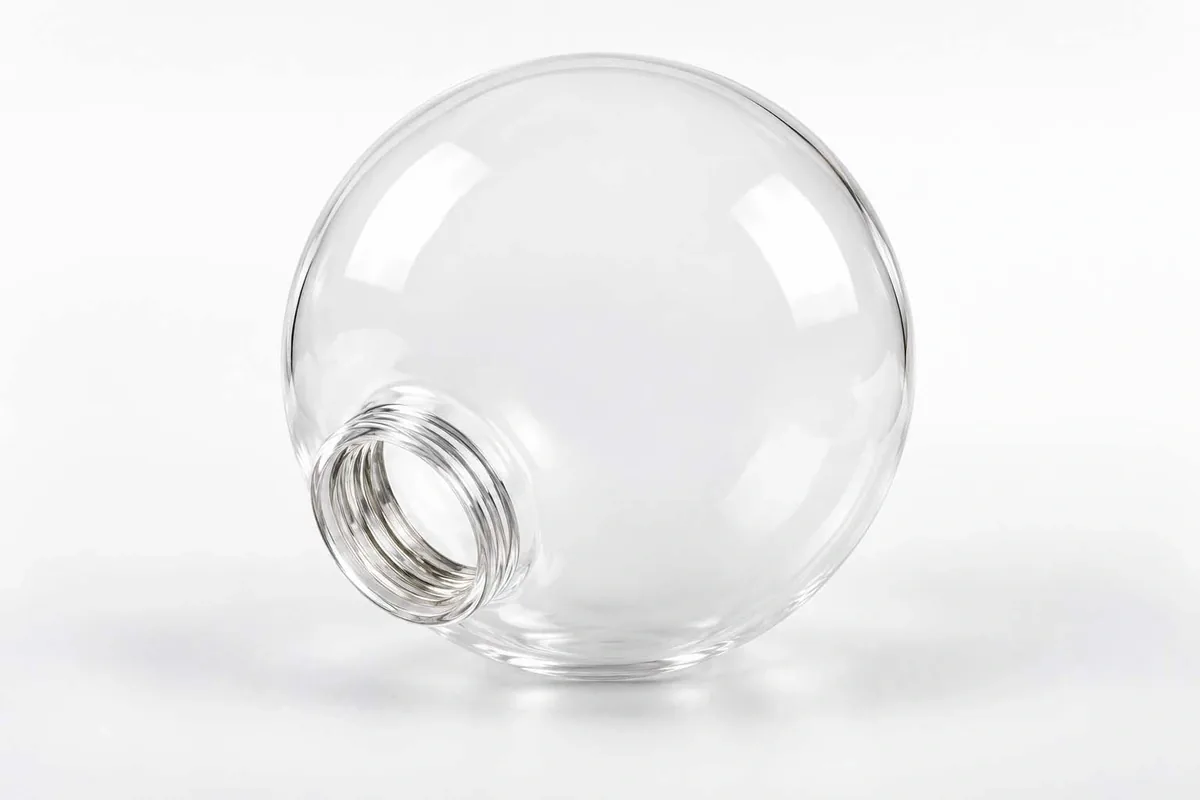
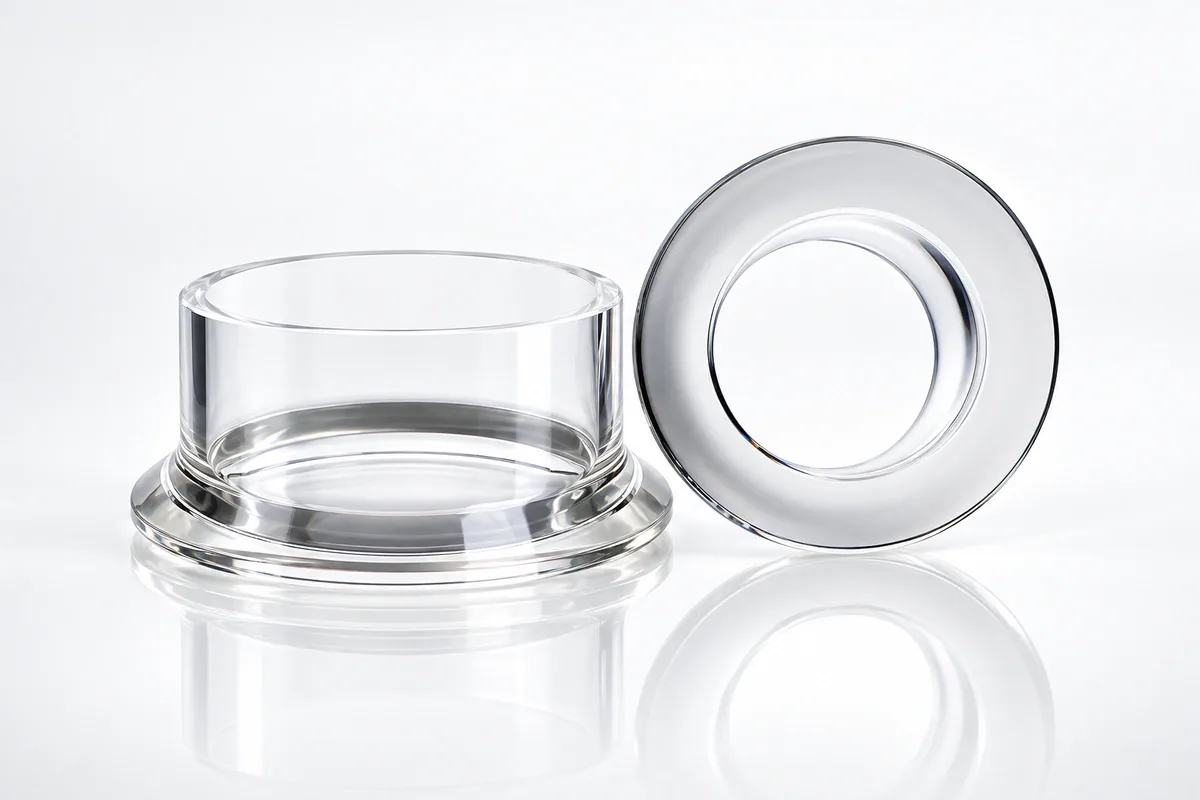
| Lamp cover | Clear, ribbed, prismatic or diffusing protective body | Outdoor, vehicle and equipment fixtures |
| Technical window | Flat, stepped, domed or featured viewing surface | Meters, instruments and machinery |
| Control or decorative part | Knob, indicator, logo or textured molded shape | Appliances, interiors and equipment |
| Project-specific component | Multiple optical and mechanical features combined | OEM assemblies developed from drawings or samples |
Part and Tooling Specifications
| Glass material | Selected for the application and confirmed with the quotation and material data |
|---|---|
| Part envelope | Preliminary diameter envelope Ø40–400 mm; larger or non-round parts require separate press and tooling review |
| Part weight | Made to the approved drawing; production limit confirmed after tooling review |
| Minimum / nominal wall | 3–8 mm reference range; local minimum wall is checked by glass-flow and strength review |
| Optical surfaces | Confirmed after drawing, sample and process review |
| Molded texture / ribs / prisms | Replicated in tooling subject to glass-flow, draft and release review |
| Draft and parting line | Typical preliminary draft 1.5–2.0°; final draft and parting line are fixed in the tool review |
| Critical datums and tolerances | Reference formed-part consistency ±0.3–0.5 mm; critical datums are quoted separately |
| Gate / tool-mark allowance | Defined during tooling review and controlled on the drawing |
| Annual production volume | Made to the approved drawing; production limit confirmed after tooling review |
Pressed-part drawings should separate optical surfaces, mounting datums and cosmetic zones. Mold release, wall flow and transitions around bosses or flanges are reviewed before tooling is released.
Pressing Process
- Tool and glass preparation: prepare the mold surfaces and approved glass charge
- Hot pressing: form the optical and mechanical geometry under controlled tooling conditions
- Annealing: cool the part through a controlled cycle to reduce residual stress
- Secondary processing: apply drilling, sandblasting, coating or strengthening where compatible and approved
- Final inspection: check dimensions, optical function, surface quality and drawing-defined features
Production Route
Lampoptics has 120 employees and separate lamp-glass, mold, optical-lens and tempering workshops. Production equipment disclosed by the company includes two electric furnaces, two electric annealing furnaces and three automatic production lines.
Molds can be developed from customer drawings or samples. Physical tempering, chemical tempering, coating, sandblasting and drilling are reviewed for compatible parts. Glass grade, press envelope, part weight and tolerances are confirmed after drawing review.
Quality Control
- Material and melt quality: bubbles, stones, cords and glass homogeneity according to the functional zone
- Mold replication: surface form, ribs, prisms and feature fill
- Dimensional inspection: critical datums, mounting features and overall envelope
- Residual stress: annealing or strengthening condition appropriate to the product
- Functional verification: beam, fit, transmission or assembly test defined by the application
Pressed Glass Component Processing
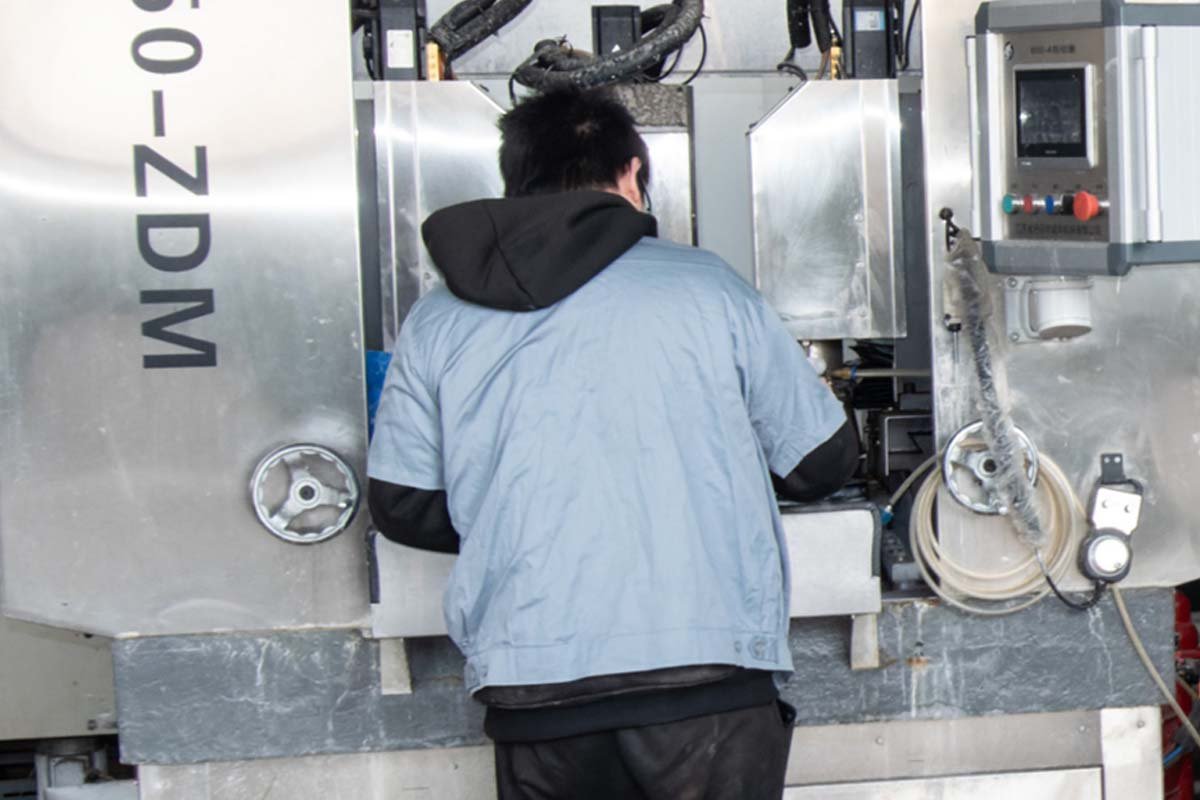
Part and Tooling Review
The component drawing is reviewed for molding draft, wall transitions, datums, parting lines and functional surfaces.
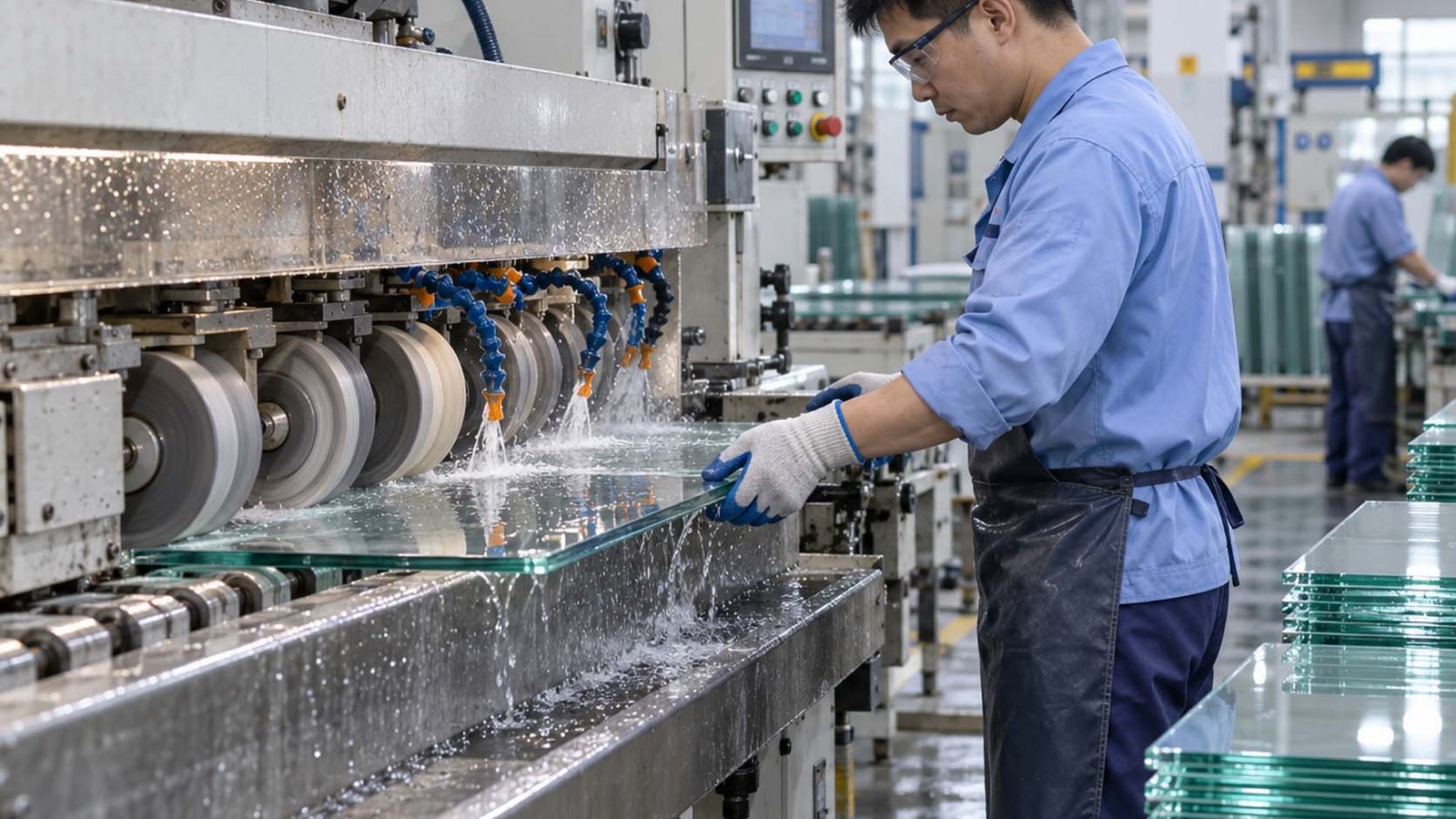
Precision Press Forming
Conditioned glass is pressed into matched tooling to reproduce the specified profile and molded features.
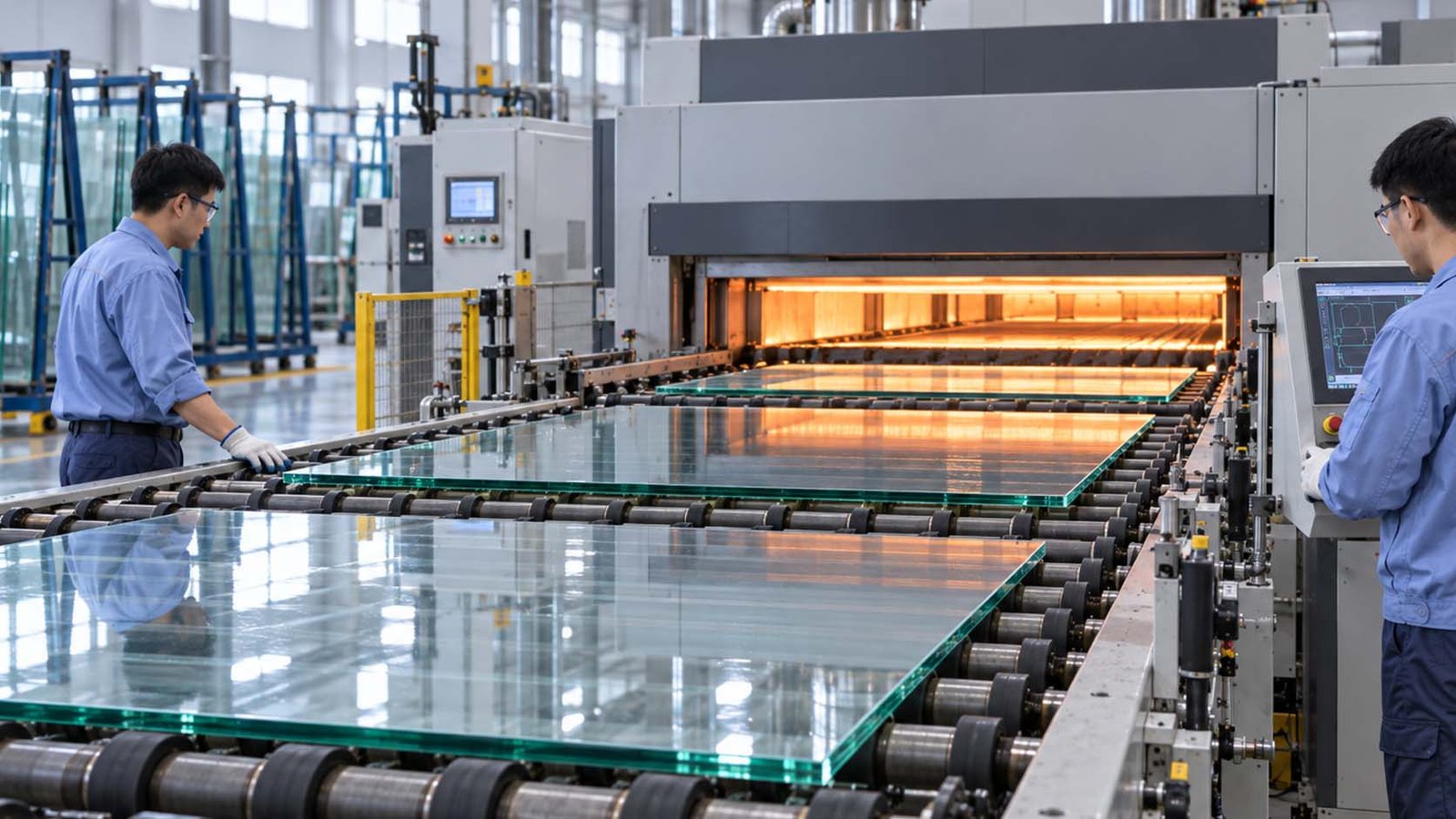
Controlled Annealing
The component is cooled through a defined cycle to reduce residual stress after forming.
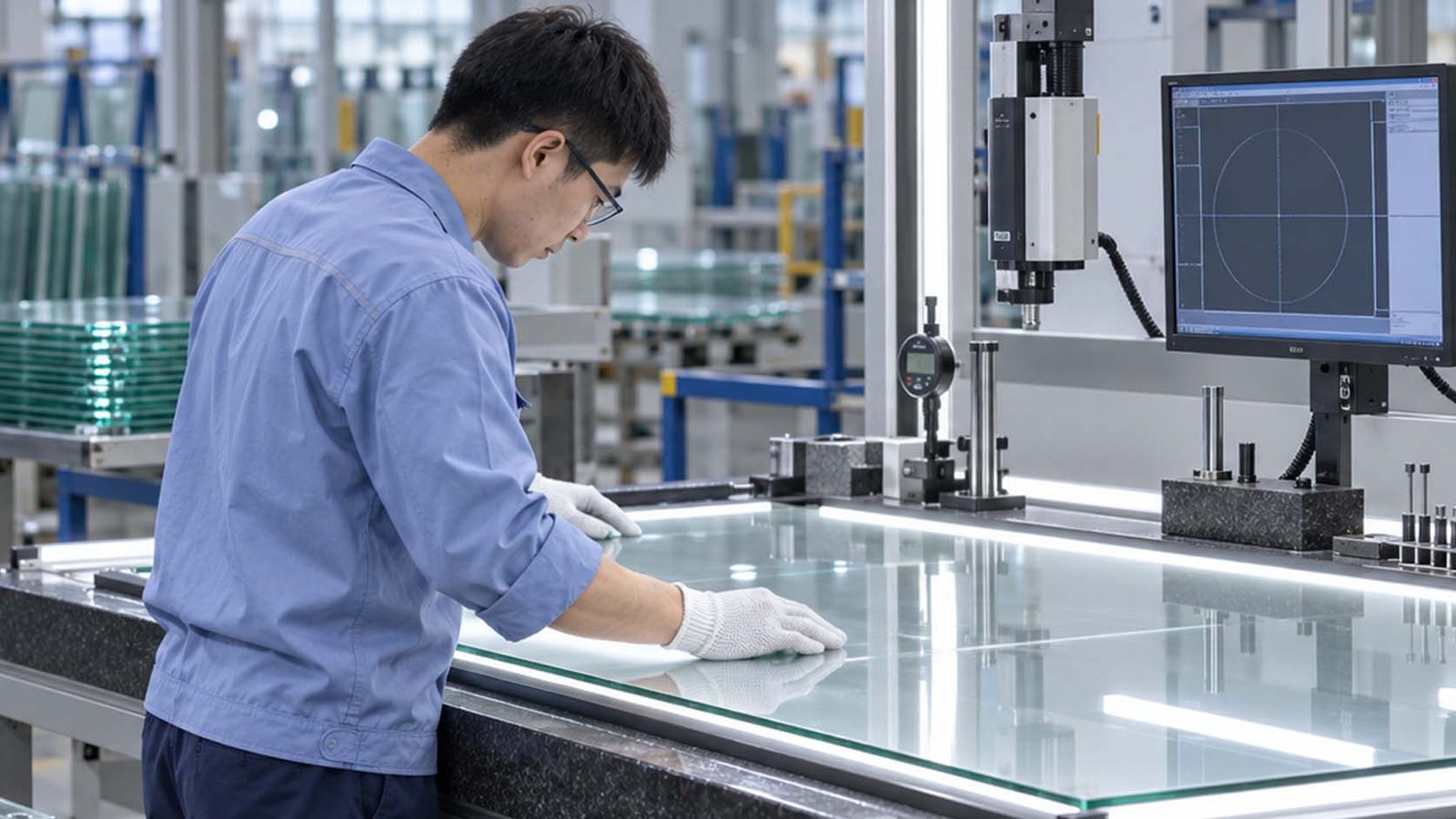
Secondary Processing and Inspection
Approved drilling, strengthening, coating or sandblasting is followed by dimensional and visual inspection.
Applications
- Automotive and motorcycle lighting: molded headlamp, fog-lamp and signal glass
- Stage and entertainment lighting: fly-eye arrays, condensers and beam-forming parts
- Industrial and outdoor luminaires: ribbed covers, domes and protective components
- Meters and equipment: pressed windows, indicators and technical shapes
- Custom OEM products: drawing-defined glass with integrated optical and mechanical features
Pressed Glass Component FAQs
What features can be molded into pressed glass?
Optical curvature, ribs, prisms, textures, flanges, bosses, seats and orientation features may be combined when the design supports glass flow and mold release.
Can Lampoptics develop a mold from a sample?
Yes. A sample can be measured and combined with functional and mating-part data to create the production drawing and tooling.
When is pressed glass preferable to machined glass?
Pressing is useful when complex surfaces or features must be repeated in production and would be inefficient to machine individually.
Can pressed parts receive additional processing?
Yes. Tempering, coating, sandblasting and drilling are available where compatible with the material and geometry.
What are Lampoptics' size and tolerance limits?
Press envelope, glass-grade availability, part-weight range and achievable tolerance are confirmed after the part and tooling concept are reviewed.