
Motorcycle · Scooter · E-Bike
Motorcycle and E-Bike Headlight Glass Lenses
Compact TIR, aspherical, freeform and molded glass optics for motorcycle, scooter and e-bike headlamps, auxiliary lights and signal modules.
Glass Optics for Motorcycle, Scooter and E-Bike Lighting
Two-wheel lighting places the source, optic, holder, PCB and thermal hardware into a compact assembly that is often directly exposed to vibration and outdoor conditions. Small changes in source position or lens rotation can alter a cutoff or asymmetric road field, so the optical and mechanical coordinate systems must be developed together.
Lampoptics reviews custom glass optics from the production source, target field and available envelope. The glass component can be molded with an aspherical, TIR, freeform or other controlled surface and coordinated with a protective window or molded housing interface.
Compact Packaging Changes the Optical Problem
The main constraints are coupled; reducing package size changes optical sensitivity, heat flow and mounting tolerance.
| Application | Optical or component task | Required project input |
|---|---|---|
| Limited axial space | May require stronger optical power or a combined-function optic | Source-to-lens distance and maximum lens depth |
| Small source and holder | Increases sensitivity to lateral shift and tilt | LED tolerance, PCB datum and lens seat |
| Required road field | May need cutoff, asymmetric or forward-throw distribution | Target photometry and installed orientation |
| Vibration and shock | Makes retention and clearance part of optical repeatability | Holder, preload, support and test profile |
| Outdoor exposure | Requires assembly-level sealing and surface review | Housing, gasket, temperature and cleaning environment |
Headlamp, Auxiliary and Signal Functions
A compact headlamp may use TIR collection close to the LED, an aspherical or molded lens for focusing, or a freeform surface for the final road distribution. Auxiliary and fog-light modules may emphasize width and near-field control, while signal optics emphasize visibility over a defined viewing-angle range.
Vibration, thermal cycling and mounting variation should be represented in the tolerance and validation plan. A key, flat, tab or asymmetric flange can prevent rotation of a directional optic. The front cover and sealing system are reviewed separately from the optical lens so protective and photometric functions are not confused.
Recommended Products for Motorcycle and E-Bike Lighting
These products cover compact beam formation, focusing and environmental separation.
| Product | Role | Key selection input |
|---|---|---|
| TIR Glass Lenses | Compact LED beam formation | Source package, cavity and angular target |
| Aspherical Glass Lenses | Efficient focusing with fewer elements | Surface prescription and working distance |
| Freeform Glass Lenses | Cutoff or asymmetric road field | Target map and orientation datum |
| Molded Glass Lenses | Primary or secondary headlamp optic | Custom envelope, aperture and mounting |
| Protective Glass Covers | Front window or environmental barrier | Housing, coating, edge and seal |
| Pressed Glass Components | Signal and custom integrated glass parts | Functional geometry and datum control |
Recommended Glass Products
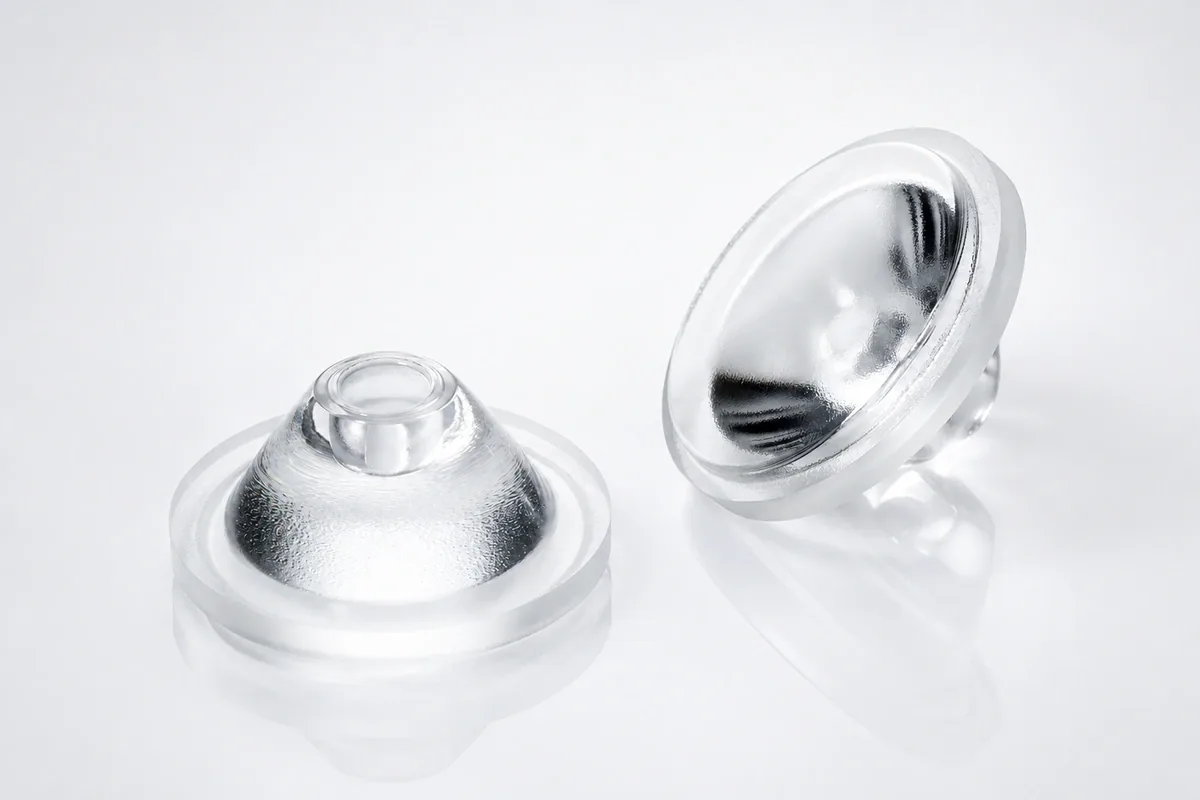
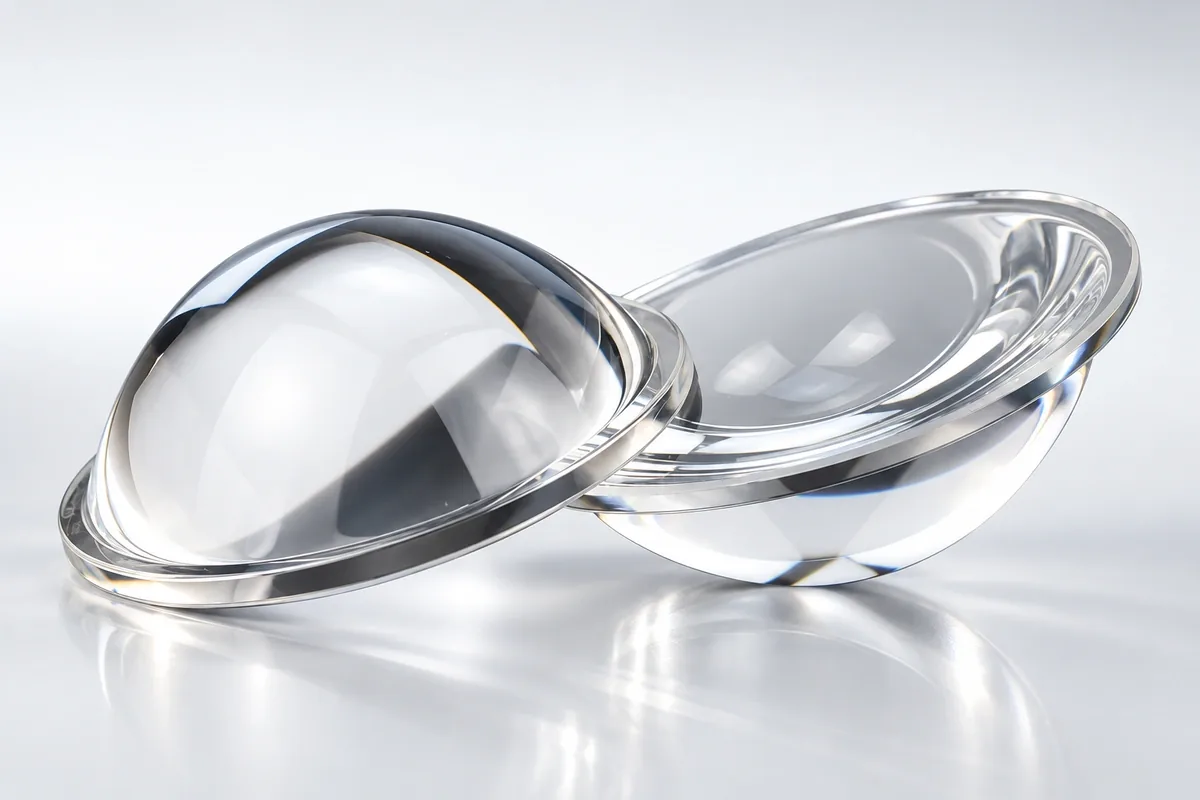
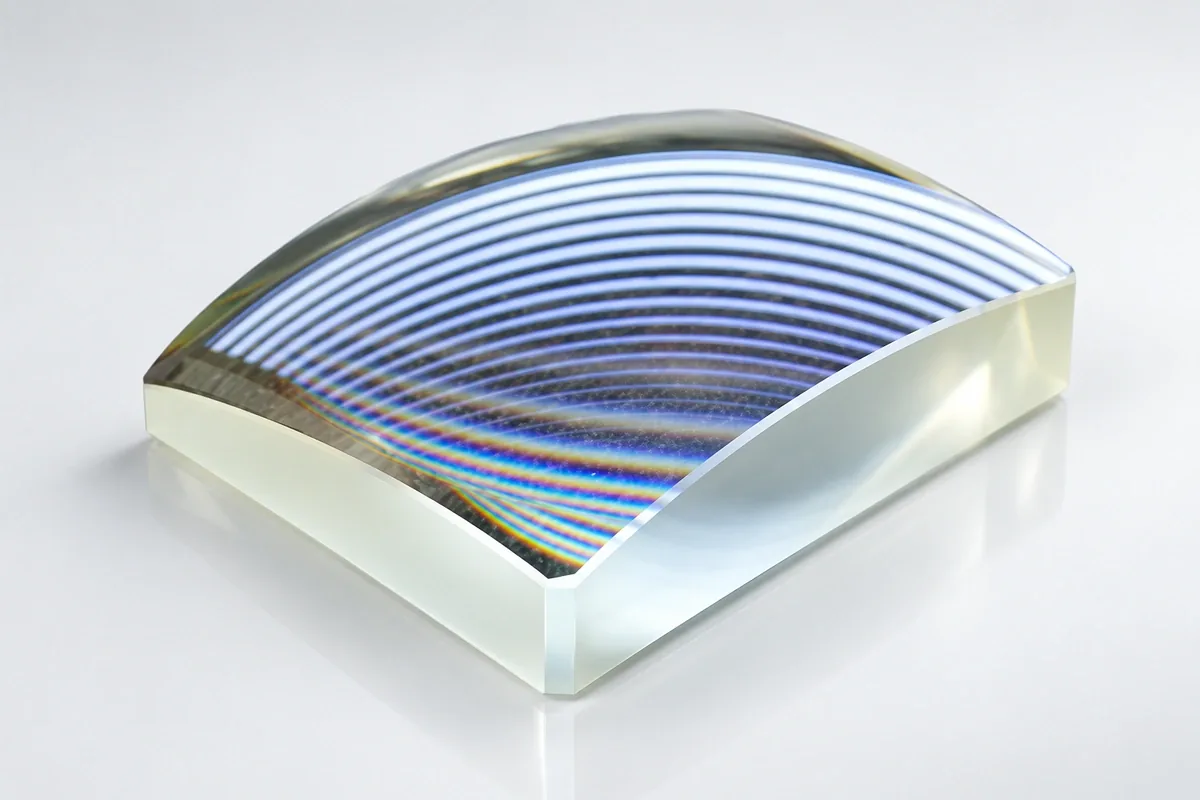
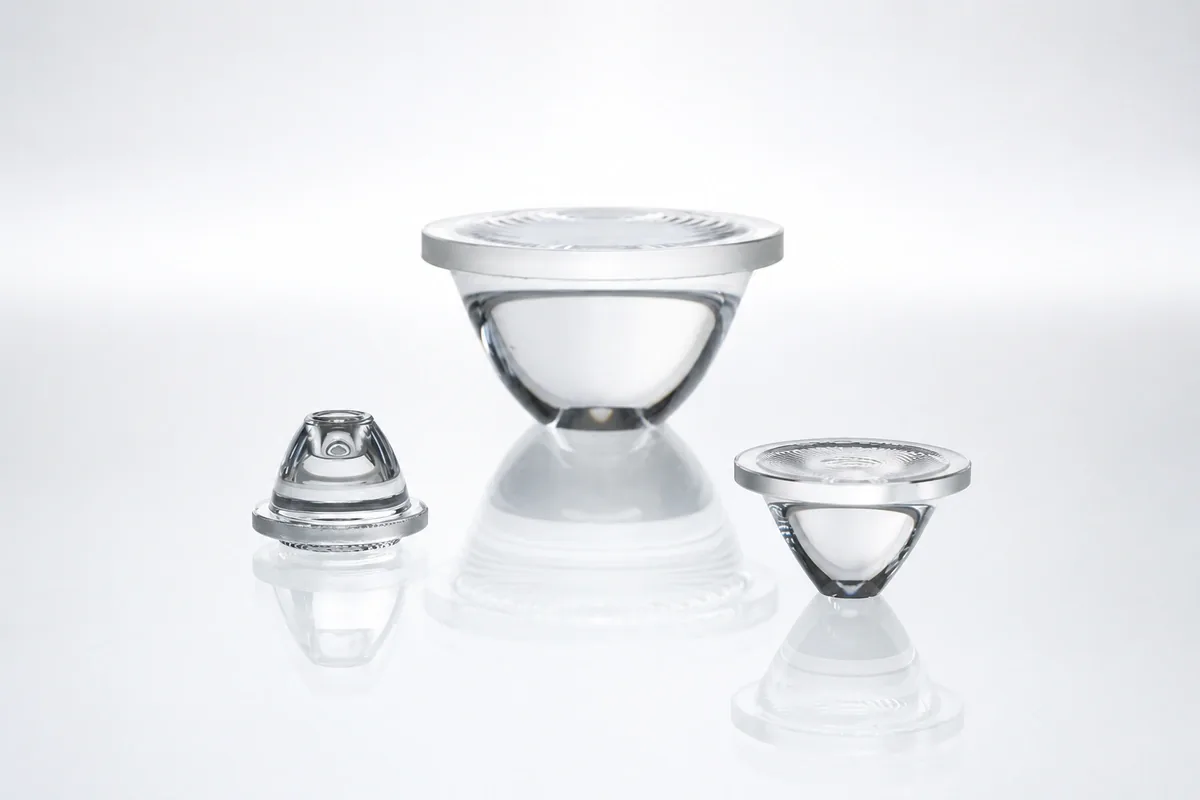
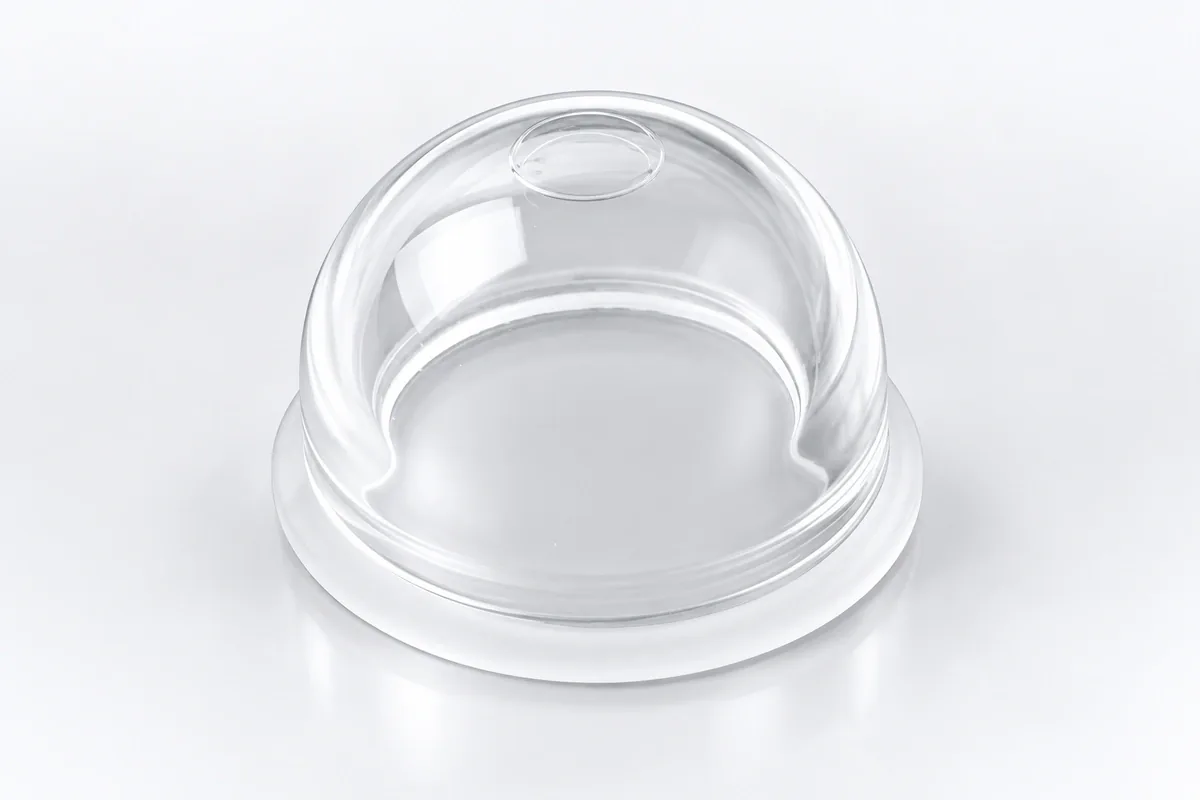
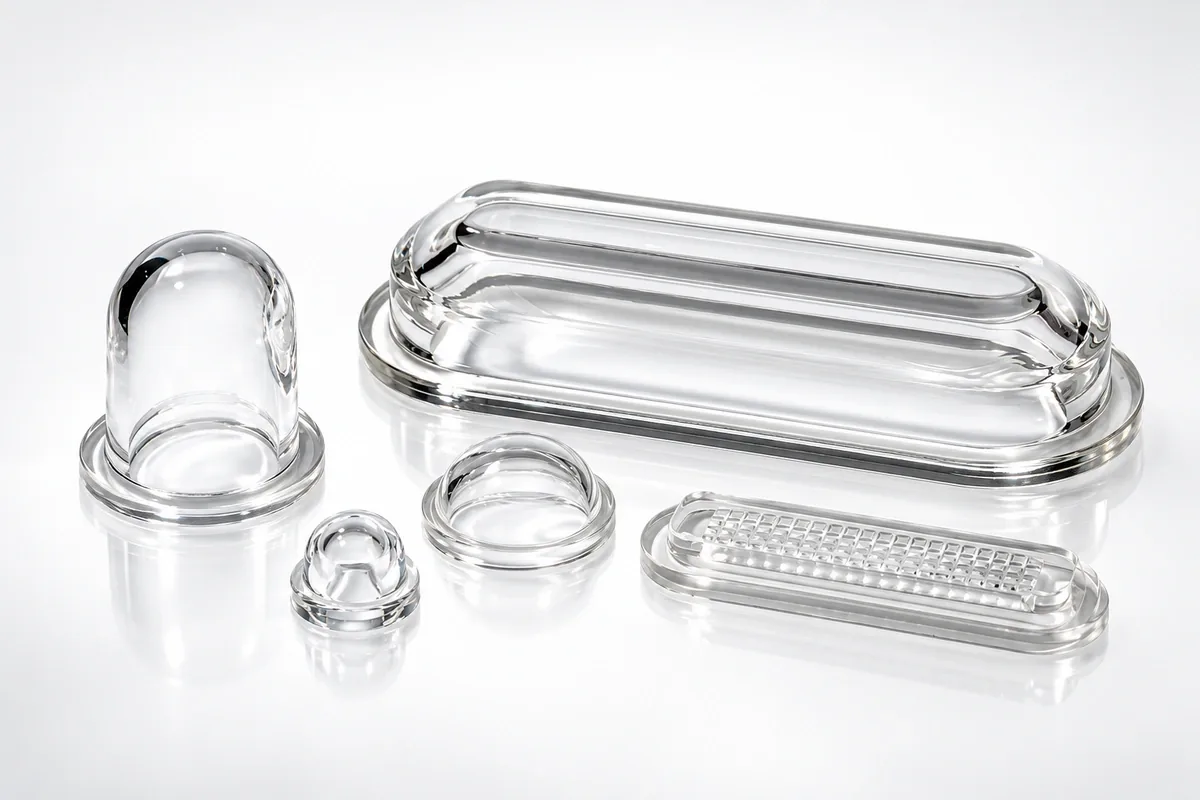
Custom Development for Compact Lighting Modules
- Define headlamp, auxiliary, signal or e-bike lighting function and installed orientation.
- Freeze the LED, PCB, heat sink, holder and available optical envelope.
- Coordinate surface data with source position, seat, key and front-cover clearance.
- Review glass forming, edge design, annealing and any strengthening or coating operation.
- Approve fit and photometry under agreed thermal and vibration-related assembly conditions.
Project Inputs for Optical and Tooling Review
- Vehicle or bicycle lighting function
- LED package, operating point and PCB layout
- Target beam, cutoff or viewing-angle data
- Lens envelope, source distance and installed orientation
- Holder, retention, vibration and thermal information
- Cover/seal requirements, quantity and validation responsibility
Motorcycle and E-Bike Headlight Glass Lenses FAQs
Are motorcycle and automotive headlight lenses the same?
They can use similar optical surface families, but motorcycle and e-bike modules often have different package, vibration, orientation and near-field requirements. The pages target different design inputs.
Why is lens clocking important in a motorcycle headlamp?
A directional freeform or asymmetric optic changes its output when rotated. A mechanical key connects the glass orientation to the installed beam coordinate system.
Can one glass element combine collection and beam shaping?
A TIR or freeform design may combine functions, subject to the source, package and manufacturable surface geometry.
Can Lampoptics make a protective front window?
Flat, stepped or other protective glass covers can be reviewed separately from the beam-forming optic using the housing, clear aperture, edge and coating requirements.
What is required to reproduce an existing lens?
Supply the sample, mating parts, source, installed orientation and target beam. Geometry alone may not preserve the intended optical function.


