
Railway · Traffic · Airfield · Marine
Transportation and Signal Lighting Glass Optics
Custom molded glass lenses, arrays, prisms and covers for railway, traffic, airfield, marine and warning-light systems, including LED retrofit projects.
Glass Optics for Transportation and Signal Lighting
Transportation lighting covers systems with very different visibility and environmental duties. A train headlamp illuminates a forward field, a railway or road signal presents a controlled indication, an airfield optic directs light along defined approach angles, and a variable-message display must maintain pixel separation over a viewing range.
Lampoptics manufactures molded and pressed optical glass from released component data. The product route is selected from the required beam, color or transmission, source layout, mounting interface and exposure rather than from a generic signal-lens description.
Different Signal Systems Need Different Optical Functions
Each system should be specified with its own direction, source and acceptance conditions.
| Application | Optical or component task | Required project input |
|---|---|---|
| Railway headlamps and signals | Forward illumination or controlled indication | Beam/cutoff target, source, color and mounting datum |
| Traffic and information displays | Pixel-level visibility and angular control | LED matrix, pitch, viewing range and panel geometry |
| Airfield, runway and heliport lights | Directional, bidirectional or omnidirectional output | Required angles, prism/collimator geometry and approved standard inputs |
| Marine and warning lights | Visible signal over required sectors | Color/transmission, angular field, housing and exposure |
| Legacy optical systems | Preserve function while changing source or assembly | Original sample, new source, mounting constraints and target output |
LED Retrofit and Legacy Glass Optics
Replacing a filament or discharge source with an LED changes emitting area, angular distribution and focal position. An existing glass optic may still fit the housing but no longer produce the required signal or field. Retrofit work therefore begins with both the original component and the new source/target data.
Prisms, collimators, Fresnel structures, TIR surfaces and lens arrays serve different signal tasks. Color and transmission requirements should identify whether color comes from the glass, source, coating or another filter. Final railway, traffic, aviation or marine system compliance remains part of the customer's applicable assembly-validation route.
Recommended Products for Signal Lighting
The recommended set covers single-channel optics, multi-LED systems and protective components.
| Product | Role | Key selection input |
|---|---|---|
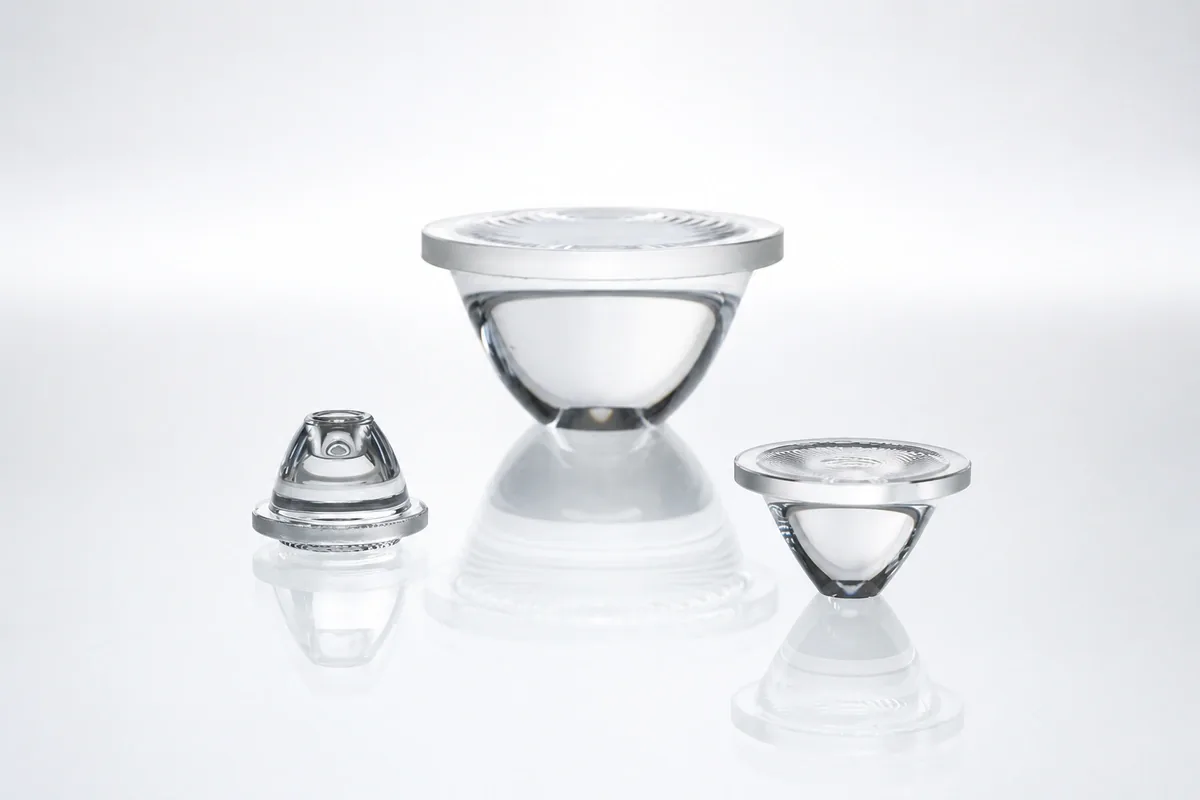
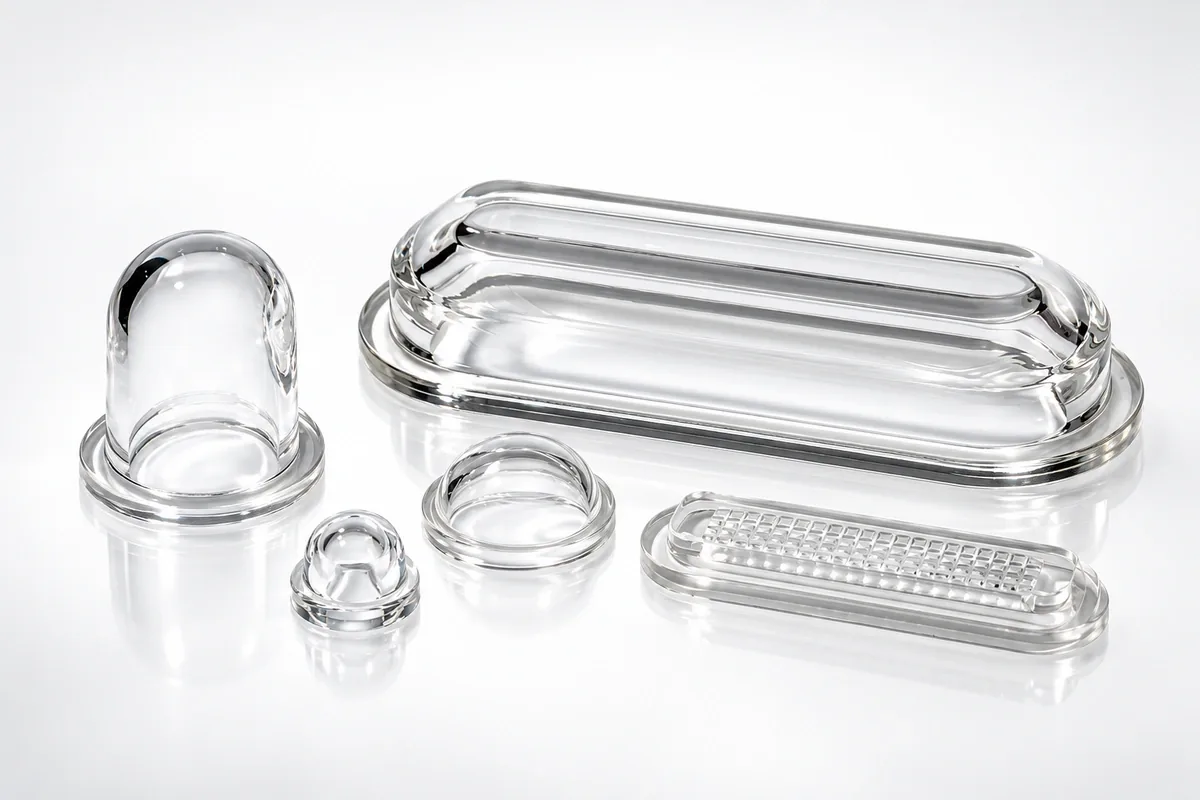
| Molded Glass Lenses | Headlamp, signal and warning-light optics | Beam target, source and mounting |
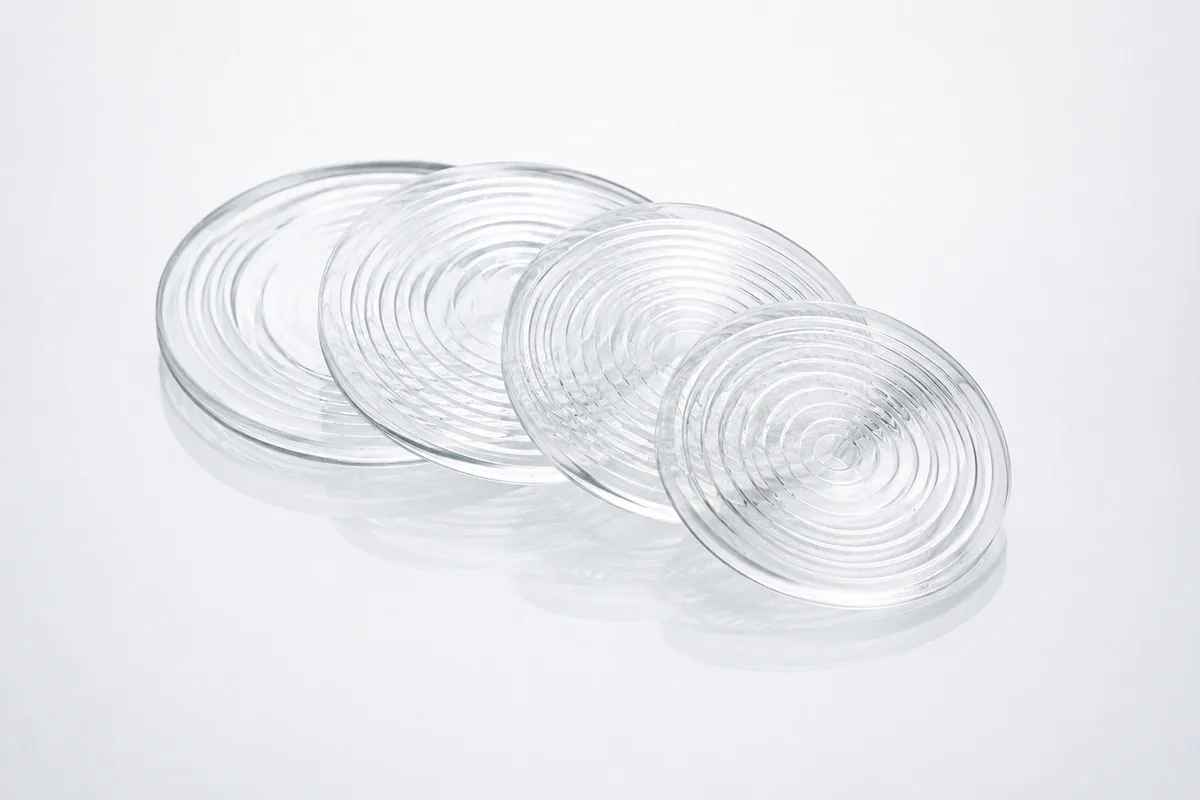
| Fresnel Glass Lenses | Compact collimation and signal projection | Focal data and groove orientation |
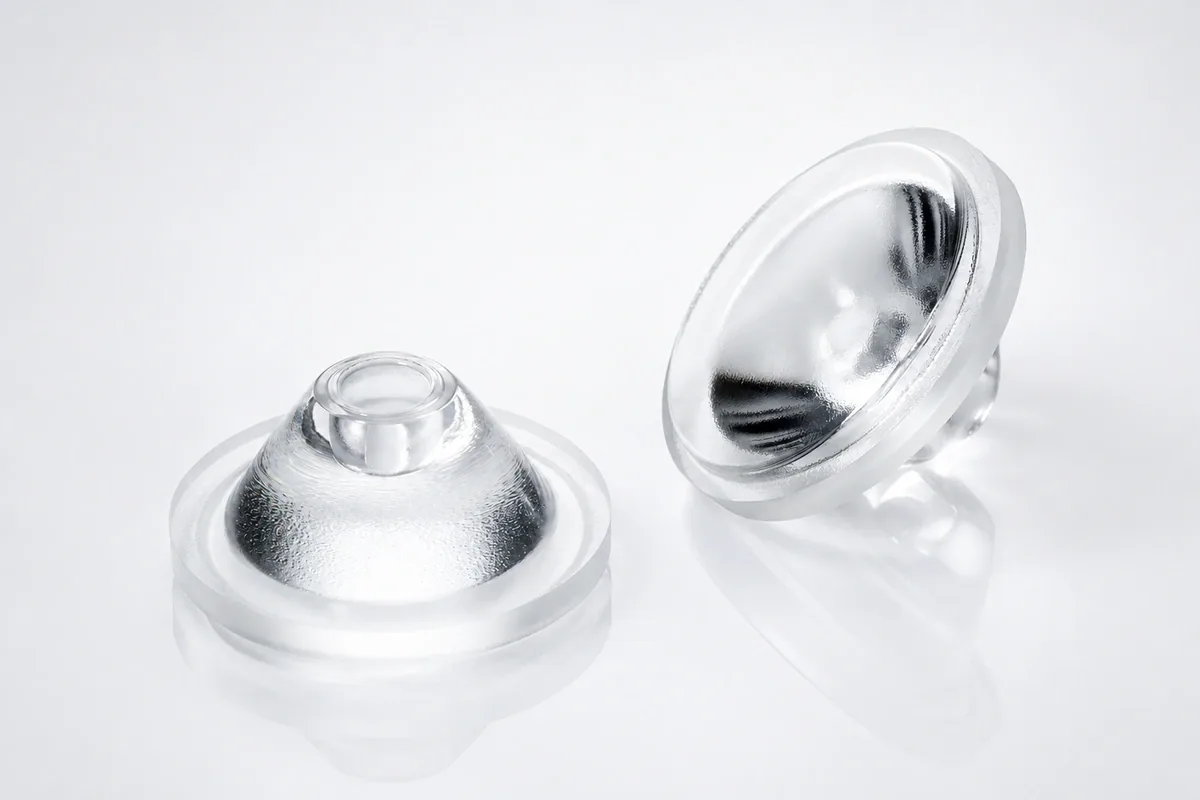
| TIR Glass Lenses | LED collimators for compact signal modules | LED package and angular distribution |
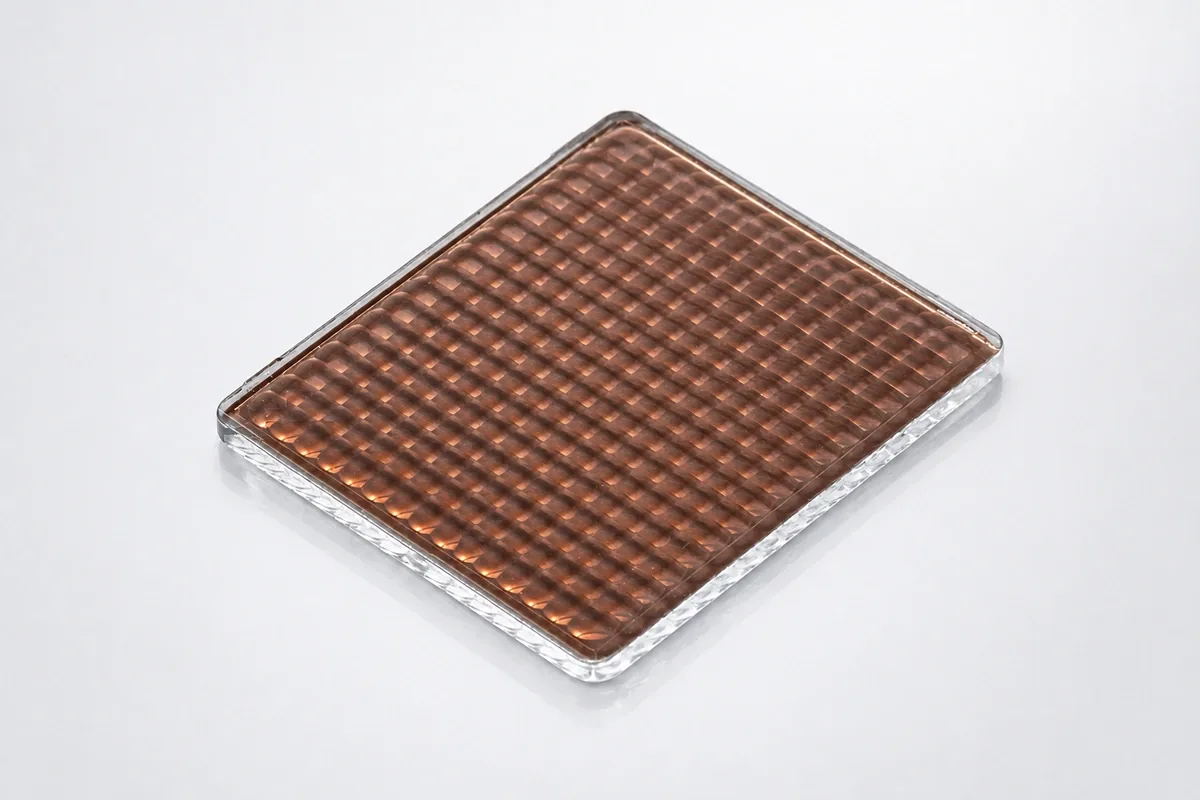
| Glass Lens Arrays | Traffic information and multi-LED displays | Pixel pitch, viewing angle and panel geometry |
| Pressed Glass Components | Prisms and drawing-defined molded signal parts | Geometry, material and optical surface |
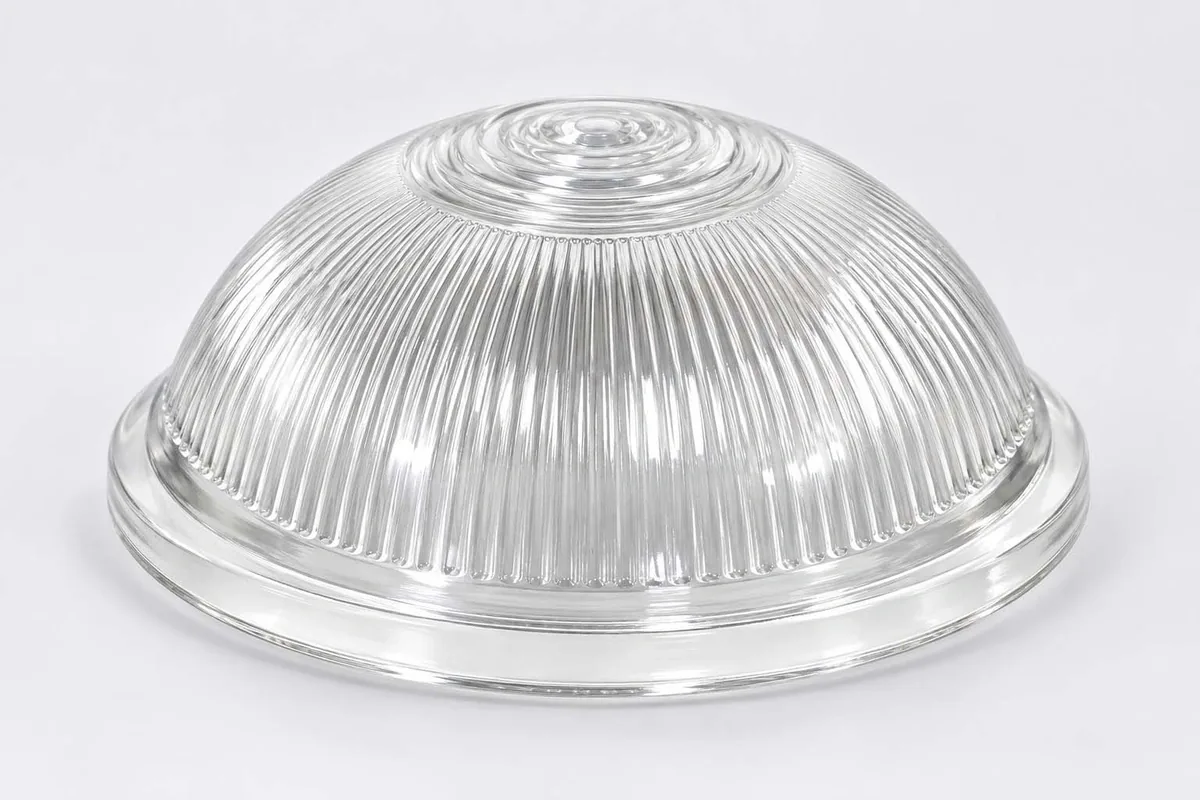
| Industrial Glass Lamp Covers | Protective cover for exposed signal assemblies | Housing, gasket and duty cycle |
Recommended Glass Products
Custom Optical Development and Inspection
- Classify the system as illumination, indication, display or protective lighting.
- Provide the production source, target viewing/beam angles, color or transmission and installed axes.
- Release the optical geometry with mounting, clocking and housing interfaces.
- Review forming, tool transfer, annealing, finishing and inspection access.
- Approve the component using the defined dimensional and optical test, then validate it in the complete system.
Application Data Required for Review
- Railway, road, airfield, marine or other signal function
- Production source and LED/display layout
- Beam, intensity, viewing-angle, color or transmission target
- Existing sample and original optical function for retrofit work
- Mechanical envelope, datum, housing and seal
- Applicable system standard, quantity and approval responsibility
Transportation and Signal Lighting Glass Optics FAQs
Can an older signal lens be retained when the source changes to LED?
Sometimes, but fit alone is not enough. The new LED emitting area, position and angular output must be checked against the required signal distribution.
Can Lampoptics manufacture optics for LED information displays?
Molded lens arrays can be reviewed from pixel pitch, source matrix, viewing-angle target, panel geometry and environmental requirements.
Can prisms or collimators be made from an existing sample?
A sample can support reconstruction, while the intended light direction, source and mounting datum are needed to verify function.
Does the glass component carry the transportation-system approval?
The glass is manufactured to released component requirements. Final compliance depends on the complete signal or lighting assembly and the applicable approval authority.
How are colored signal requirements specified?
State the required chromaticity or spectral transmission, source spectrum, thickness and test condition rather than using only a visual color name.


