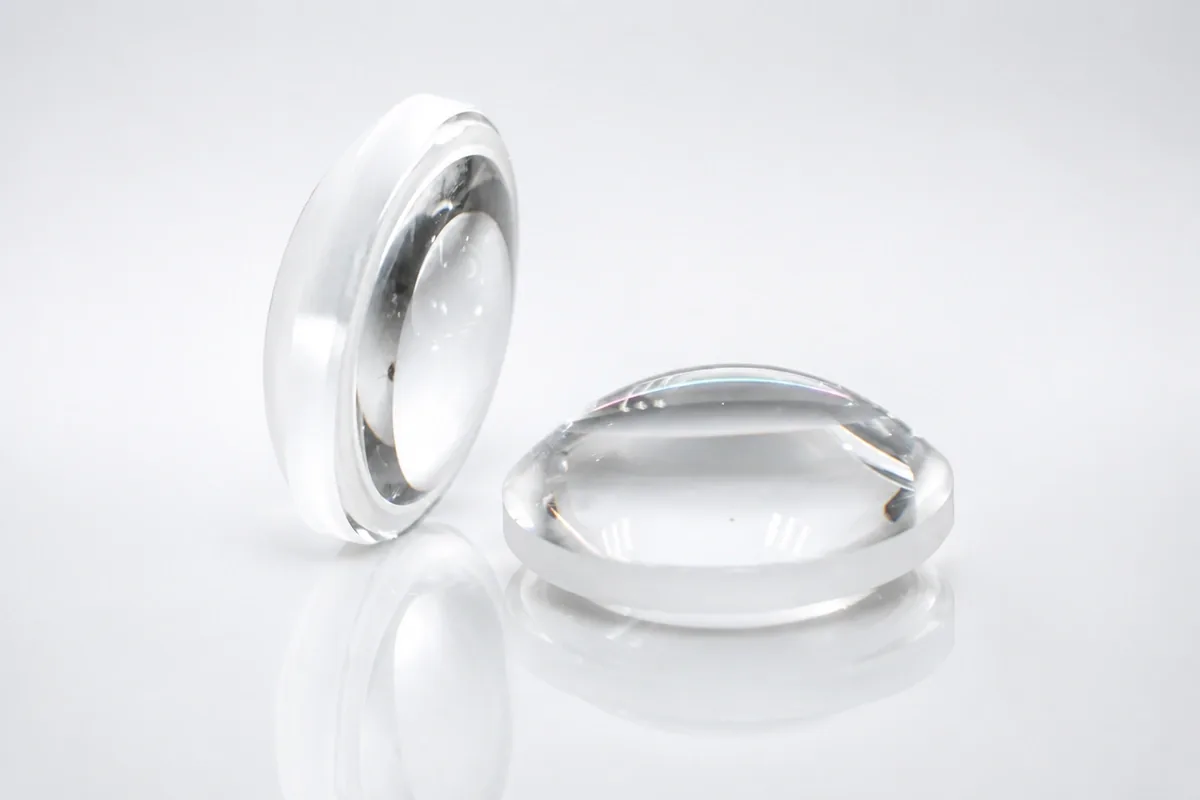
Custom Molded Glass Lenses
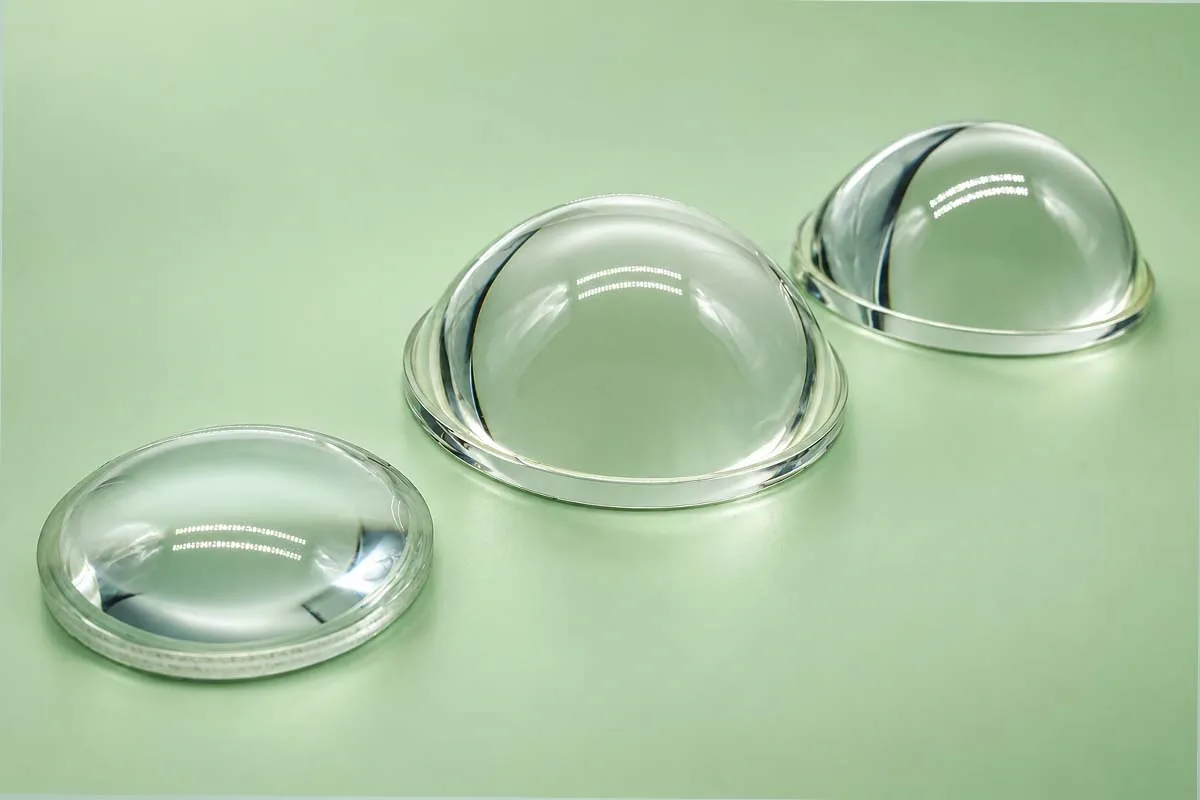
Molded glass lenses reproduce an optical surface and its mechanical mounting features directly from precision tooling. They are used when the lens must combine beam control, thermal stability and repeatable geometry in production quantities.
China Lampoptics produces convex and condenser lenses and develops molded optical parts from prescriptions, drawings or approved samples. The optical surface, outside diameter, flange or seat and glass grade are defined as one controlled component.
Specification note: Numerical ranges shown on this page are preliminary engineering references for project screening. The quotation and approved drawing define the final material, dimensions, tolerances, processing route and inspection method.
Molded Lens Types
| Lens type | Optical function | Typical use |
|---|---|---|
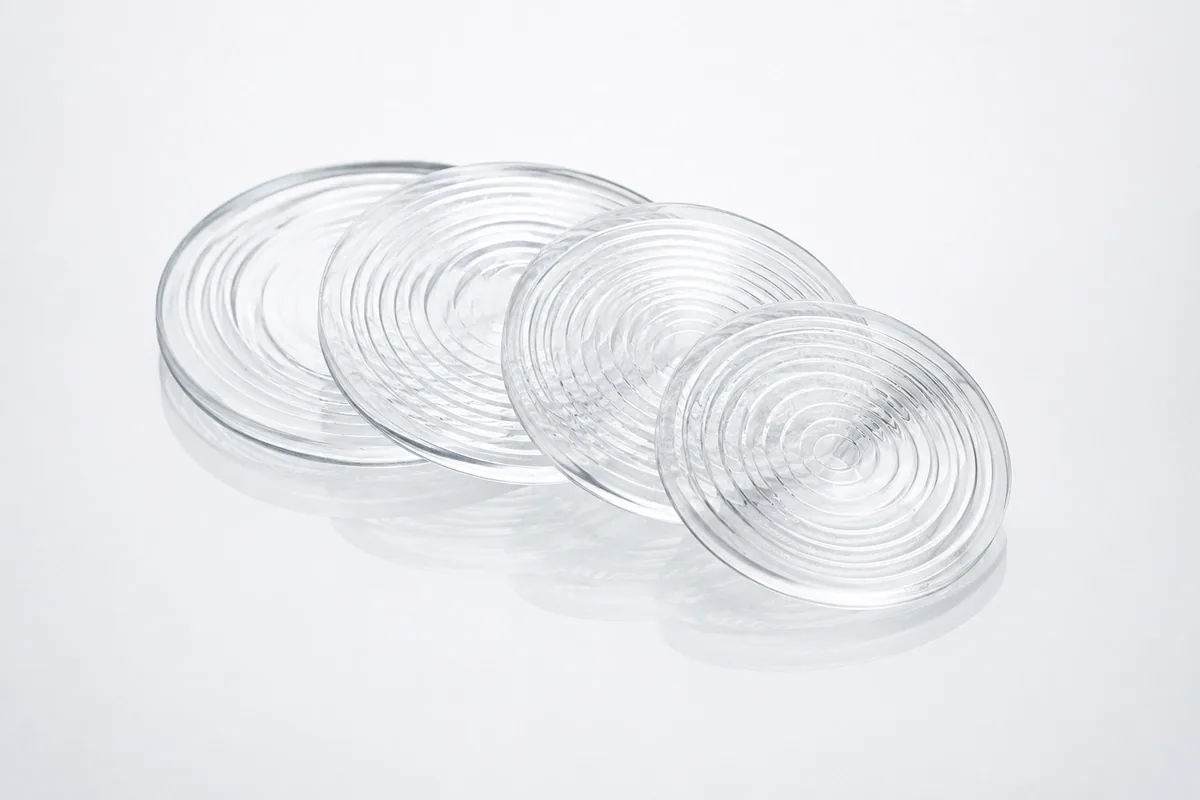
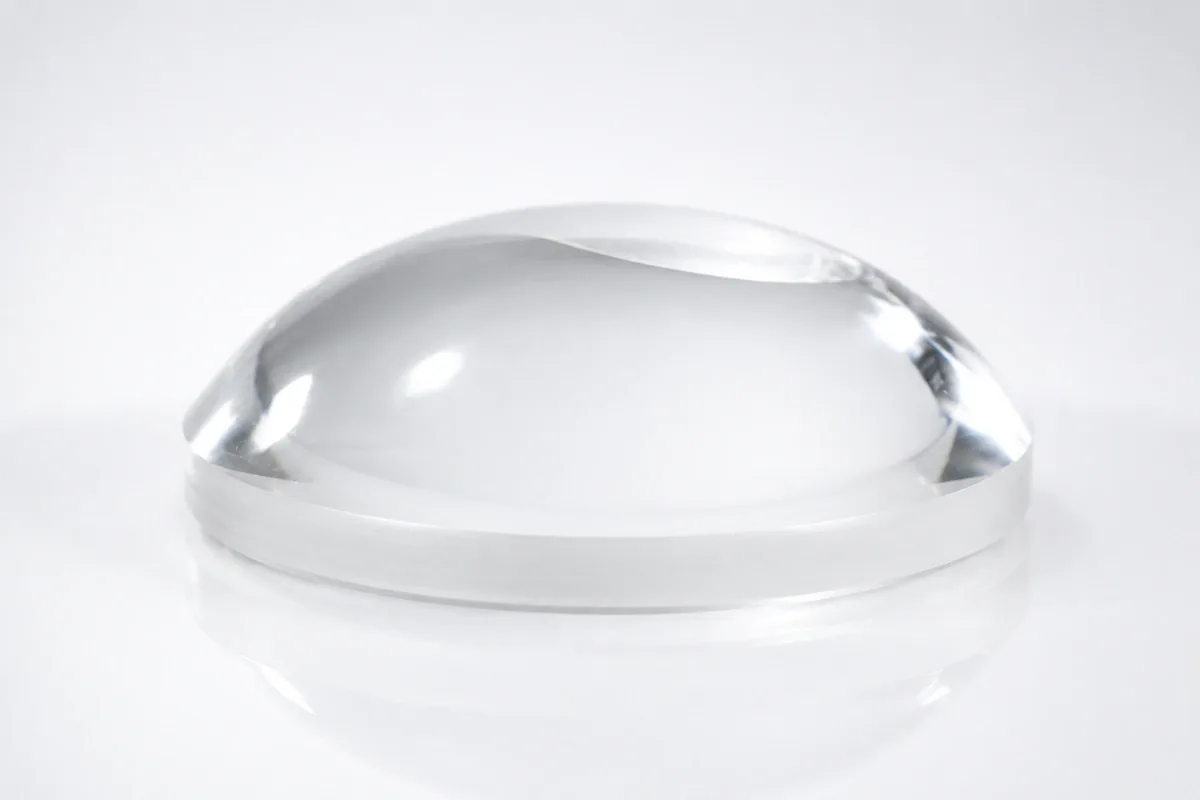
| Plano-convex lens | Collects or focuses light with one flat surface | Spotlights, condensers and sensors |
| Bi-convex lens | Provides positive optical power from two convex surfaces | Illumination and imaging assemblies |
| Meniscus lens | Combines convex and concave surfaces | Beam shaping and optoelectronic systems |
| Cylindrical lens | Focuses or spreads light in one axis | Line generation and elongated beams |
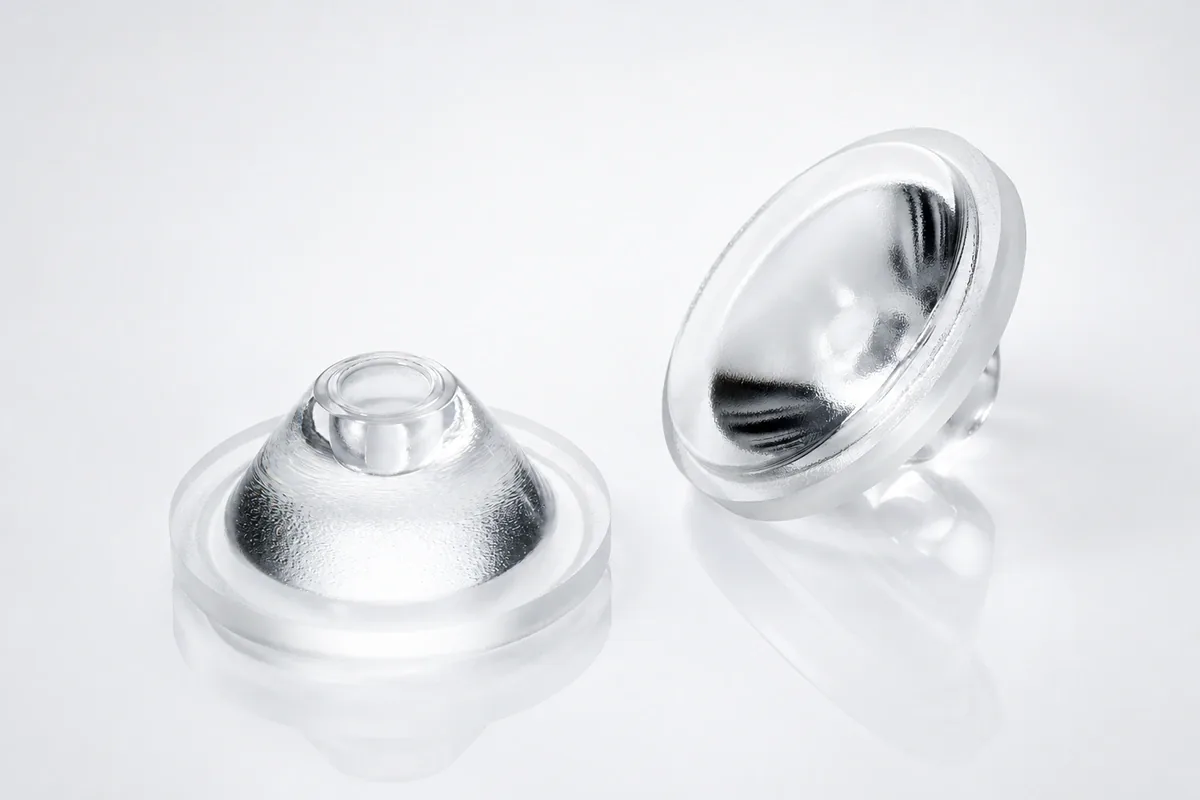
| Aspheric lens | Uses a non-spherical profile to manage aberration or beam shape | Compact LED and laser optics |
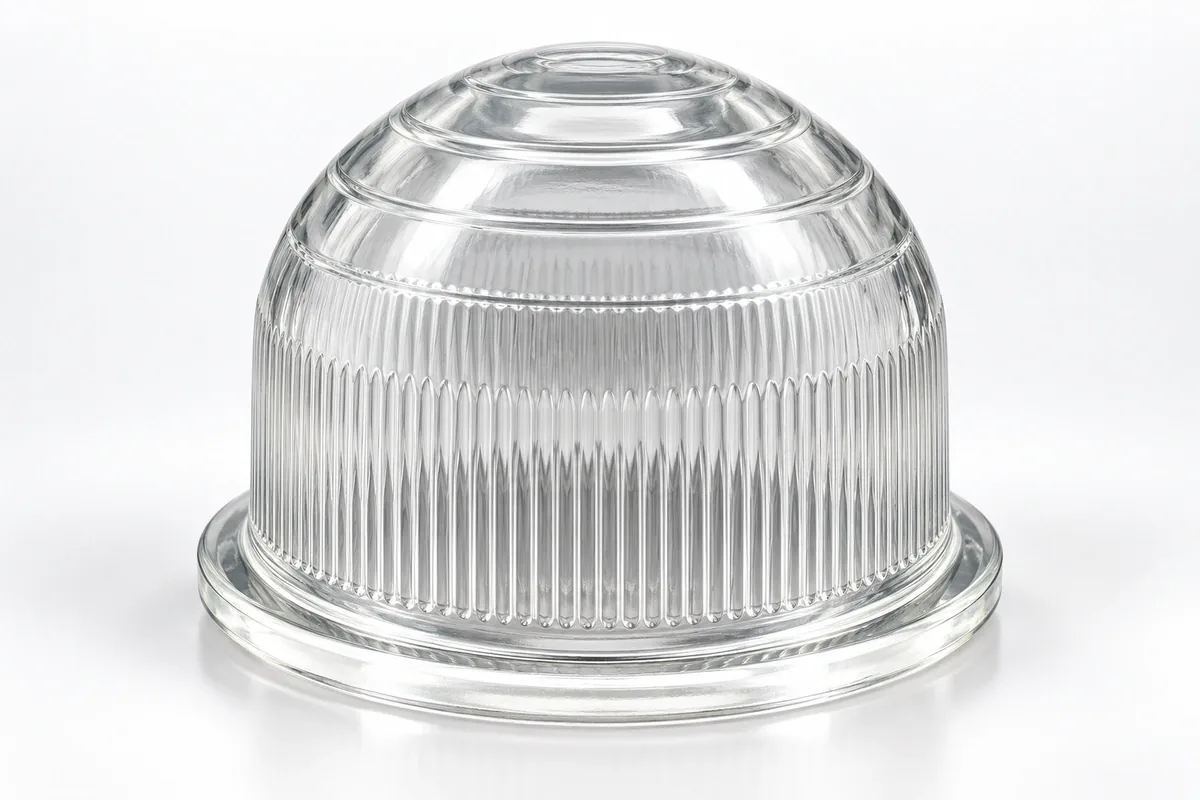
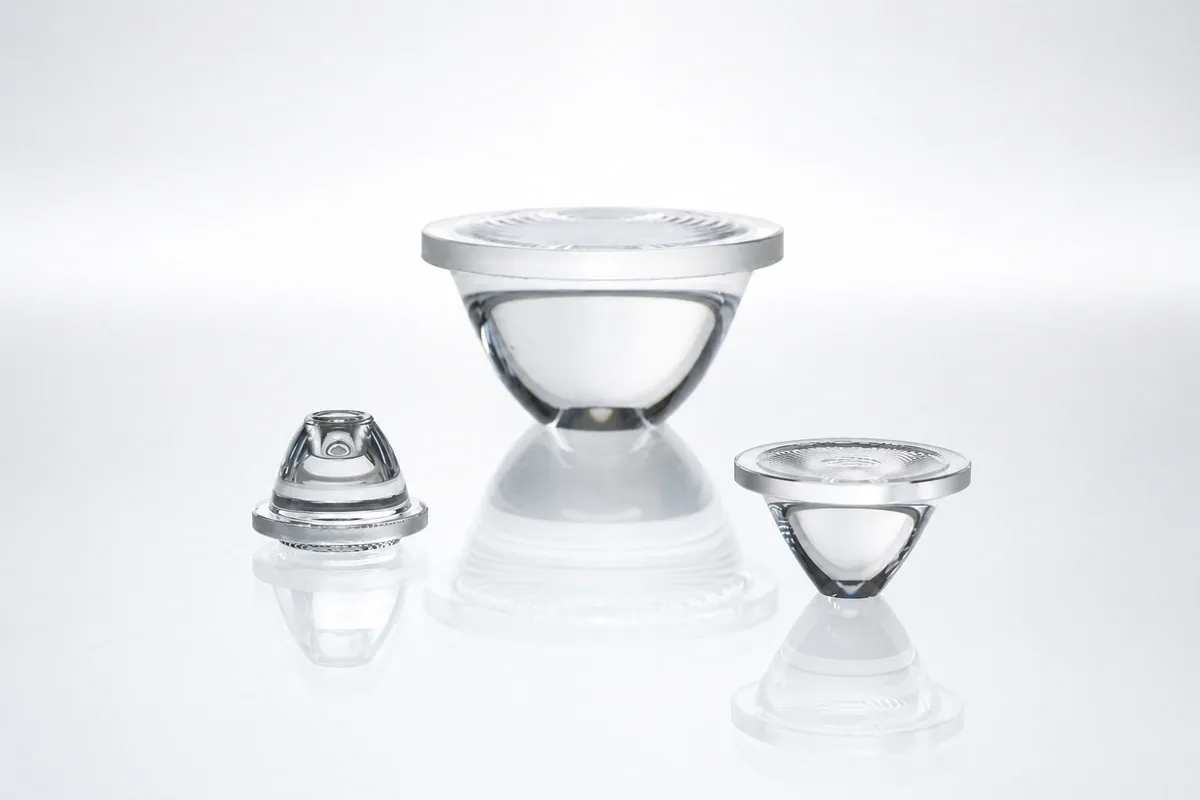
| Flanged or special-shaped lens | Integrates optical and mounting geometry | Vehicle, industrial and custom luminaires |
Optical Specifications
| Glass grade / refractive index | Selected for the application and confirmed with the quotation and material data |
|---|---|
| Design wavelength | Defined in the released optical prescription |
| Effective focal length | Defined in the released optical prescription |
| Back focal length | Defined in the released optical prescription |
| Clear aperture | Defined in the released optical drawing |
| Surface radii / aspheric data | Controlled optical prescription with sign convention and units |
| Surface-form tolerance | Reference target PV 0.1–3.5 µm; definition and measurement method must be stated |
| Centration / wedge | Reference centration range 10 arcsec–5 arcmin or drawing-defined edge-thickness difference |
| Transmission | Target defined by the application or approved sample; achievable result confirmed during review |
| Surface quality | Reference levels S/D 20-10 to 40-20; final cosmetic zones are drawing-controlled |
Focal length alone is not a complete molding specification. The released optical prescription must use one sign convention and coordinate system and must be tied to the mechanical datum that locates the lens in the fixture.
Mechanical and Mounting Data
| Outside diameter or envelope | Initial feasibility screening uses the Ø1–120 mm molded-optic reference envelope |
|---|---|
| Center thickness | Prescription-controlled; reference CT tolerance ±0.01–0.05 mm |
| Edge thickness | Prescription-controlled; tolerance confirmed with the released lens drawing |
| Flange / seat | Defined by the mechanical drawing |
| Orientation feature | Defined by the optical-to-mechanical datum scheme |
| Dimensional tolerance | Reference diameter tolerance ±0.01–0.05 mm; tighter requirements require process and metrology review |
| Edge finish | Selected from confirmed project-compatible processes and approved by sample |
| Coated face identification | Marked in the controlled drawing when coating is specified |
For lenses with a flange, tab, notch or asymmetric profile, the optical axis and feature orientation must be controlled together.
Fused Silica Micro-Optics
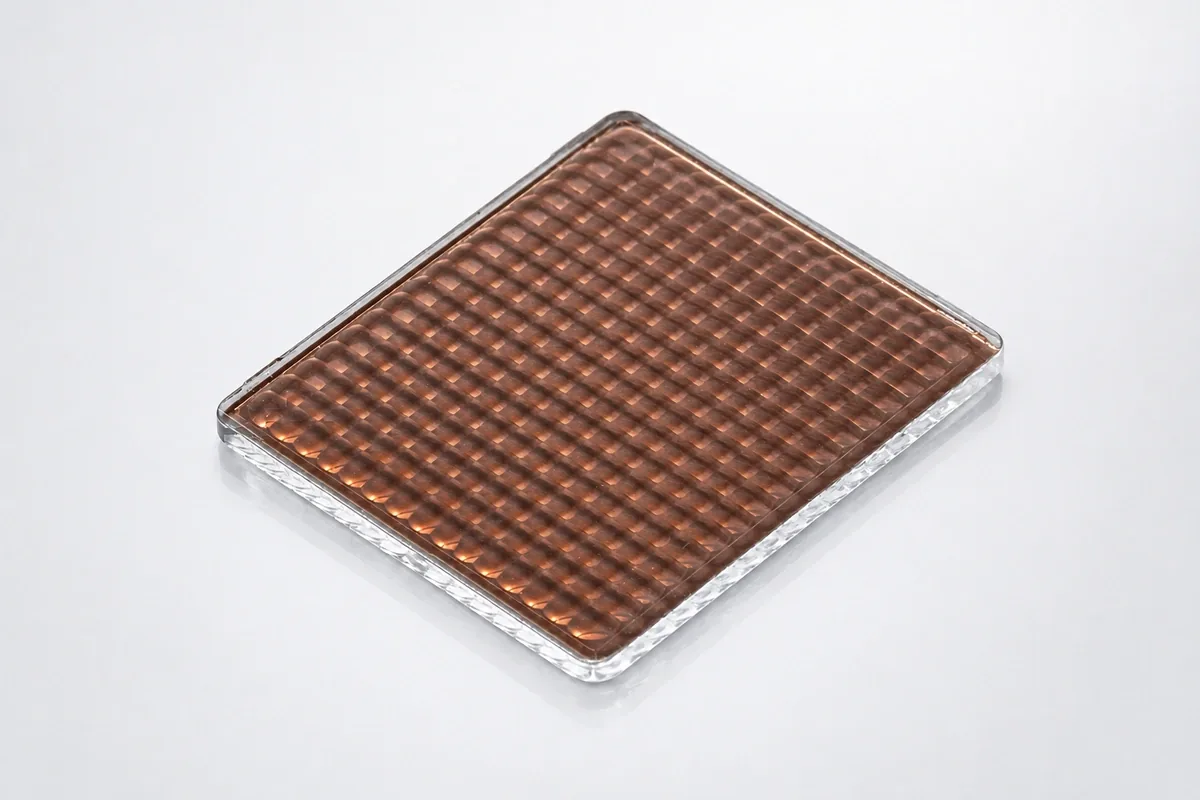
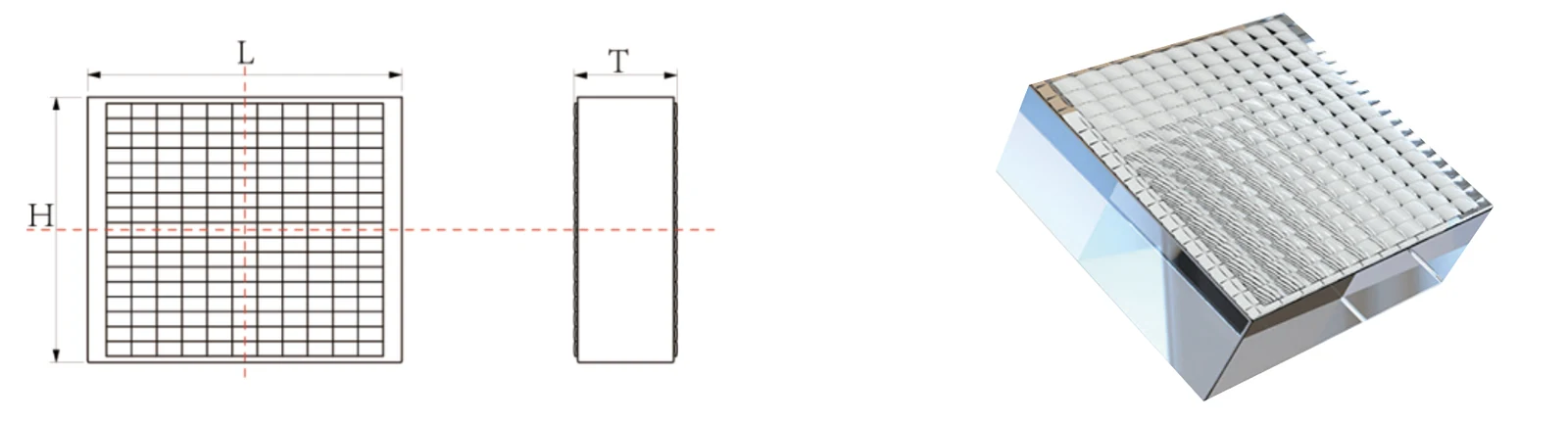
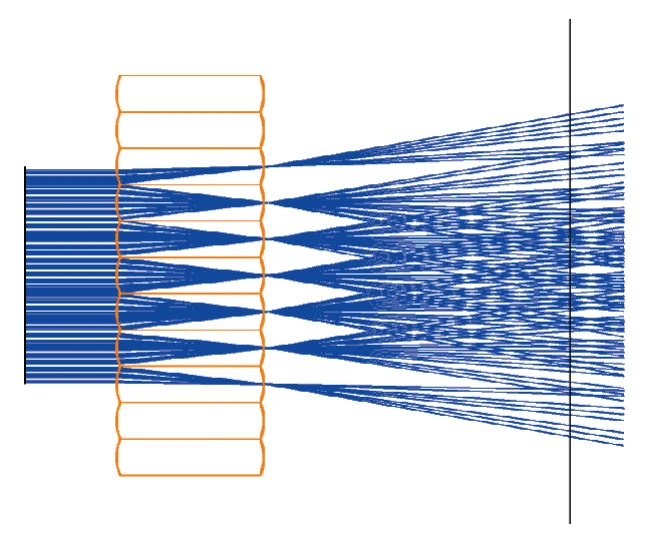
Fused-silica options are available for fly-eye arrays, microlens arrays, aspheric lenses and selected TIR designs. Compared with conventional molded-glass options, material selection must account for the operating wavelength, thermal environment and optical prescription.
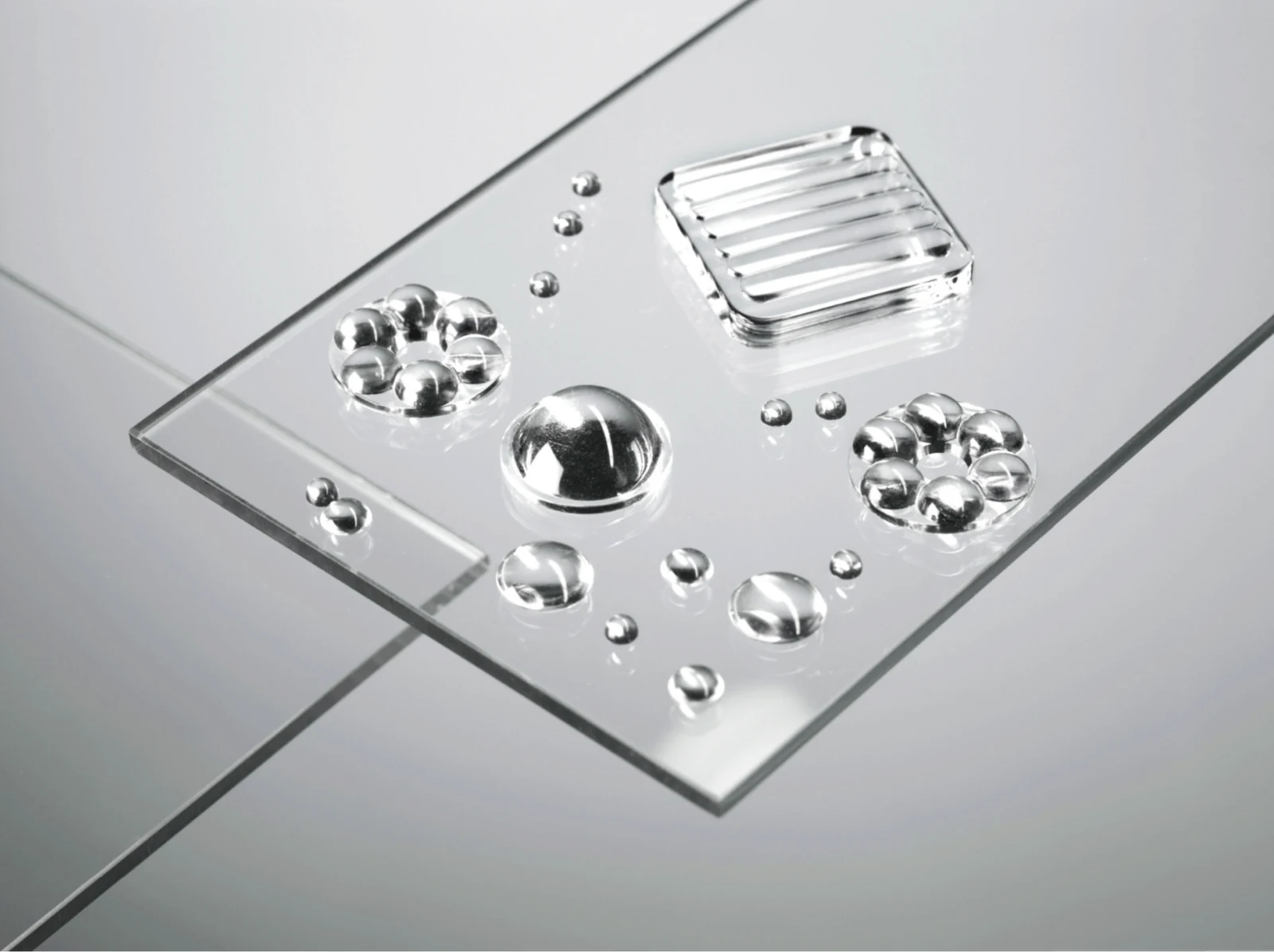
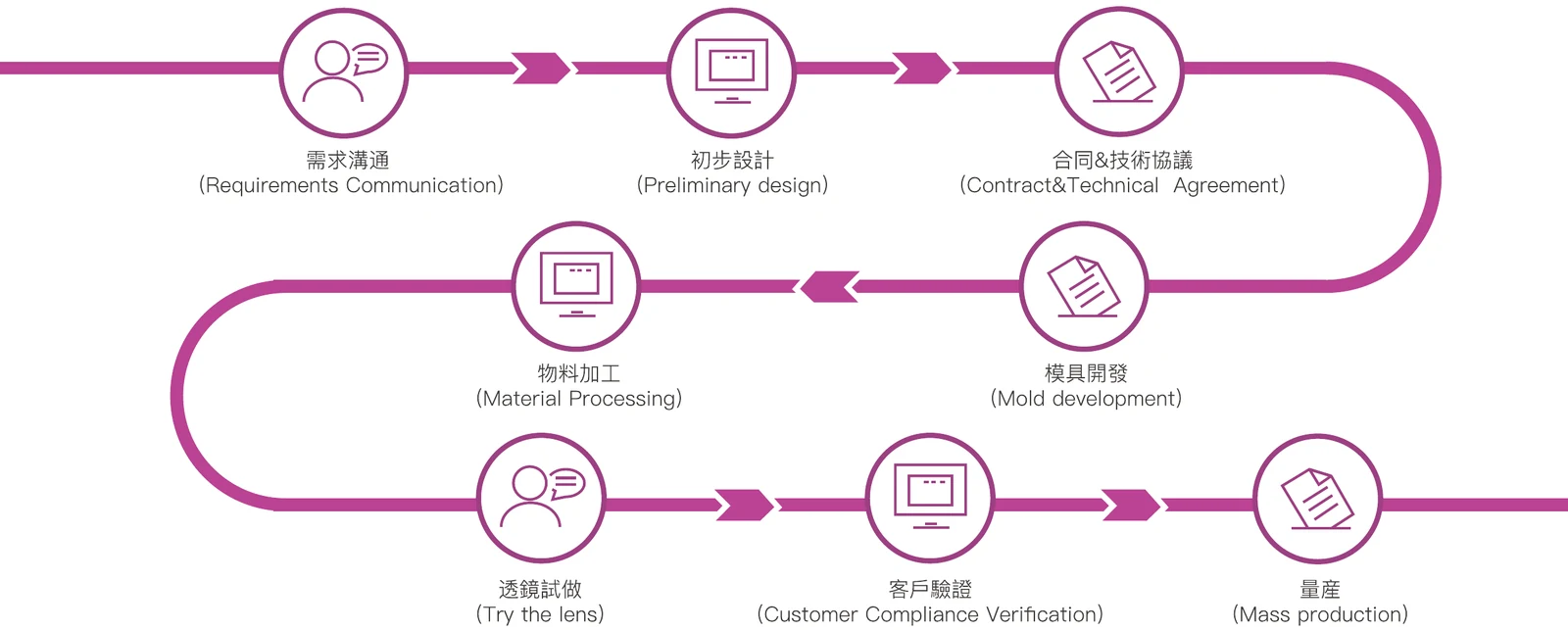
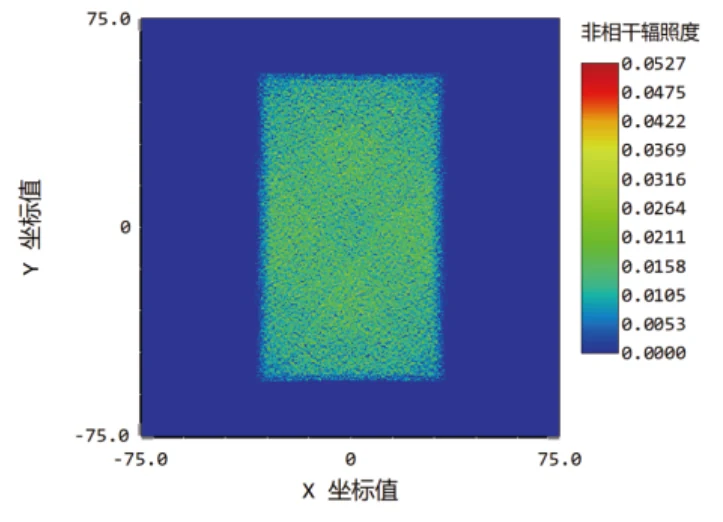
Optical design, material selection and forming geometry are developed together. Prototype evaluation checks the lens profile, mechanical fit and light distribution before production specifications are finalized.
Mold Development and Production
Lampoptics has dedicated optical-lens and mold workshops plus two electric furnaces, two electric annealing furnaces and three automatic production lines. Tooling and trial parts can be developed from customer optical and mechanical data.
Coating or drilling can be considered after molding where the part geometry permits. Glass grade, lens envelope, molding tolerance and the inspection route are confirmed during project review.
Molded Glass Lens Processing
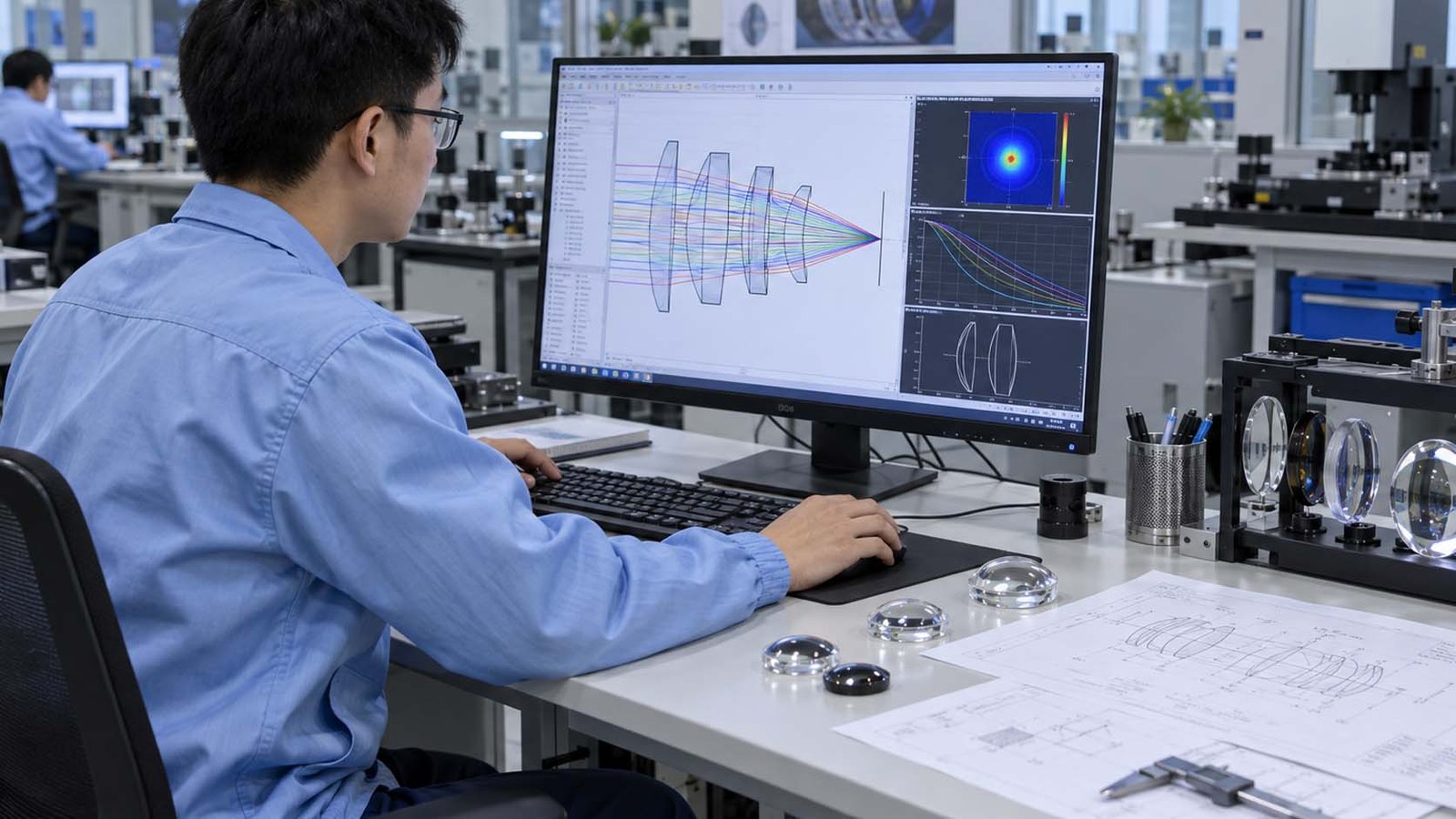
Optical Design Review
Surface data, focal targets, source position, clear aperture and mechanical datums are reviewed before tooling.
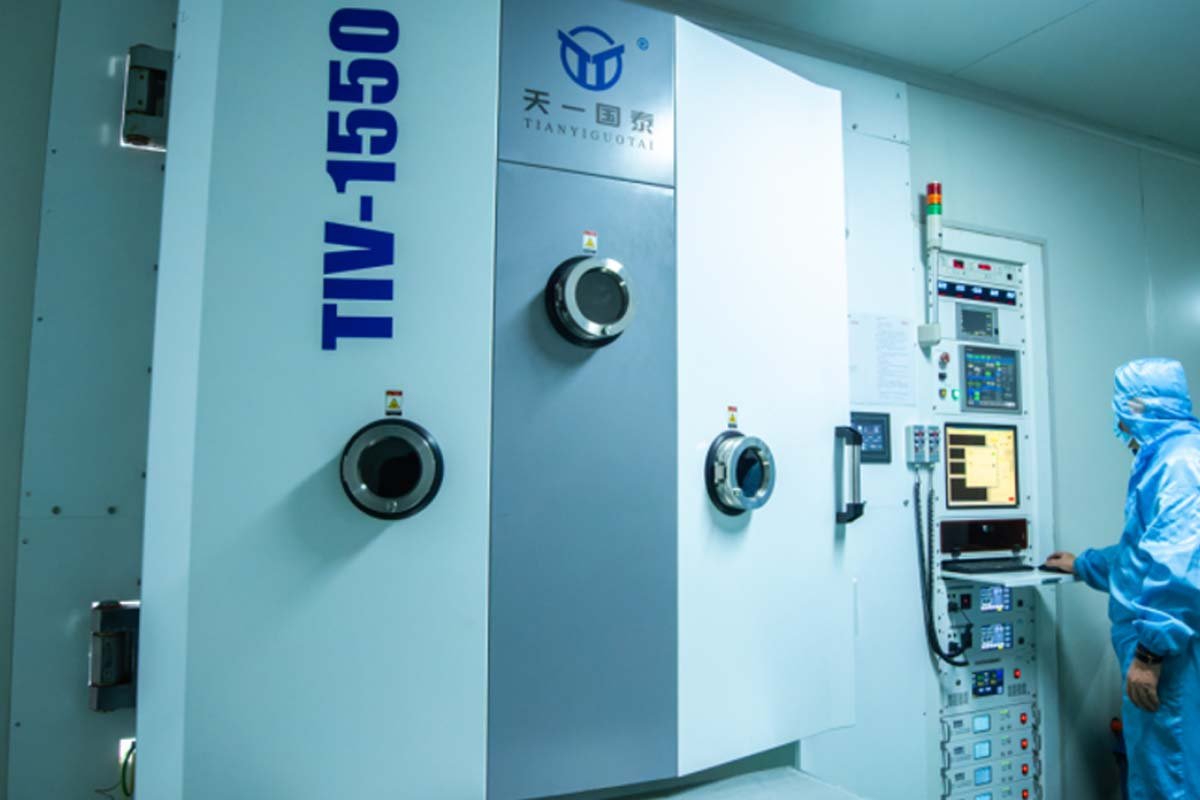
Precision Mold Tooling
Optical and mechanical surfaces are transferred into matched tooling with controlled alignment and surface finish.

Glass Molding and Annealing
Conditioned glass is molded to the lens form and cooled under a controlled cycle to limit residual stress and distortion.
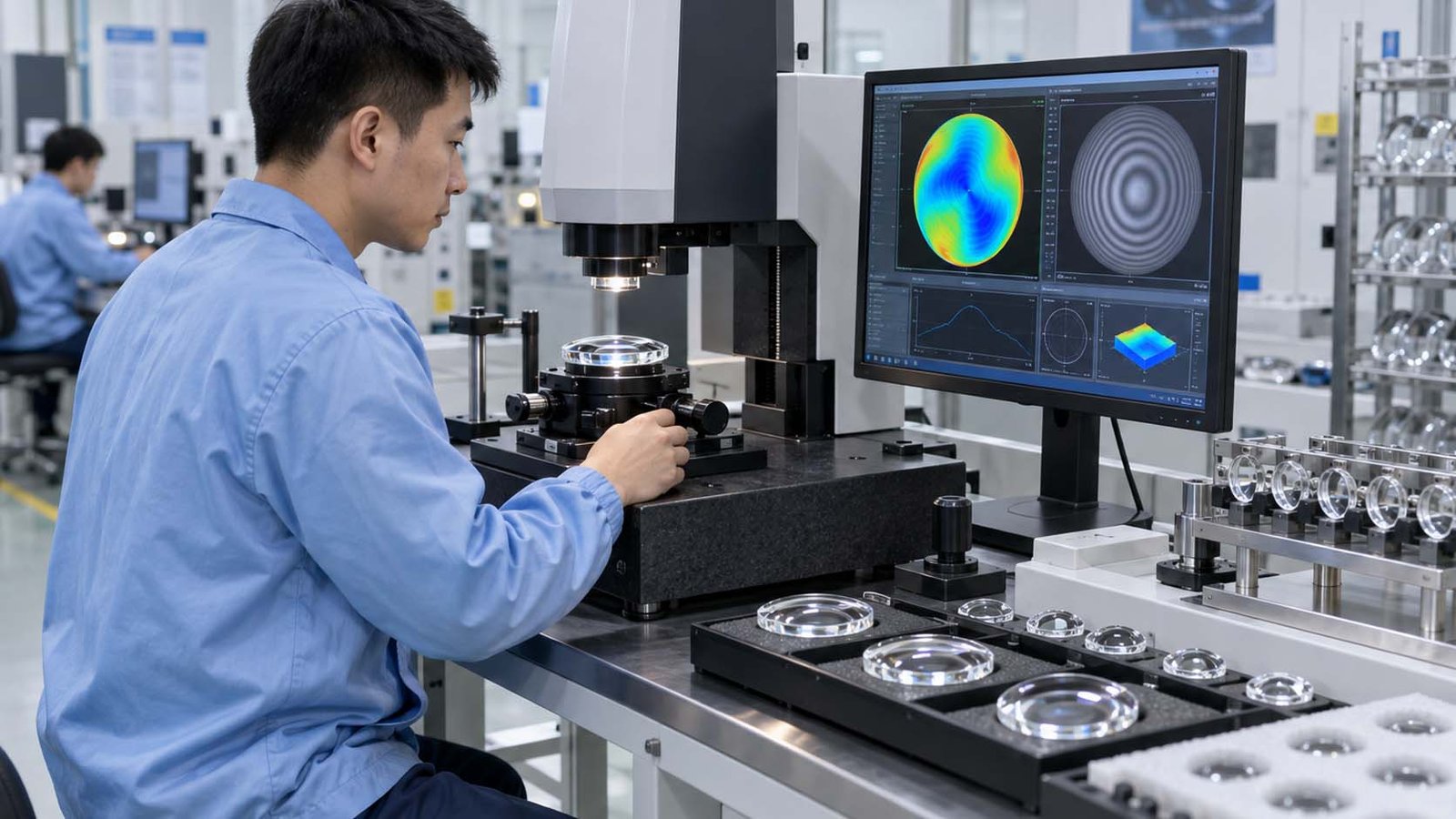
Optical Inspection
Surface form, focal performance, centration, dimensions and cosmetic quality are checked to the approved inspection plan.
Applications
- Automotive and motorcycle lighting: headlamp, fog-lamp and signal optics
- Spotlights and projectors: convex and condenser lenses
- Stage and entertainment lighting: beam-forming and condenser elements
- Industrial luminaires: heat-stable glass lenses for LED and lamp sources
- Sensors and instruments: meniscus, cylindrical and special-shaped optics
Molded Glass Lens FAQs
What information defines a molded glass lens?
The optical prescription, glass grade, mechanical drawing, clear aperture, tolerances and coating requirement define the part.
Can Lampoptics reproduce a lens from a sample?
A sample can support reverse engineering, but functional approval should use focal or beam data in addition to dimensional comparison.
Can mounting features be molded with the lens?
Flanges, seats and orientation features can be integrated when the optical surface, wall transition and mold release permit.
Can molded lenses be coated?
Coating is available as a project-specific process. Wavelength range, angle of incidence, coated face and durability requirements must be stated before feasibility is confirmed.
Which glass grades are available?
The glass grade is selected against the required refractive index, transmission band, molding temperature and service environment, then confirmed with the quotation.