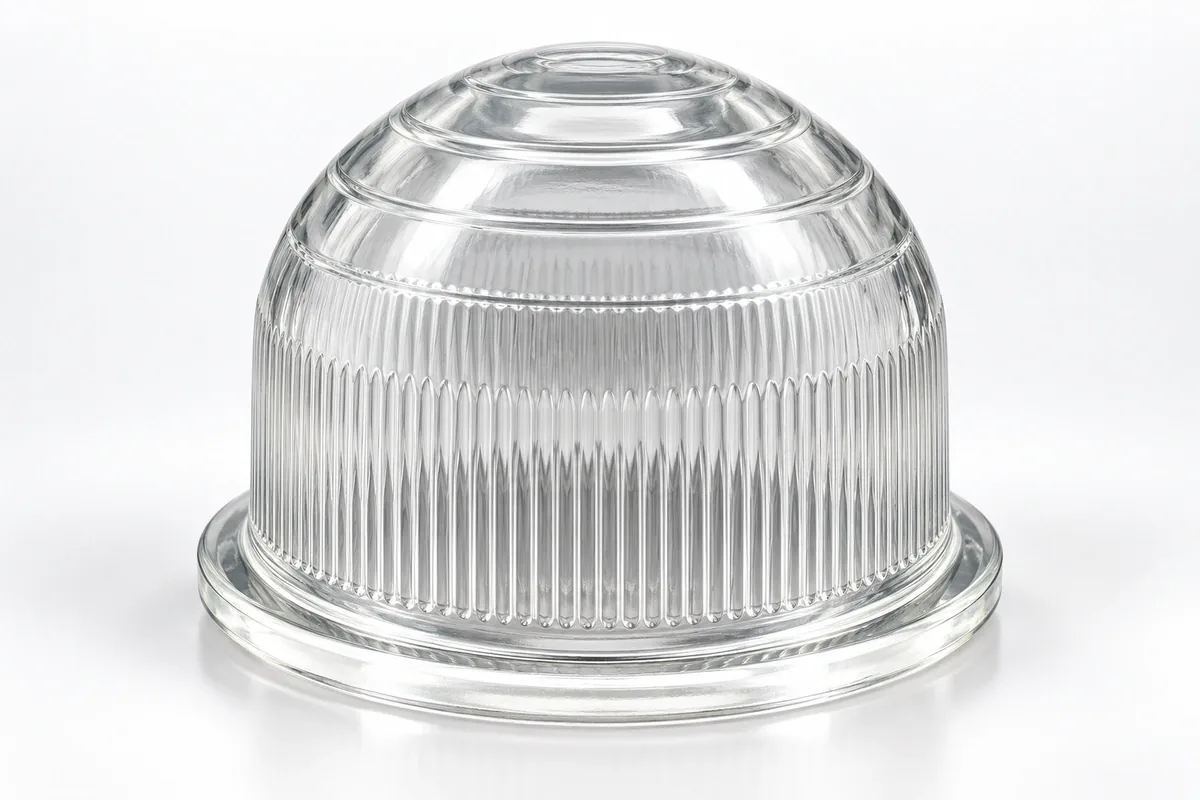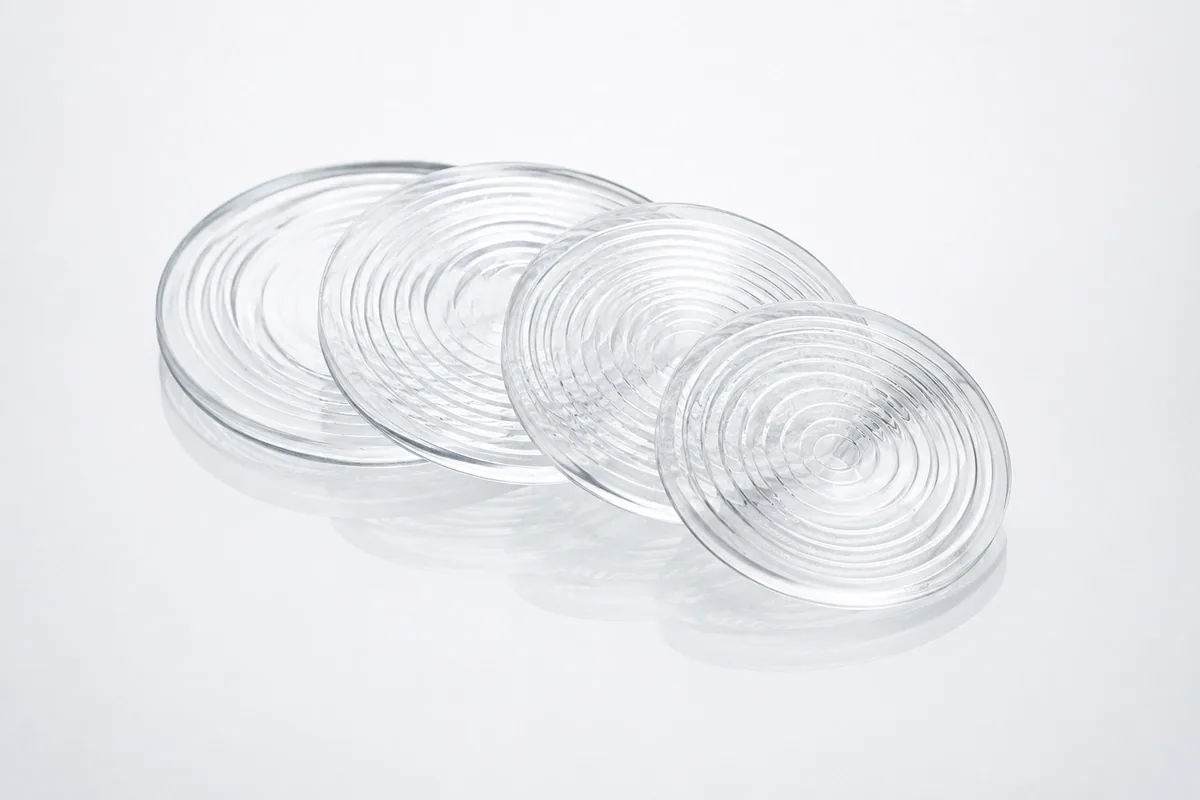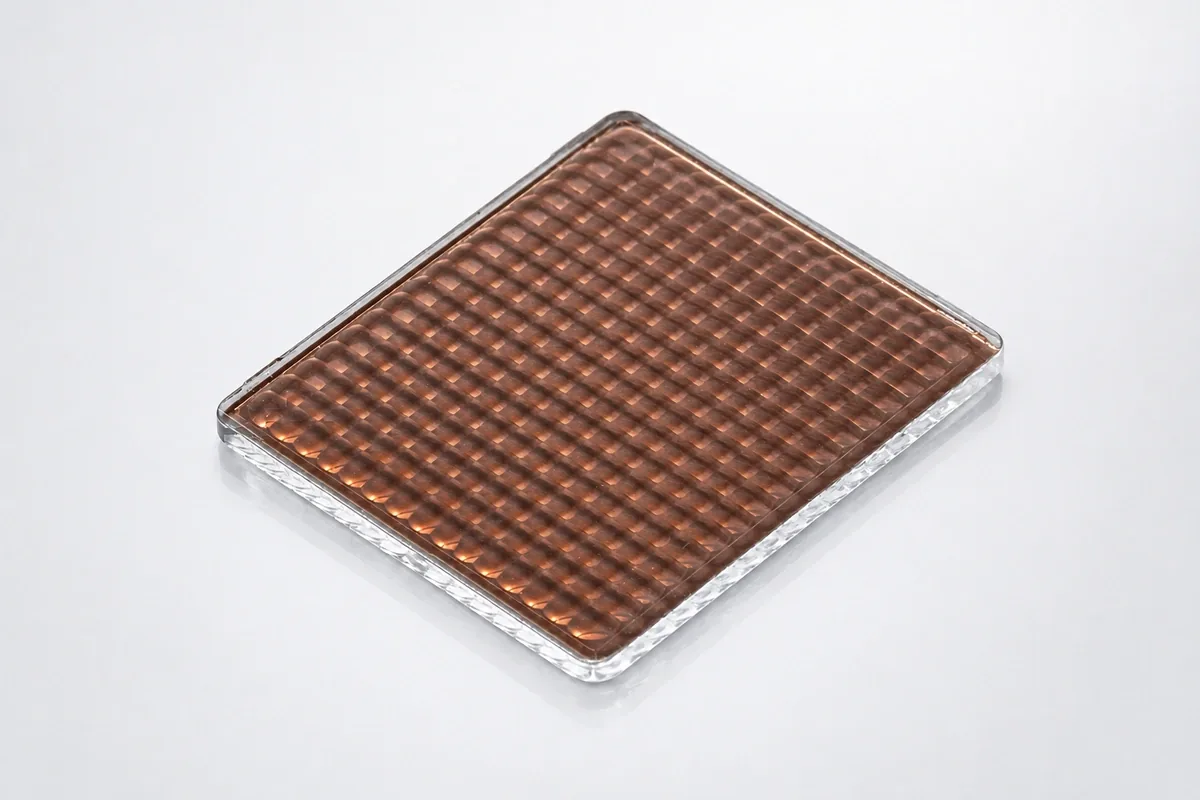
Custom TIR Glass Lenses
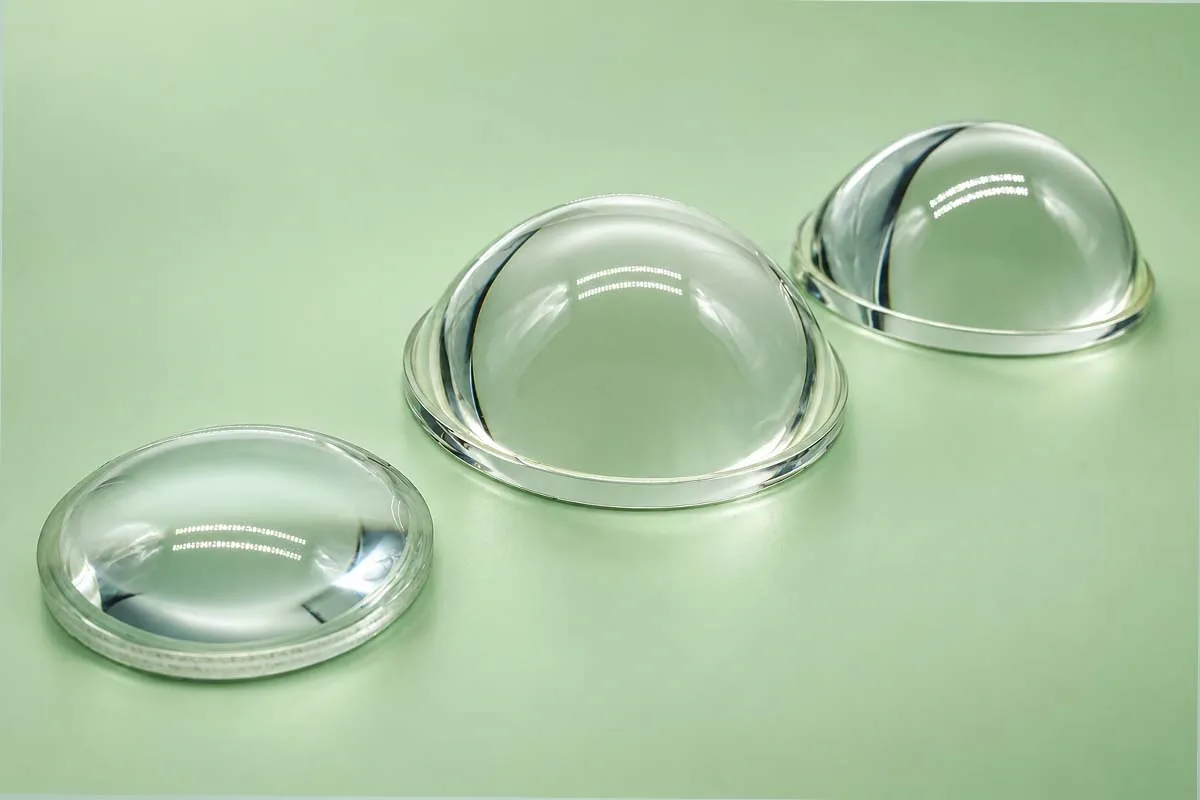
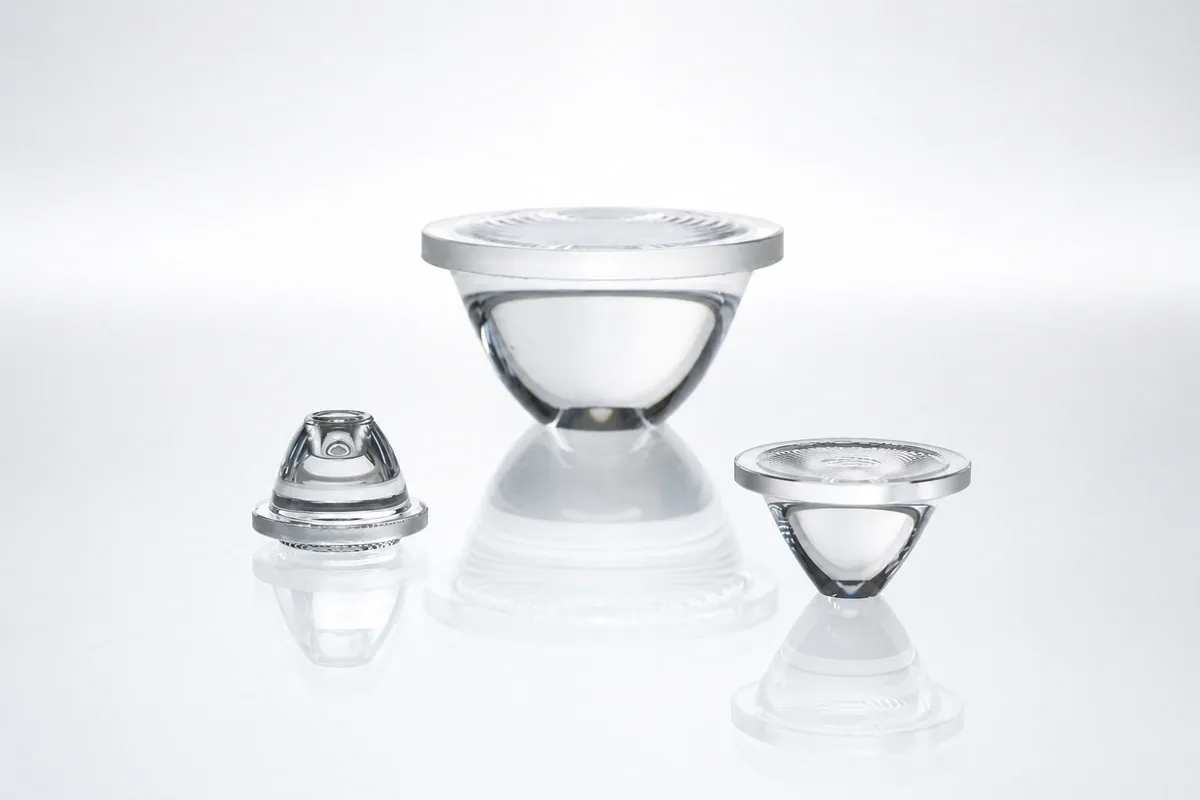
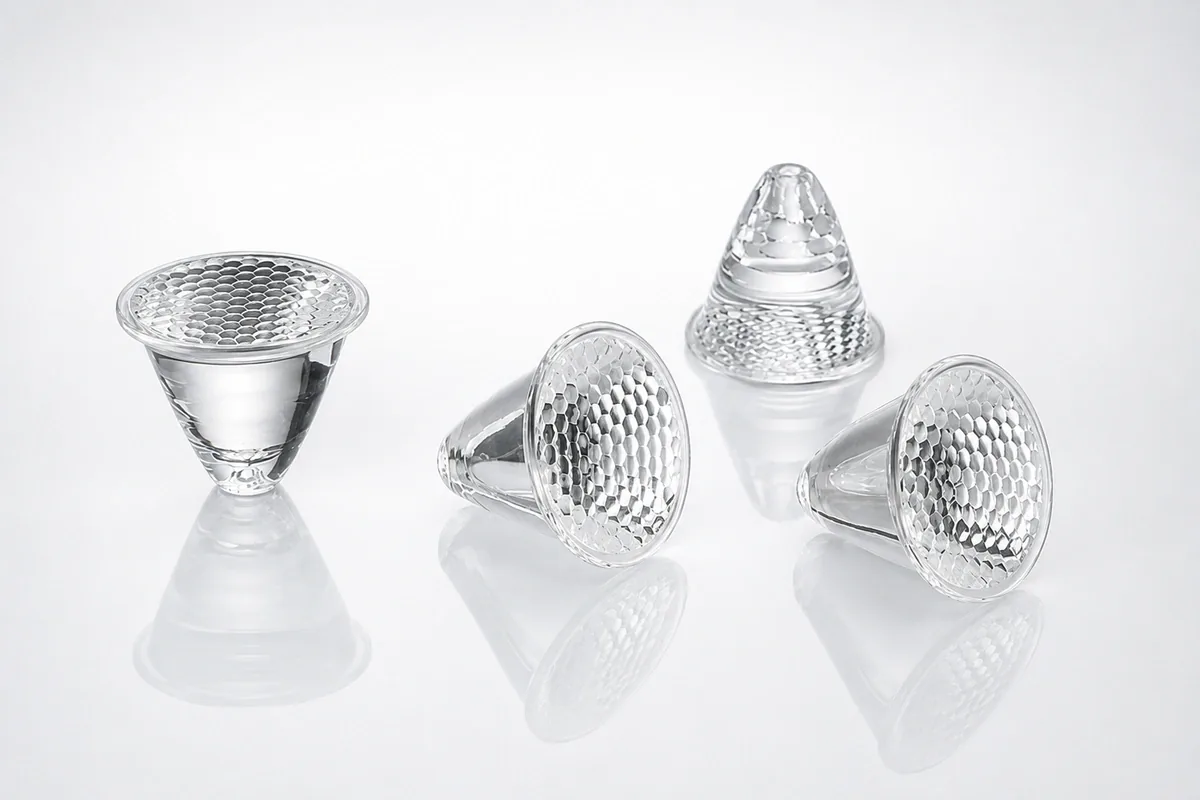
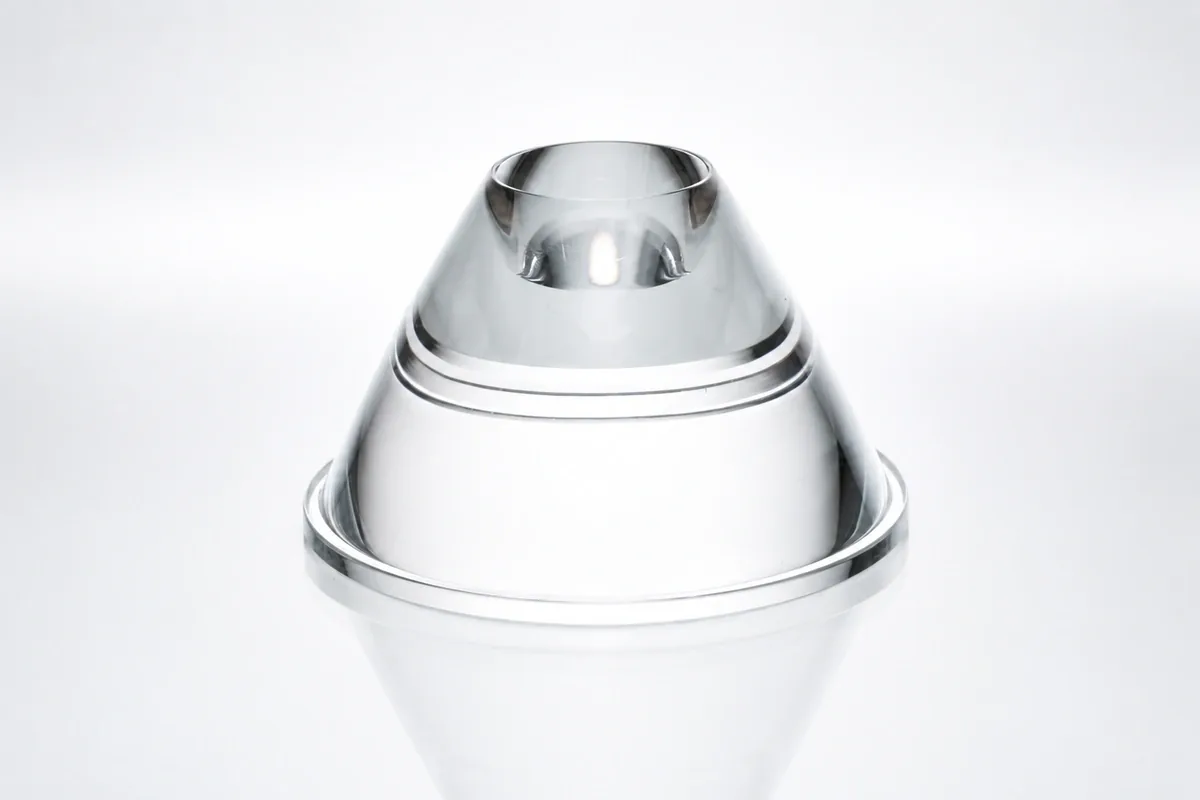
A total-internal-reflection lens places the LED or other source near an entrance cavity. Light entering the central region passes through refracting surfaces, while light reaching the outer sidewall is redirected by total internal reflection. The exit surface then forms the required beam.
Glass TIR optics are used where the lens must combine compact beam control with thermal and environmental stability. China Lampoptics evaluates the complete source-to-lens geometry rather than treating the optic as a generic diameter.
Specification note: Numerical ranges shown on this page are preliminary engineering references for project screening. The quotation and approved drawing define the final material, dimensions, tolerances, processing route and inspection method.
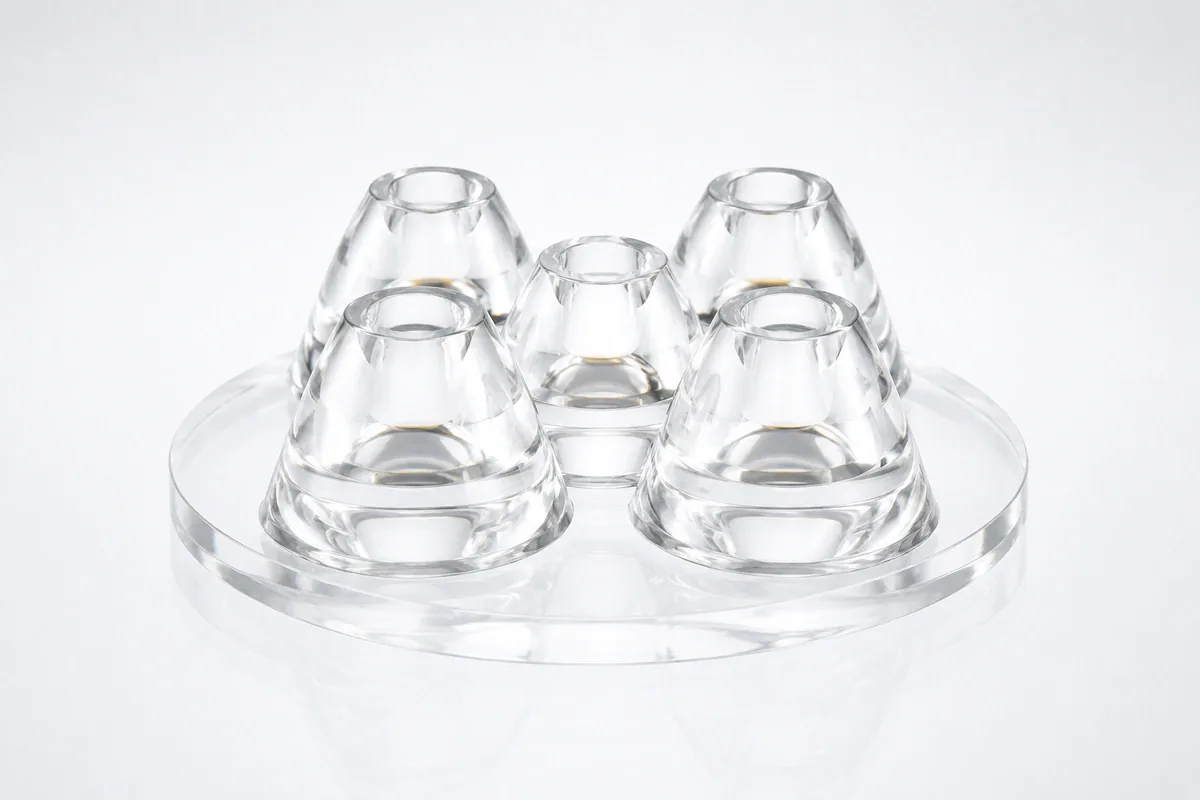
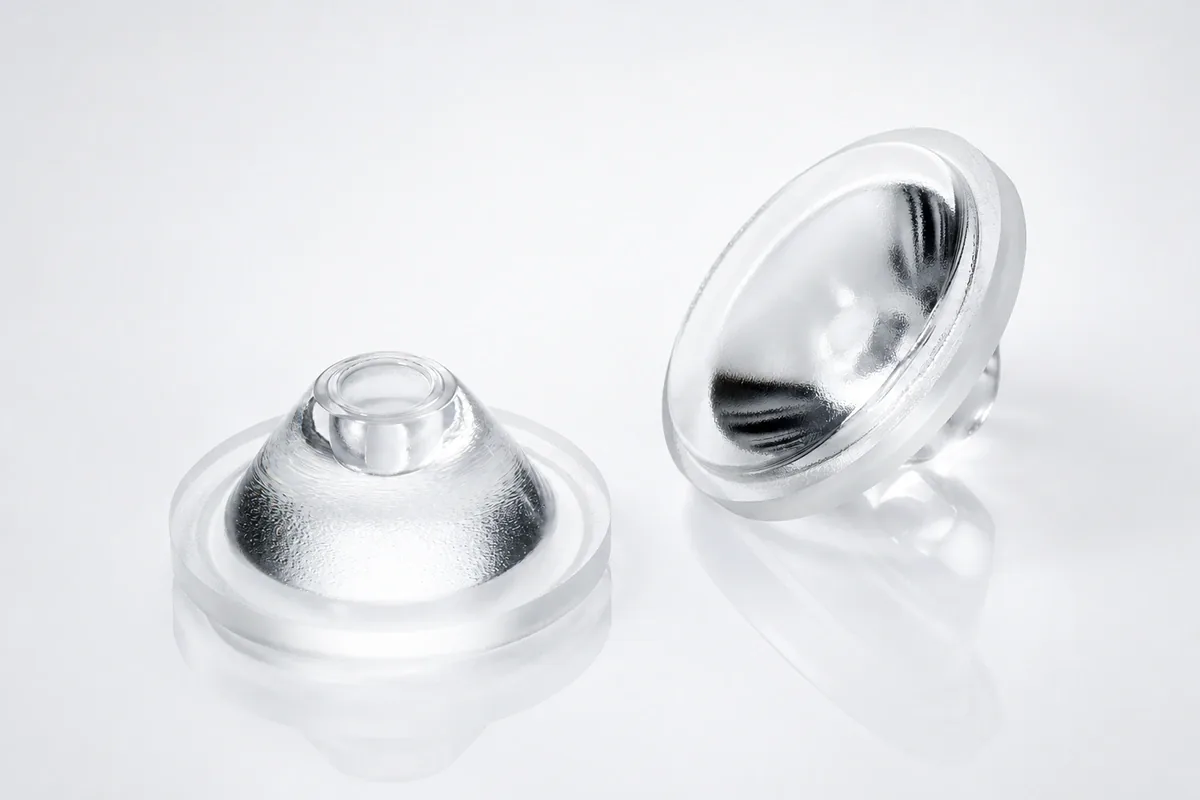
Beam Distributions
| Distribution | Optical result | Typical use |
|---|---|---|
| Narrow spot | Concentrated center beam | Spotlights, searchlights and long-throw fixtures |
| Medium beam | Balanced intensity and field width | General and industrial lighting |
| Wide beam | Broad field from a compact source | Indoor, high-bay and area lighting |
| Oval beam | Different horizontal and vertical spread | Corridors, vehicle warnings and wall washing |
| Asymmetric beam | Directs more light to one side of the optical axis | Street, perimeter and task lighting |
Source and Lens Interface
| LED / emitter model | Specified production source with package revision |
|---|---|
| Emitting area | Defined by the selected source datasheet/model |
| Spectrum / wavelength | Defined by the selected source and application |
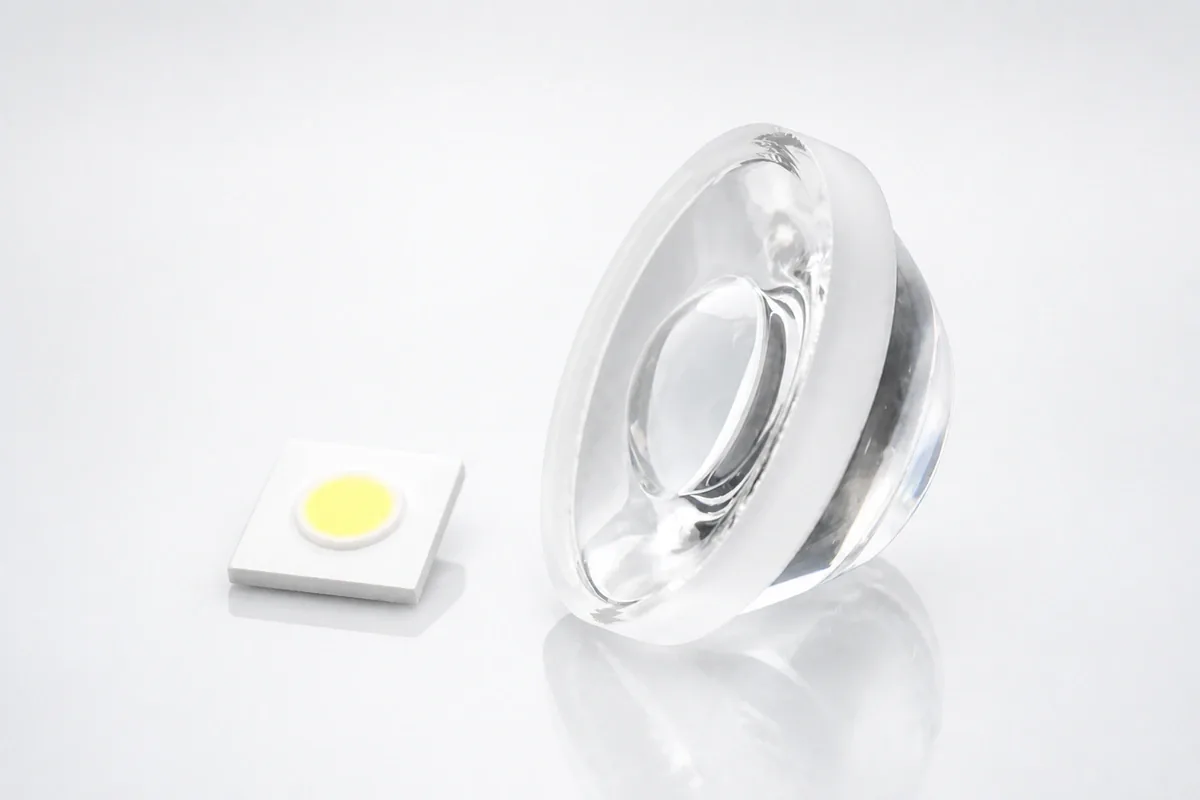
| Entrance cavity | Matched to source package and holder |
| Axial source position | Defined by the optical model |
| Lateral tolerance | Defined by sensitivity analysis and holder design |
| Tilt tolerance | Defined by sensitivity analysis and holder design |
| Mechanical holder / seat | Controlled mechanical interface drawing |
| Clearance at operating temperature | Defined by thermal and assembly analysis |
| Adhesive or retaining method | Defined by the complete optical assembly |
Changing LED package, emitting area or source position can change the beam even if the same lens is used. Photometric approval must therefore record the source and its mechanical location.
Optical Specifications
| Target intensity distribution | Controlled photometric target file |
|---|---|
| Beam angle definition | FWHM, field angle or project-specific definition stated with target |
| Peak intensity | Measured under the specified source, current and distance |
| Optical efficiency | Defined by the optical system and controlled acceptance target |
| Cutoff / stray-light limit | Defined by the application photometric target |
| Glass refractive index | Selected for the application and confirmed with the quotation and material data |
| Transmission band | Target defined by the application or approved sample; achievable result confirmed during review |
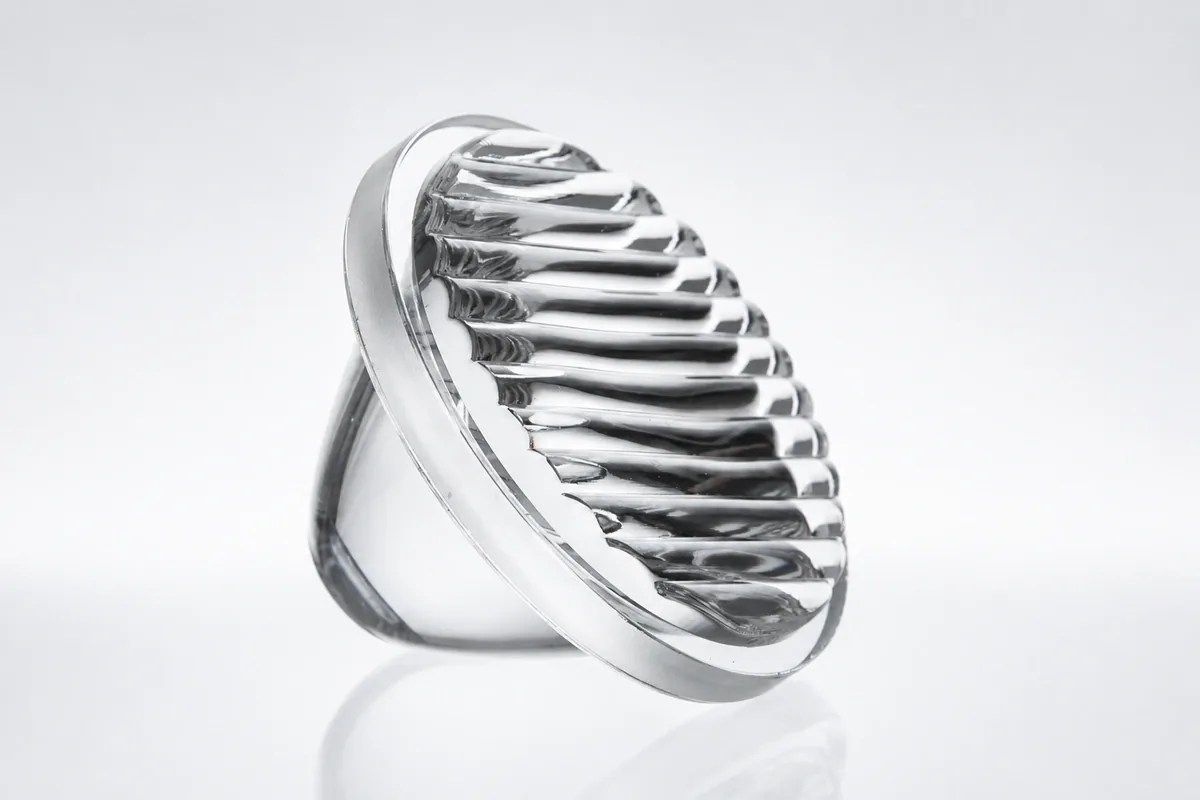
| Exit surface | Smooth or structured according to the released optical model |
A photometric file or measured intensity map is a better functional acceptance reference than beam angle alone, especially for asymmetric and cutoff distributions.
Fused Silica TIR Lens Development
Fused silica can be reviewed for TIR and reflector-lens designs that combine elevated temperature, UV service or a demanding optical environment. The source package, entrance cavity, reflective surface, exit surface and holder must be designed as one system.
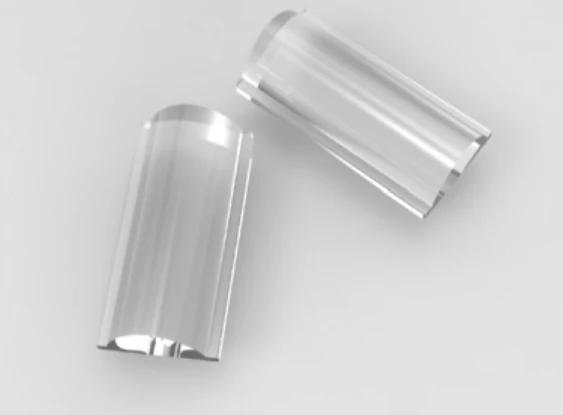
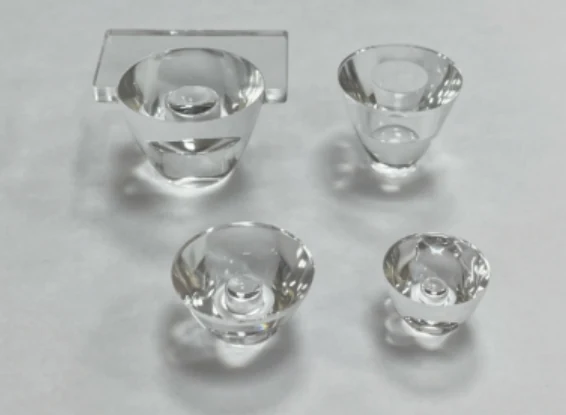
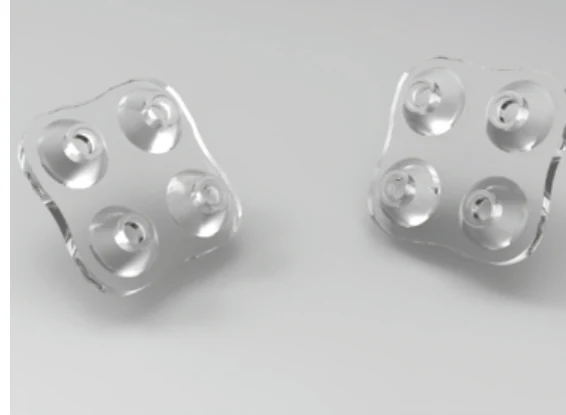
| Product forms | Fused-silica TIR lenses and reflector-lens forms |
|---|---|
| Material specification | Confirm grade, refractive index at the design wavelength, internal transmission, OH content and thermal cycle |
| Optical specification | Confirm emitter model, source position, target distribution, working distance and stray-light limit |
| Mechanical specification | Confirm clear aperture, seat, retention, assembly tolerance and thermal clearance |
TIR geometry is tailored to the emitter and target beam. The entrance cavity, exit surface, optical axis and mounting seat are specified together on the product drawing.
Product Development and Acceptance
Lampoptics develops the entrance cavity, reflective sidewall, exit surface and mechanical seat in one mold coordinate system. Controlled annealing follows forming before dimensional and optical evaluation.
Glass grade, surface-form tolerance, cavity limit and performance-verification responsibility are confirmed during project review. Coating can be considered when a measurable spectral or surface requirement is supplied.
TIR Glass Lens Processing
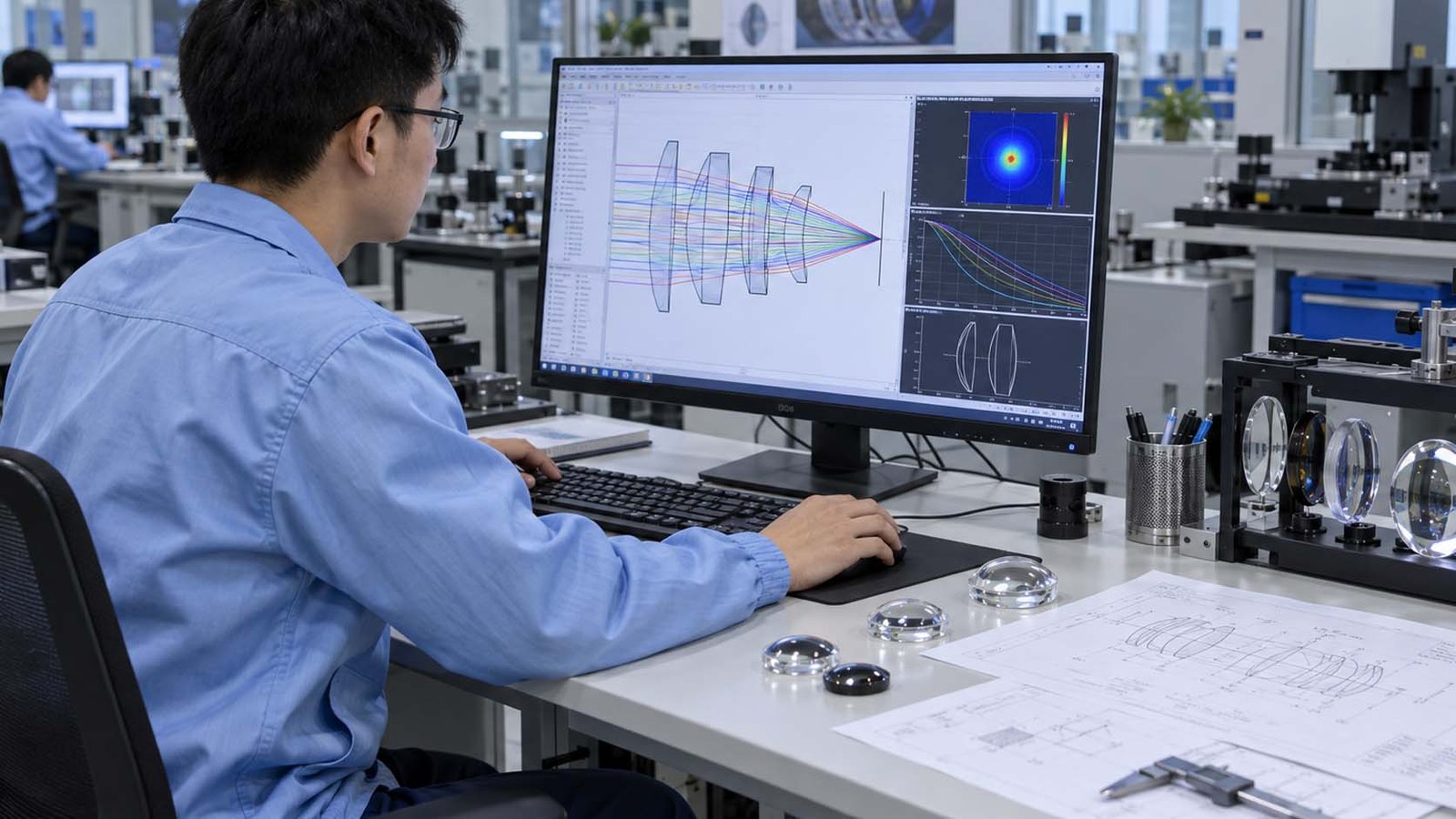
Source Matching
The LED package, emitting area, source position and target beam define the entrance cavity and TIR surface.
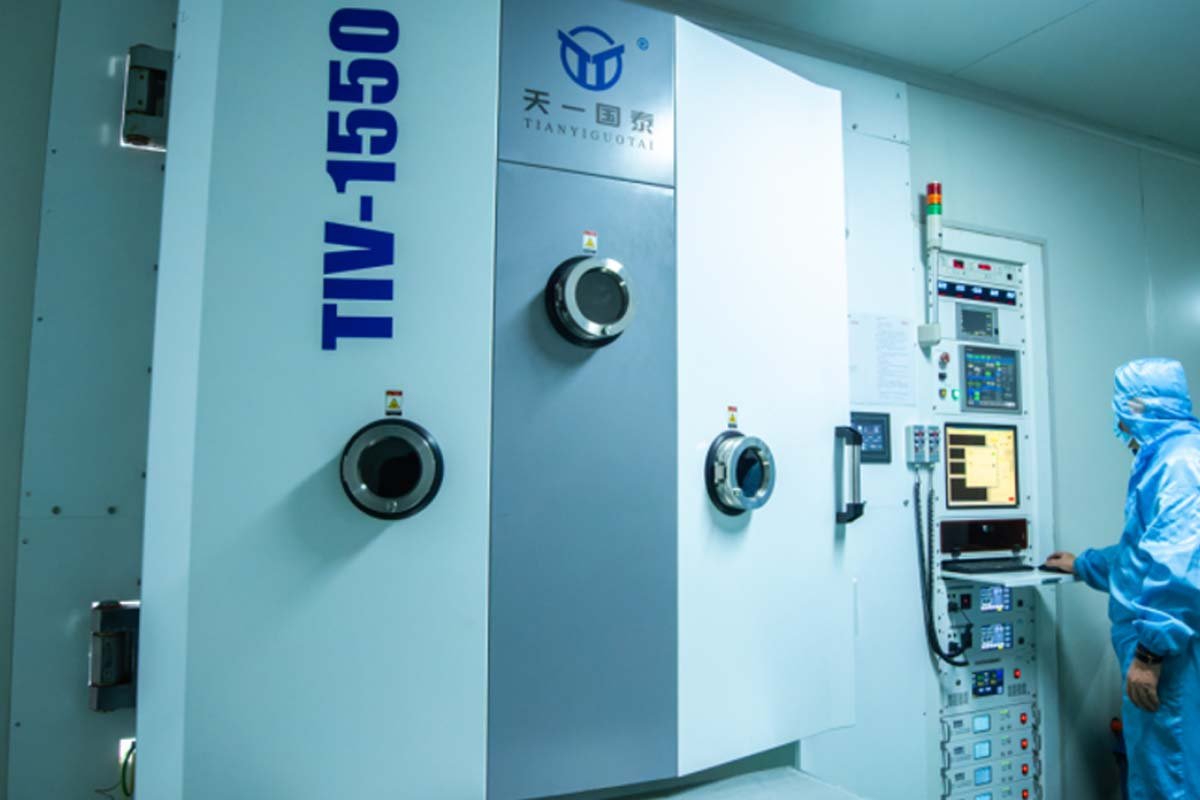
Optical Tooling
The cavity, reflective profile and mounting datum are transferred into precision molding tools.

Glass Molding
The complete optical form is molded while controlling fill at steep surfaces and around the source cavity.
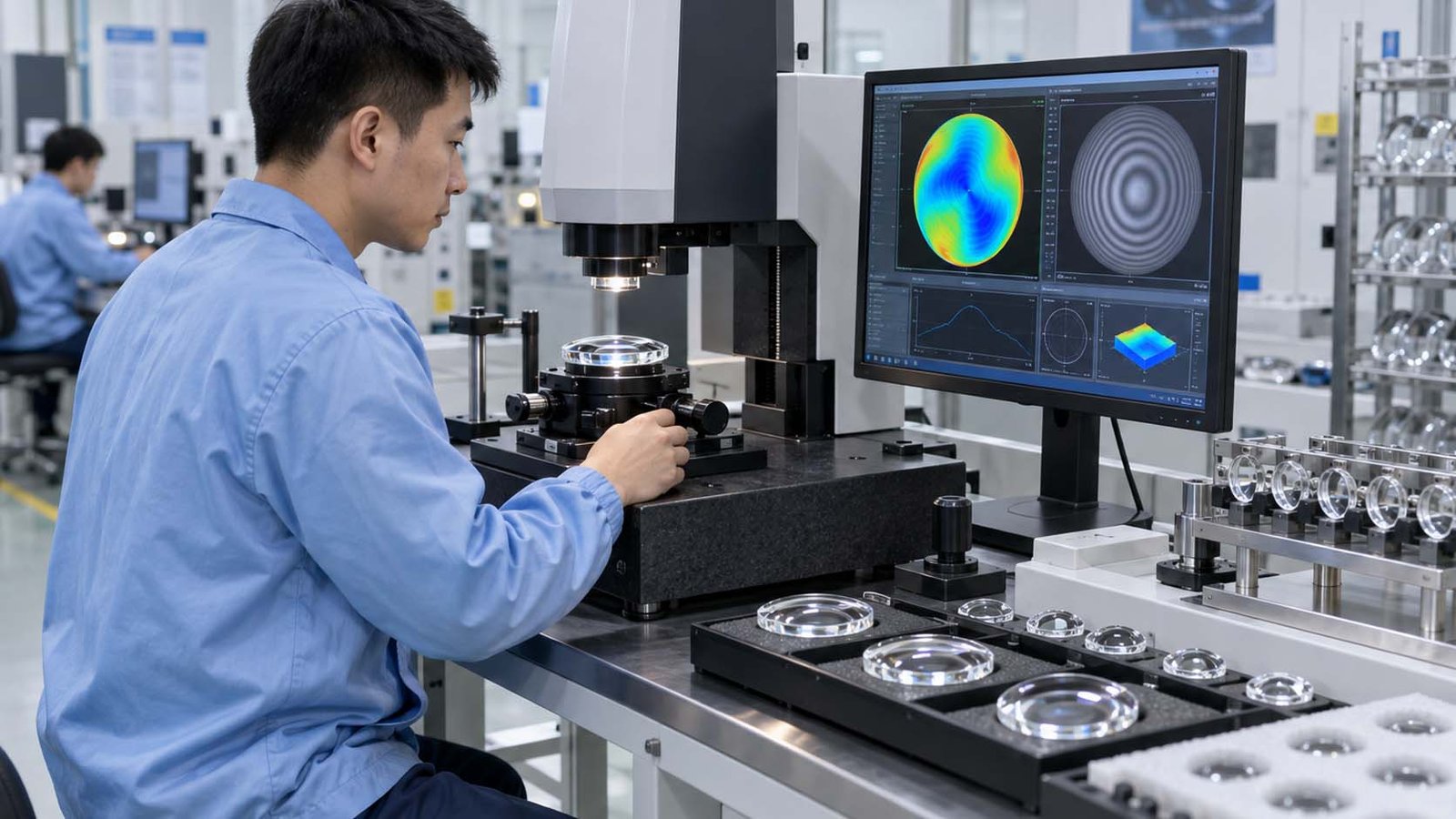
Performance Acceptance
Dimensions, source alignment and the far-field beam are compared with the approved optical target.
Applications
- Spot and track lighting: compact narrow and medium beams
- Street and area lighting: asymmetric distributions
- High-bay and industrial lighting: medium and wide beam families
- Vehicle and warning lights: oval, asymmetric and colored beams
- Stage lighting: high-intensity collimation and beam shaping
TIR Glass Lens FAQs
What does TIR mean?
TIR means total internal reflection, where light striking an internal glass surface above the critical angle is redirected without a reflective coating.
Does one TIR lens work with every LED?
No. The emitting area, package height, spectrum and source position all influence the beam.
Can TIR glass lenses produce asymmetric beams?
Freeform sidewalls or exit surfaces may support oval or asymmetric distributions. The required intensity map must be supplied as a controlled design target.
How is the beam approved?
Use the defined source, drive condition, source position, test distance and a target photometric file or intensity limits.
What TIR sizes can Lampoptics mold?
Feasible lens size, cavity and weight are confirmed after the LED package, optical model and tooling envelope are reviewed.