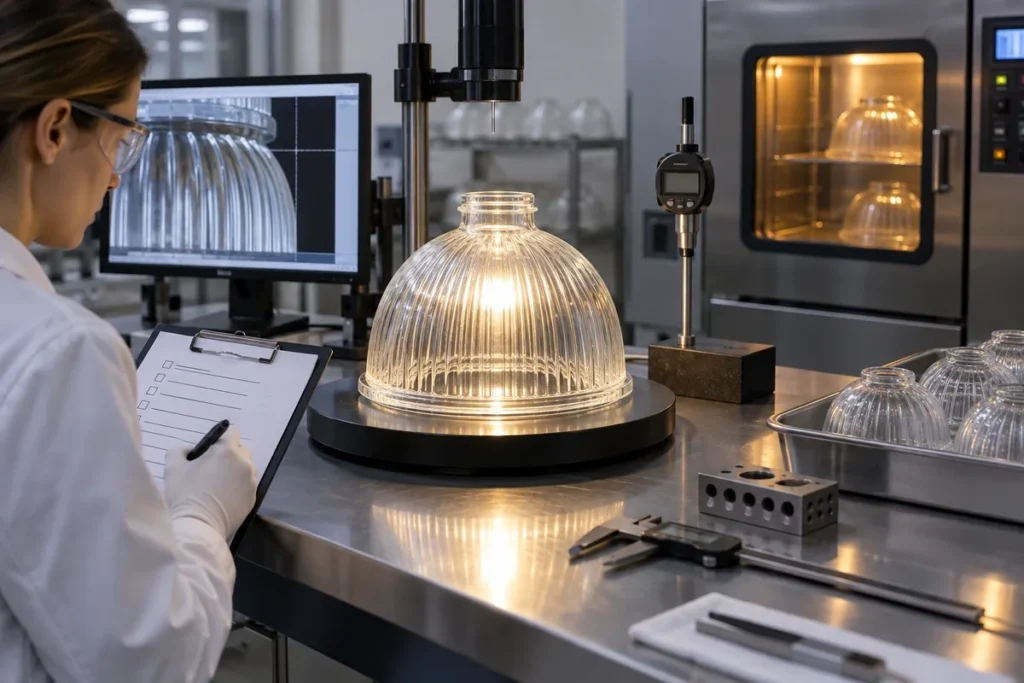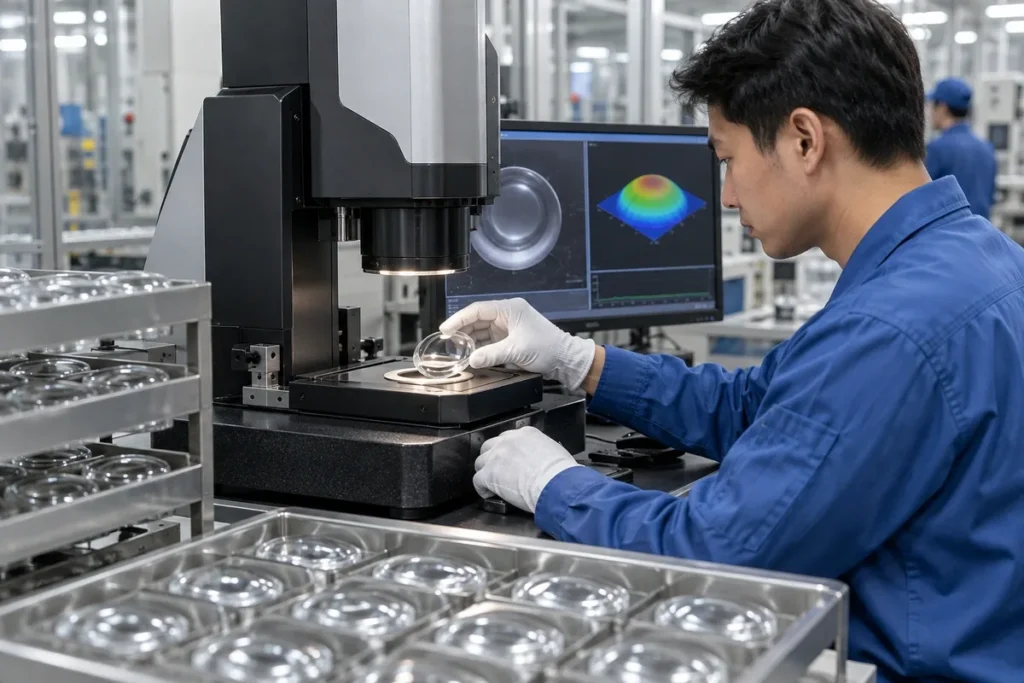
Aspherical vs spherical glass lenses is a performance-versus-complexity decision. A spherical surface is defined by a radius and is straightforward to describe and inspect. An aspherical surface departs from that sphere to control aberration or redistribute rays more precisely. In illumination, the asphere is valuable only when the real LED, packaging space and beam target justify its added tooling and metrology requirements.
Key Takeaways
- Use a spherical lens when it meets the beam target with acceptable size and efficiency.
- Choose an asphere to solve a defined optical limitation, not simply because it sounds more advanced.
- Model the actual extended LED source and assembly tolerances before comparing designs.
- Specify surface form and functional beam acceptance in a way production can measure.
What Changes When a Surface Becomes Aspherical?
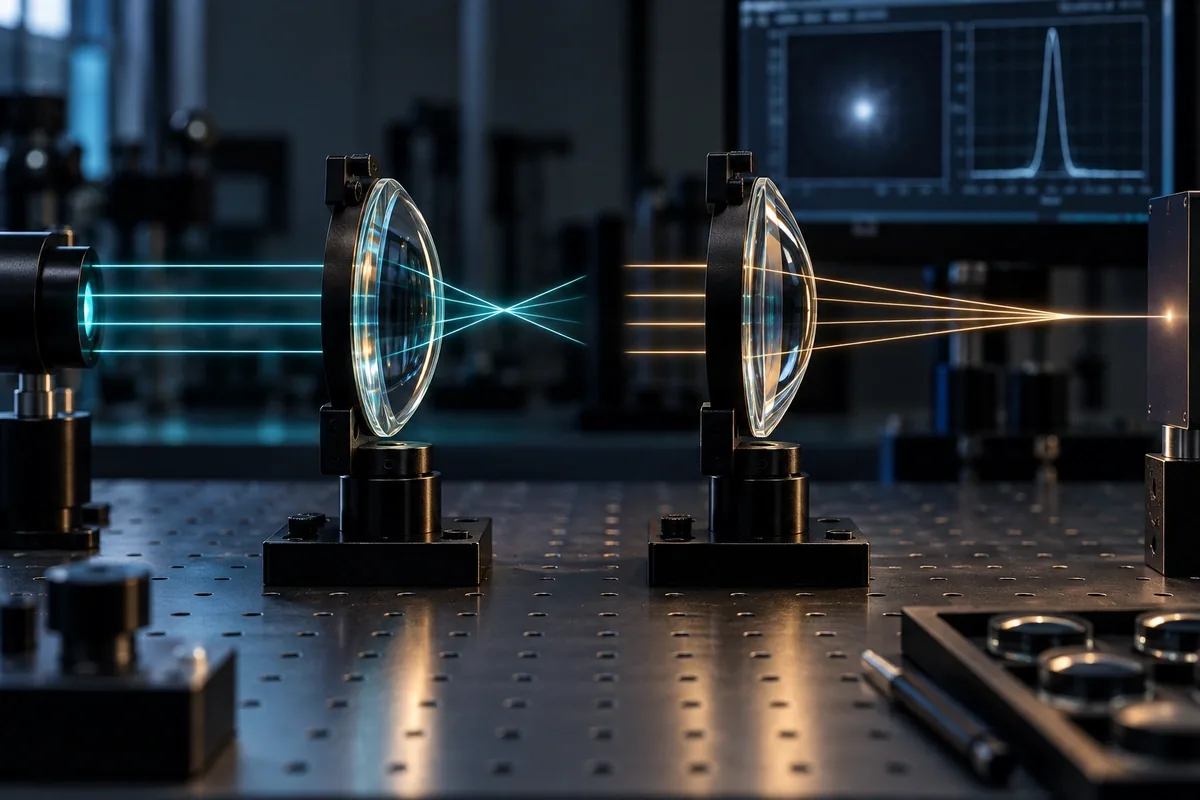
Every point on an ideal spherical surface belongs to one radius. Rays farther from the optical axis therefore encounter a predictable but limited family of slopes. An asphere modifies those slopes using conic and higher-order terms or a point-based prescription. It can reduce spherical aberration, shorten a system or shape a non-imaging beam with fewer elements.
The benefit depends on source extent and numerical aperture. A perfect point-source design may lose its advantage with a large LED die or phosphor region. Compare designs with the same source model, material and mechanical constraints.
Aspherical vs Spherical Glass Lenses: Tradeoffs
| Criterion | Spherical lens | Aspherical lens |
|---|---|---|
| Prescription | Radius, diameter and thickness | Conic/higher-order coefficients or controlled point set |
| Design freedom | Moderate | Greater control of ray direction and aberration |
| Tooling | Generally simpler form generation and verification | More demanding tool form and replication |
| Inspection | Radius, form and functional checks | Detailed form map, datum alignment and functional beam |
| Best use | Requirements met without unnecessary complexity | Documented performance or packaging gain |
Use the Actual LED and Mechanical Stack
Lens performance changes with LED emitting area, spectrum, dome, source height and temperature. Define the position of the lens relative to a physical LED datum. Include centering, tilt and axial tolerances in simulation. If adhesive sets the gap, its cured thickness must be controlled or removed from the optical stack with a mechanical stop.
For an illumination optic, specify beam angle, center intensity, distribution shape, uniformity and allowed artifacts. An asphere should be judged against those metrics, not against surface-form numbers alone.
Design the Prescription for Molded Glass
High sag, sharp edge transitions and steep local slope may complicate mold manufacture, glass fill and release. The optical and tooling teams should identify which coefficients or zones may be adjusted. The mounting border and parting line must remain outside critical surfaces where possible.
First samples can be measured with profilometry or comparison methods and then tested in the intended optical bench. A beam difference may come from surface form, refractive index, source position or assembly, so diagnostic measurements should be planned before sampling.
Custom Aspherical Glass Lens Support
China Lampoptics reviews custom aspherical and molded glass lens designs for geometry, mold development, material and inspection. Customers may provide a full optical prescription, CAD surface, sag table or approved master sample together with a functional beam requirement.
Send source data, wavelength range, target distribution, allowable envelope, material, surface zones, tolerance priorities and quantity. This creates a practical path from optical model to molded samples.
Watch: A Related Glass or Optics Process
Canon's overview illustrates refraction and basic lens behavior. It provides useful background for understanding why changing a surface away from a sphere creates another degree of optical control.
Related Products and Capabilities
Continue Reading
Discuss Your Aspherical Vs Spherical Glass Lenses Project
Send your drawing, application conditions, quantity and the characteristics that matter most. China Lampoptics will review the information and identify the open technical items before quotation.
Contact China Lampoptics