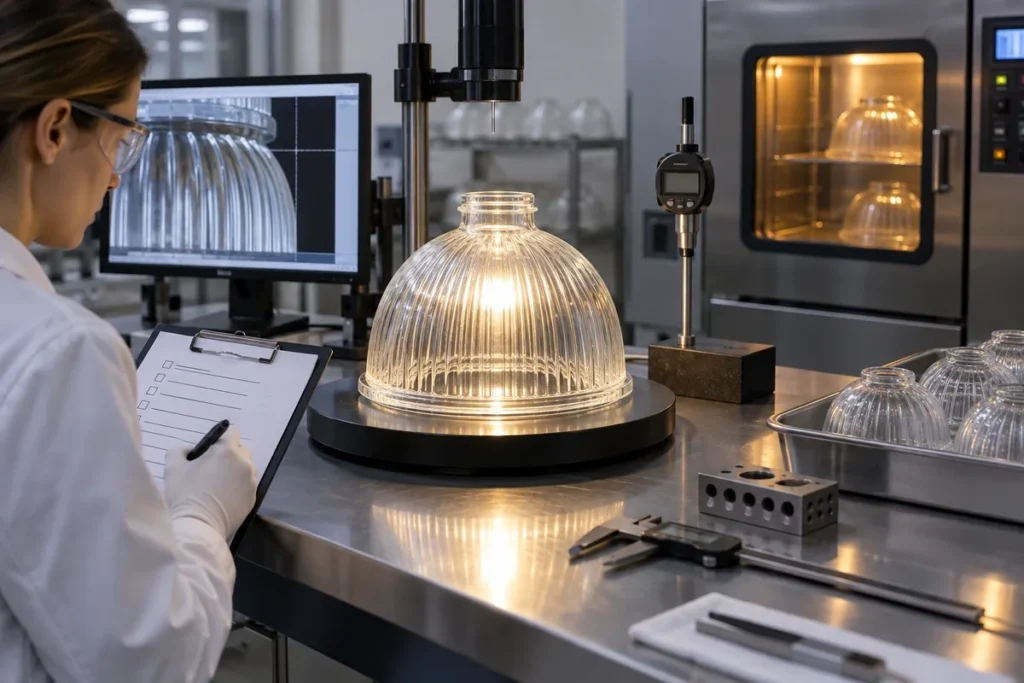
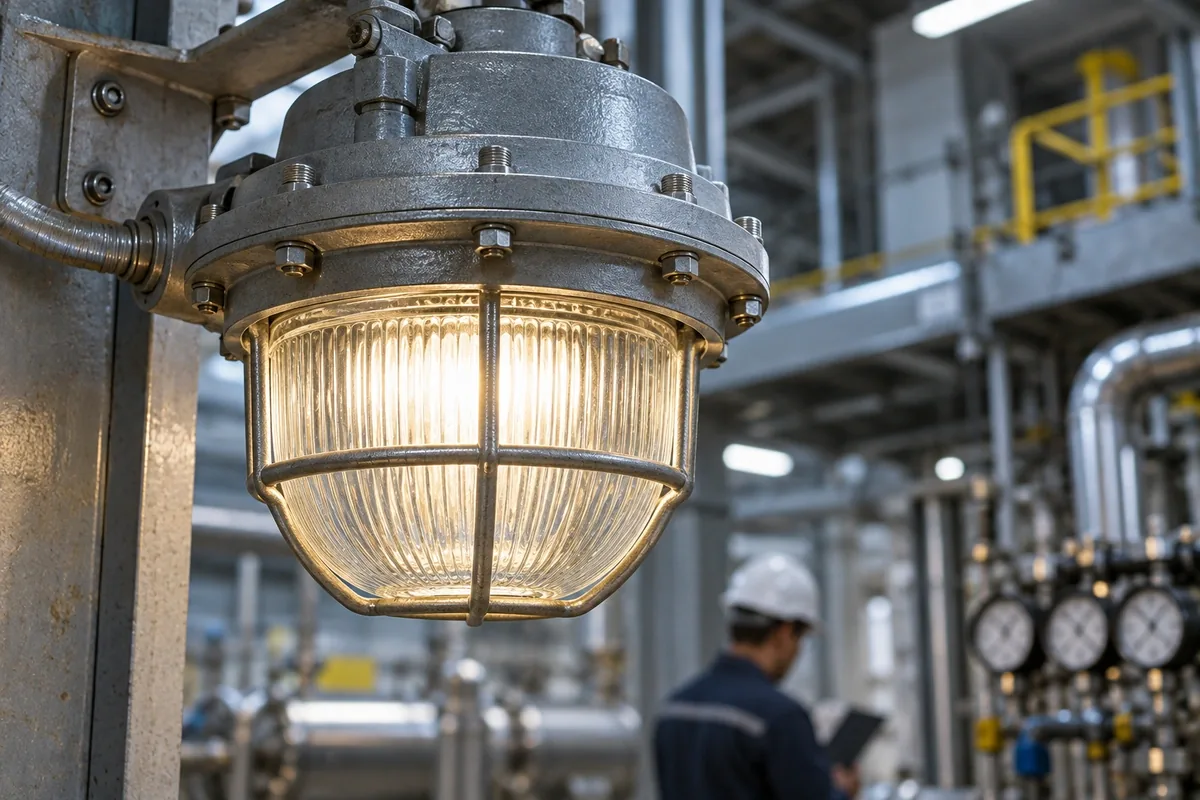
Explosion-proof glass covers cannot be specified safely from diameter and thickness alone. The glass operates as part of a certified or qualification-bound enclosure that includes the body, flame path, retaining system, gasket or cement, thermal source and installation method. The equipment designer must define the applicable standard, protection concept, gas or dust group, temperature class and required tests before a replacement or custom cover is developed.
Key Takeaways
- Treat the glass, retainer and enclosure as one pressure- and temperature-loaded system.
- Provide the governing standard and certification responsibility; a component supplier cannot certify an unknown assembly.
- Control seating geometry, edge condition, retention and traceability as carefully as visible glass quality.
- Do not substitute a visually similar cover without qualified engineering and system testing.
Why the Complete Enclosure Defines the Requirement
In an explosion-protected luminaire, the cover may need to withstand internal pressure, external impact, thermal shock and long-term environmental exposure while remaining secured. The supported span, curvature, rib geometry and boundary condition determine stress. Retaining rings or cemented joints transfer loads into the metal housing and may also contribute to the defined flame path.
Two covers with the same outside dimensions can behave differently if their glass composition, wall distribution, molded ribs, edge finish or support width differ. A sample-only copy therefore needs a controlled drawing and validation plan.
Information Required for a Technical Review
| Requirement group | Information to provide | Why it matters |
|---|---|---|
| Protection basis | Applicable standard, protection concept, gas/dust classification and certification owner | Defines tests and permitted construction changes |
| Mechanical duty | Design/test pressure, impact requirement, supported aperture and retention | Establishes glass and housing loads |
| Thermal duty | Lamp/LED heat, glass temperature, cycling and cold-liquid exposure | Guides material and thermal validation |
| Interface | Housing drawing, seating width, gasket/cement and installed position | Controls load transfer and sealing |
| Traceability | Drawing revision, material, lot marking and inspection records | Supports controlled production and certification evidence |
Design Glass Geometry and Retention Together
Curvature and ribs can increase stiffness and manage light, but they also create local thickness changes. The rim or flange must seat without rocking. Sharp edge damage, uneven cement thickness or concentrated clamps can create high stress. The retainer should prevent ejection under the defined load without imposing uncontrolled preload.
Dimensions should reference the installed condition. Where a functional housing gauge is used, preserve its revision and calibration. If the enclosure relies on a cemented joint, material compatibility, cure control and process inspection belong to the assembly manufacturer.
Testing, Change Control and Claims
Applicable tests may address pressure, impact, thermal endurance, thermal shock, ingress and flame-path performance. The exact program follows the protection concept and jurisdiction. Passing a generic glass strength test does not demonstrate compliance of an enclosure, and a previous certificate may not cover a changed geometry or supplier route.
Control changes to material, dimensions, mold, strengthening, edge process and marking. Before adopting a new glass component, the certification owner should determine whether re-evaluation is required.
Working with China Lampoptics
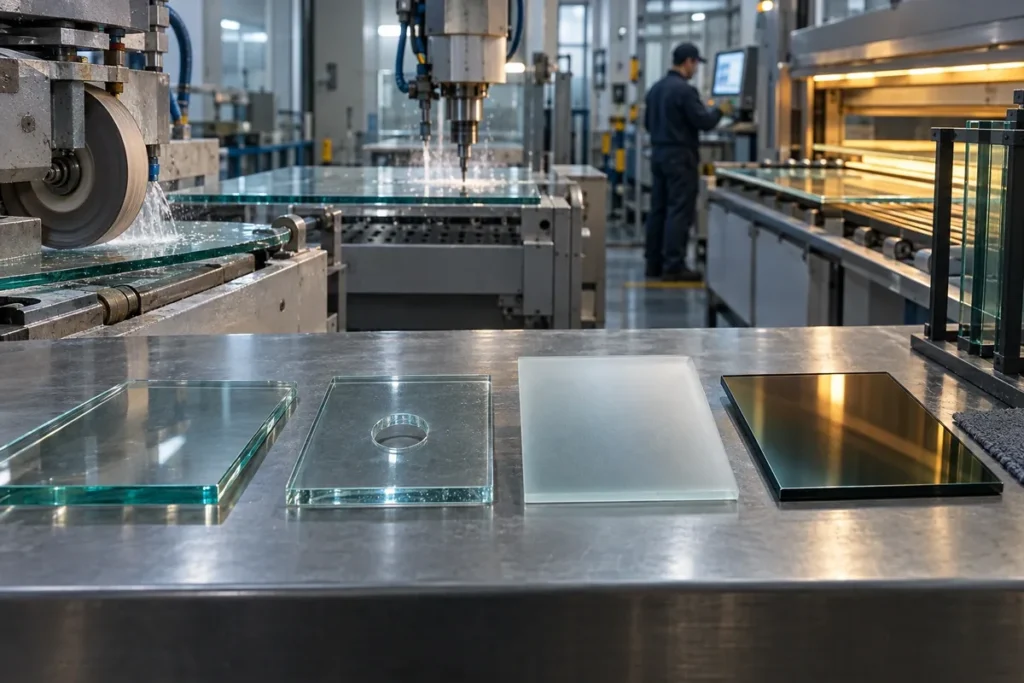
China Lampoptics reviews thick, ribbed, domed and threaded industrial glass-cover drawings for manufacturability, mold development and relevant secondary processing. The review identifies open data rather than filling safety-critical fields with assumptions.
Send the approved drawing, housing section, standard and protection concept, material requirement, test responsibility, annual quantity and current certificate/change-control constraints. Unknown safety data should remain explicitly open until the responsible engineer resolves it.
Watch: A Related Glass or Optics Process
This tempering overview is useful for understanding controlled glass strengthening. It does not represent explosion-protection certification, which must be established for the complete enclosure under its applicable standard.
Related Products and Capabilities
Continue Reading
Discuss Your Explosion-Proof Glass Covers Project
Send your drawing, application conditions, quantity and the characteristics that matter most. China Lampoptics will review the information and identify the open technical items before quotation.
Contact China Lampoptics