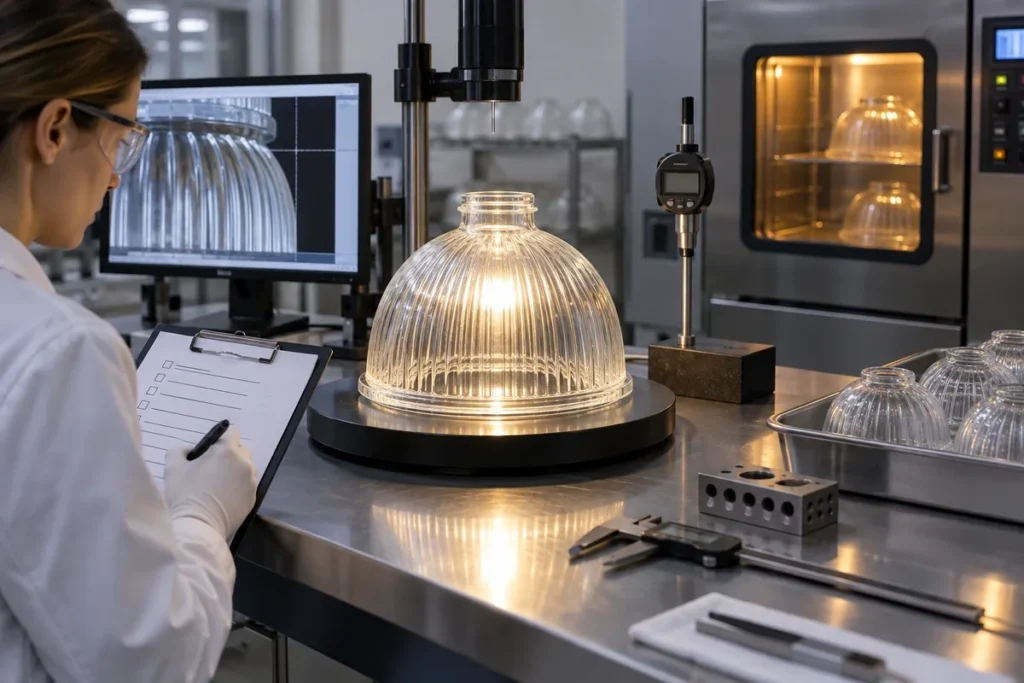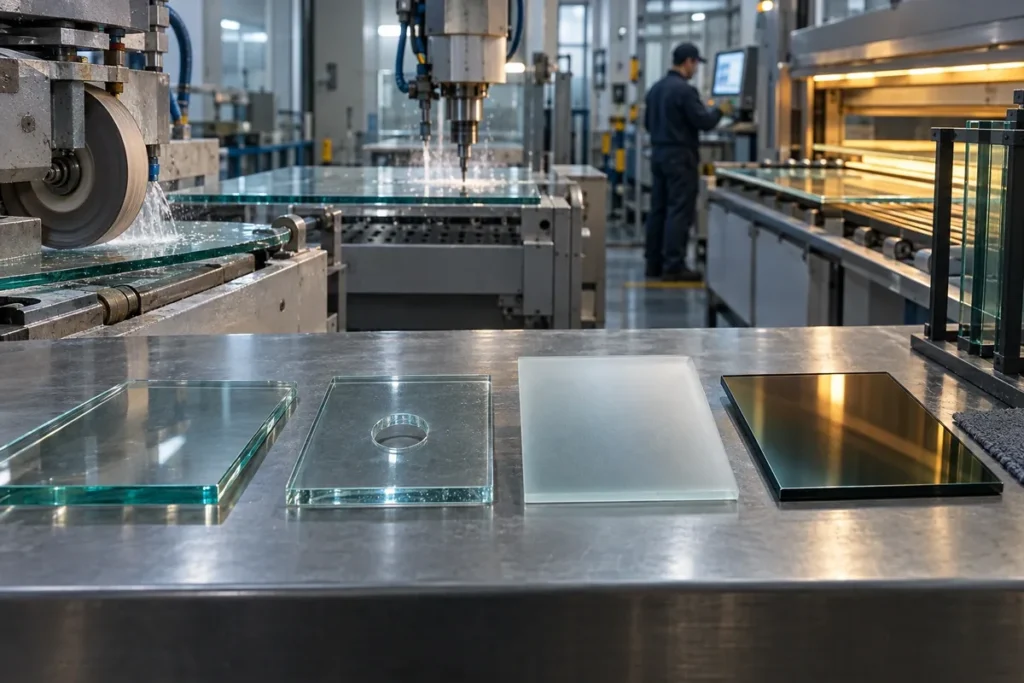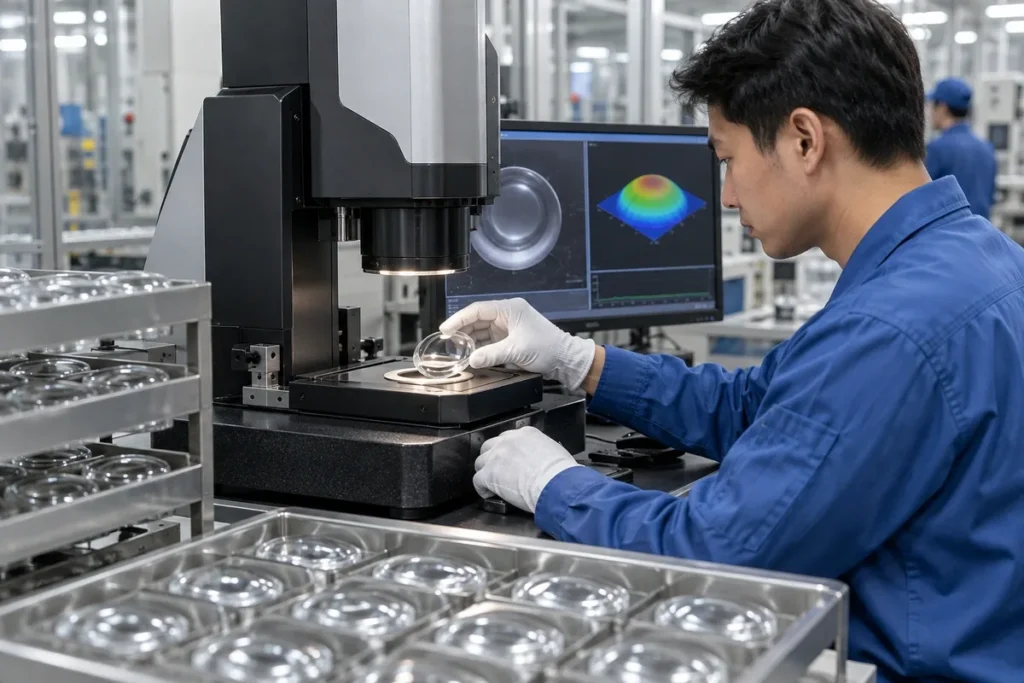
The opal vs frosted glass lamp shades decision determines more than color. Opal glass diffuses within the material, frosted glass scatters light at a treated surface, and clear glass preserves the strongest view of the source and molded detail. The best option depends on desired transmission, glare control, LED visibility, cleaning, durability and the visual character of the luminaire when both on and off.
Key Takeaways
- Clear glass maximizes sparkle and source visibility but provides the least inherent diffusion.
- Frosting adds surface scatter and can be applied selectively, though the treated surface needs maintenance consideration.
- Opal glass creates body diffusion and a white unlit appearance, with transmission tied to composition and thickness.
- Always compare illuminated samples using the actual LED board and source-to-shade distance.
How the Three Finishes Manage Light
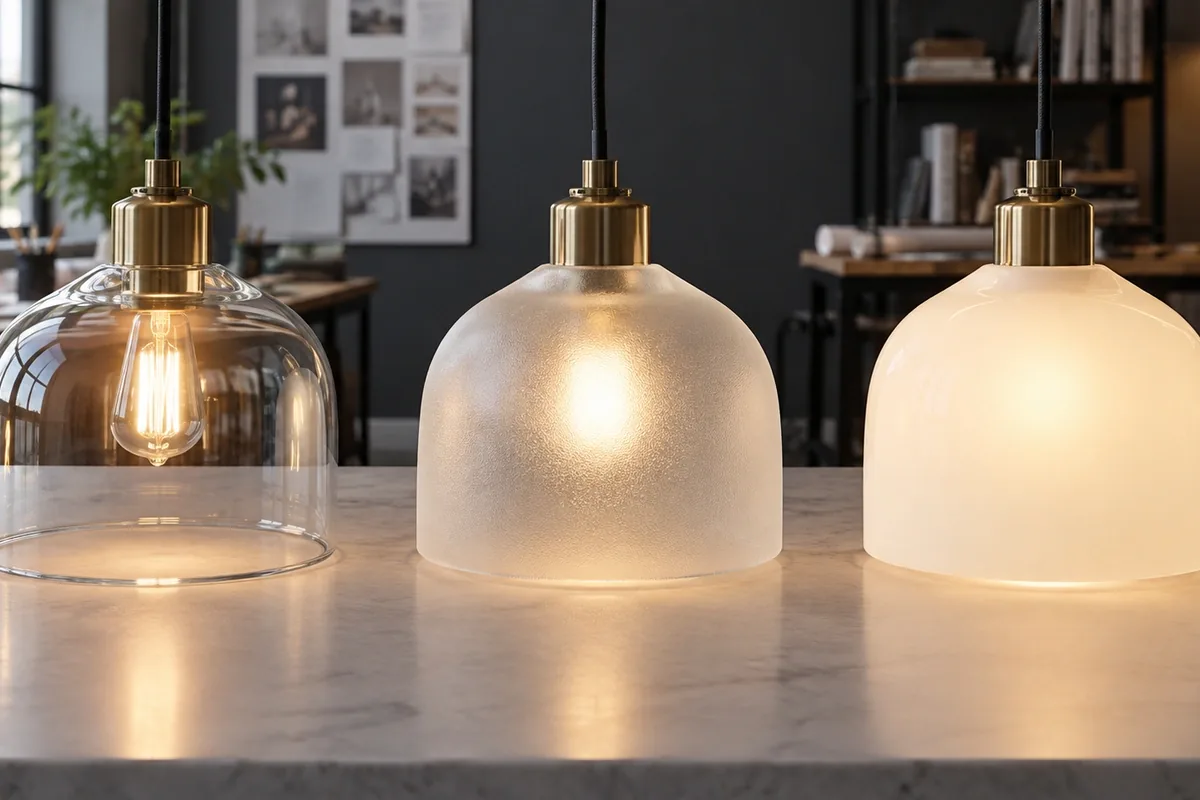
Clear glass transmits light with relatively little diffusion unless molded ribs, prisms or texture are added. It reveals filament-style sources and creates crisp highlights. Frosted glass carries a microscopically rough surface that redirects rays over many angles, softening source images. Opal glass contains light-scattering constituents throughout the body, so diffusion remains even if the surface is smooth.
None of the categories has one fixed transmission value. Glass composition, shade thickness, color, surface roughness and geometry all matter. A deeply ribbed clear shade may hide an LED more effectively than a lightly frosted flat panel, while a dense opal formulation can reduce output more than the project allows.
Opal vs Frosted Glass Lamp Shades—and Clear Glass
| Attribute | Clear | Frosted | Opal |
|---|---|---|---|
| Source visibility | High unless texture intervenes | Reduced by surface scatter | Usually lowest through body diffusion |
| Light character | Sparkle, contrast and defined highlights | Soft surface glow | Broad, visually solid luminous body |
| Unlit appearance | Transparent or colored transparent | Matte or satin surface | White or colored translucent body |
| Cleaning sensitivity | Shows dust and fingerprints | Residue can alter matte appearance | Smooth opal surfaces are generally straightforward to wipe |
| Customization route | Molded patterns, color or coating | Full or selective surface treatment | Composition/color plus molded texture |
Control Glare Without Losing Useful Light
Glare depends on luminance, viewing angle, source size and surrounding contrast. Diffusion spreads light across a larger apparent area, which can reduce harsh point images, but excessive scatter may send flux where it is not useful. Start with the desired distribution and observer positions, then decide how much concealment is necessary.
For LED products, board layout is part of the solution. Wider LED spacing can remain visible through a finish that looks uniform over a dense array. The distance from LEDs to the glass often has a large effect; a shallow housing may need stronger diffusion or additional internal mixing.
Specify Appearance with Physical References
Words such as milk, satin, etched and frosted are interpreted differently across suppliers. Approve a physical limit sample or a quantified transmission/haze target where the application warrants it. Define whether the inside, outside or both surfaces receive treatment, and identify areas that must remain clear for mounting, labeling or optical reasons.
Evaluate color under the intended correlated color temperature. Warm and cool LEDs can make the same opal shade appear different. Also inspect at normal viewing distance; magnified inspection can overemphasize forming evidence that is invisible in service.
Custom Shade Finish Development
China Lampoptics supports clear, opal and finished pressed-glass shade projects with drawing review, sample comparison and producibility feedback. Molded patterns and secondary treatments can be combined where the requested appearance and process route are compatible.
Send the luminaire image, LED layout, target finish sample, required clear or masked zones, cleaning environment and quantity. Approval criteria can then be written around the real visual objective instead of an ambiguous finish name.
Watch: A Related Glass or Optics Process
Canon's introductory optics video helps visualize how transmission and surface interaction change the path and appearance of light. Lamp shades use these effects for diffusion rather than image formation.
Related Products and Capabilities
Continue Reading
Discuss Your Opal Vs Frosted Glass Lamp Shades Project
Send your drawing, application conditions, quantity and the characteristics that matter most. China Lampoptics will review the information and identify the open technical items before quotation.
Contact China Lampoptics