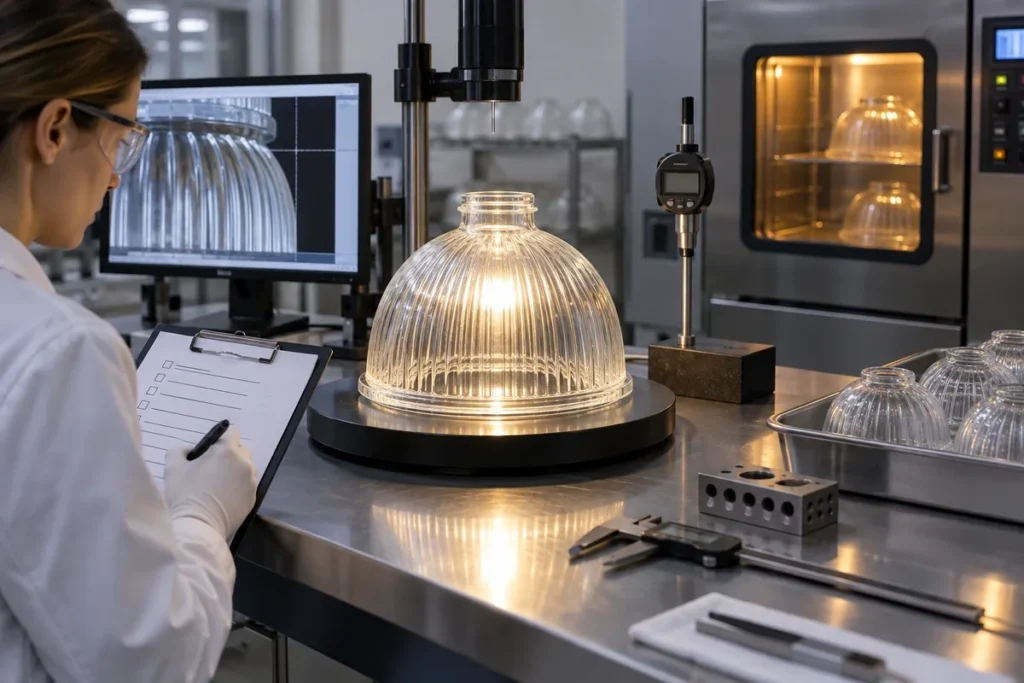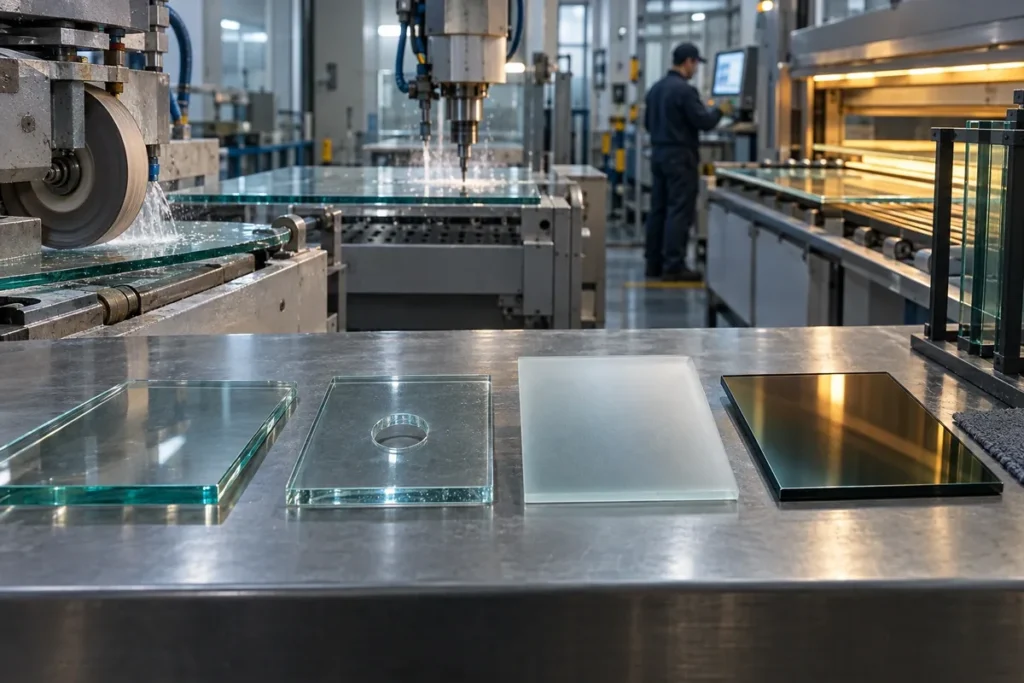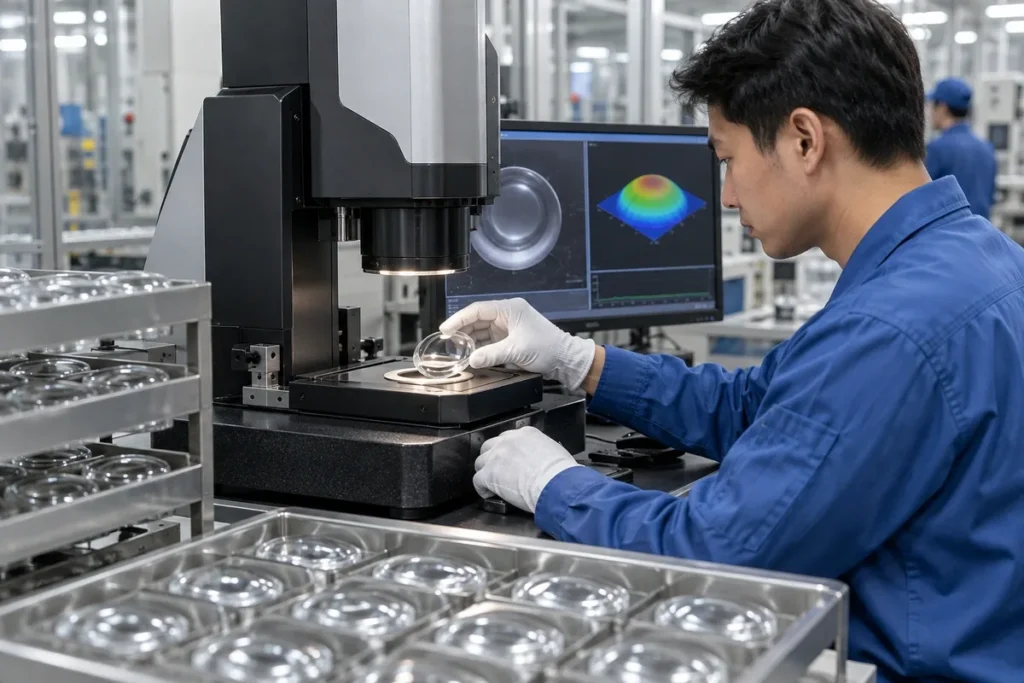
Tempered glass lighting covers can offer greater resistance to mechanical and thermal stress, but tempering is not a universal finishing step. The glass composition, thickness, molded geometry, edge condition and size must suit the strengthening process. The luminaire must also support the cover without point loading or rigid restraint. A strong cover begins with a compatible part and mounting design.
Key Takeaways
- Confirm tempering feasibility before finalizing deep shapes, severe thickness transitions or tight dimensions.
- Complete cutting, drilling and major edge processing before thermal tempering where applicable.
- Treat edges and mounting contacts as critical because damage or point load can initiate failure.
- Validate the finished cover in the intended luminaire and temperature cycle.
What Tempering Changes in a Glass Cover
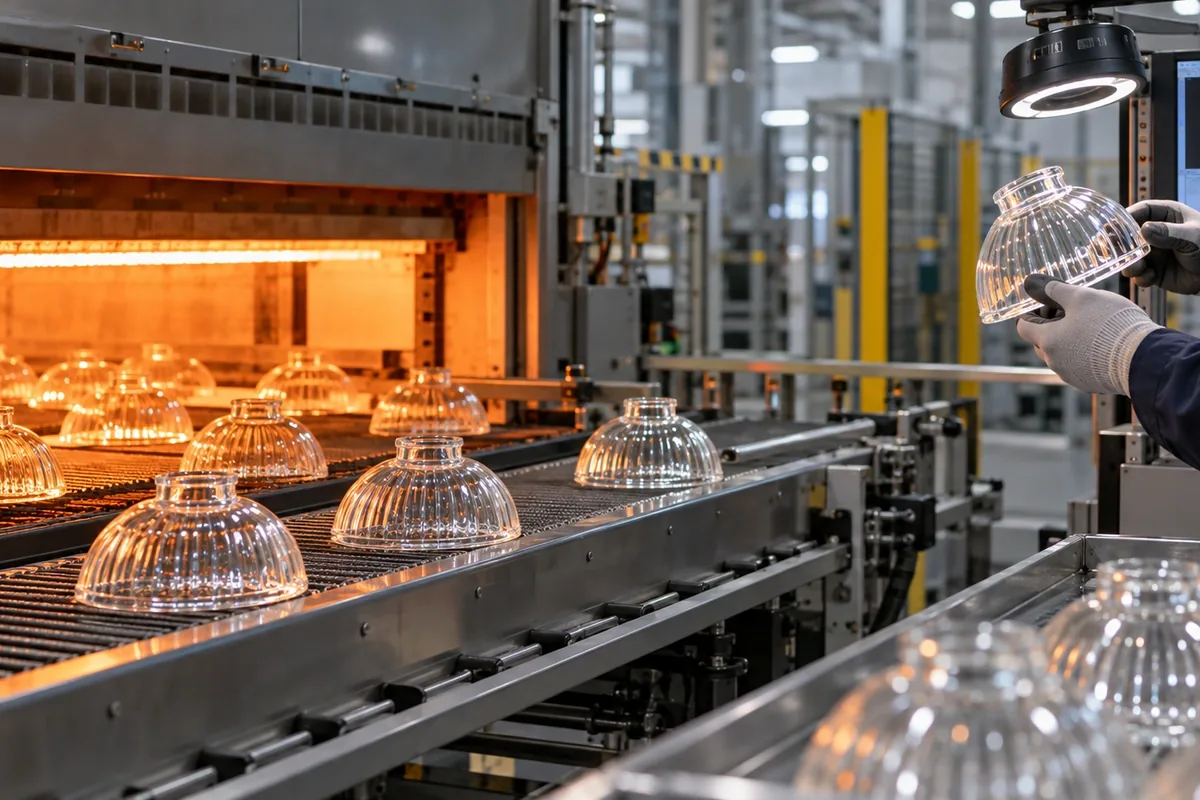
Thermal tempering heats glass and cools its surfaces rapidly, creating compressive stress at the surface and balancing tensile stress inside. Surface compression helps the part resist flaws opening under service loads. Chemical strengthening uses ion exchange rather than rapid air quenching and may suit other thickness or geometry ranges. The applicable route depends on the glass and component.
Strengthening changes the stress state; it does not remove scratches, inclusions, sharp edges or poor assembly. It may also affect flatness or dimensions. These consequences should be included in drawing tolerances and inspection planning.
When Are Tempered Glass Lighting Covers Appropriate?
| Application condition | Why strengthening may help | What must still be checked |
|---|---|---|
| Exposed industrial luminaire | Improved margin against handling or incidental impact | Actual impact requirement, guard design and mounting |
| Rapid heat-up or cool-down | May improve resistance to thermal stress | Glass family, gradients, thickness and liquid contact |
| Large protective window | Additional resistance to bending stress | Support spacing, flatness, edge quality and wind/load case |
| Drilled or shaped cover | Possible only with a compatible route | Hole-edge distance, pre-processing and geometry feasibility |
| Sealed enclosure | Can add mechanical margin | Pressure differential, gasket compression and certification scope |
Design the Edges, Holes and Mounting First
Edges are highly stressed regions and are exposed to handling damage. Specify an appropriate ground or finished edge and protect it through assembly. Holes and notches need adequate distance from edges and suitable radii. Because major machining after thermal tempering is generally not acceptable, the finished geometry must be established before strengthening.
Use broad gaskets or supports that distribute load. Metal clips and screws should not contact bare glass at sharp points. Allow for thermal expansion and tolerance. A cover that rocks on an uneven frame can be loaded before the luminaire is even switched on.
Inspection and Validation for Industrial Covers
Inspection begins before tempering with glass quality, edge condition, holes and dimensions. After processing, evaluate dimensions or distortion relevant to assembly, visual quality and the agreed evidence of strengthening. The correct test method depends on the product and any applicable luminaire standard.
System validation may include thermal cycling, impact, vibration, sealing and environmental exposure. These tests must use the final frame, gasket and retention hardware because the mounting changes stress. A material certificate alone cannot predict assembled behavior.
Industrial Cover Processing at China Lampoptics
China Lampoptics reviews molded and flat protective glass covers for forming, edge work, drilling, strengthening and other relevant secondary processing. The feasible route is confirmed from the drawing, glass family, thickness, size and requested test rather than assumed for every shape.
Provide CAD, load and impact conditions, temperature cycle, mounting section, holes, finish, annual volume and certification responsibility. This information makes it possible to separate a simple protective cover from a safety-critical enclosure component.
Watch: A Related Glass or Optics Process
This process video provides a visual overview of heating and rapid cooling in glass tempering. Actual recipes, equipment and part suitability vary by material and geometry.
Related Products and Capabilities
Continue Reading
Discuss Your Tempered Glass Lighting Covers Project
Send your drawing, application conditions, quantity and the characteristics that matter most. China Lampoptics will review the information and identify the open technical items before quotation.
Contact China Lampoptics