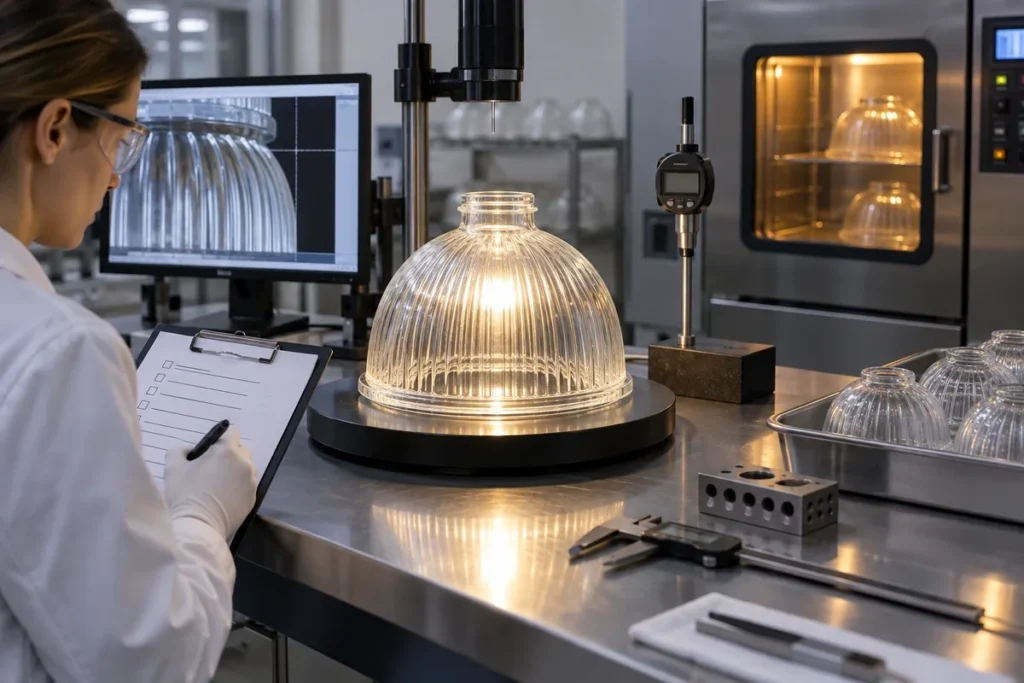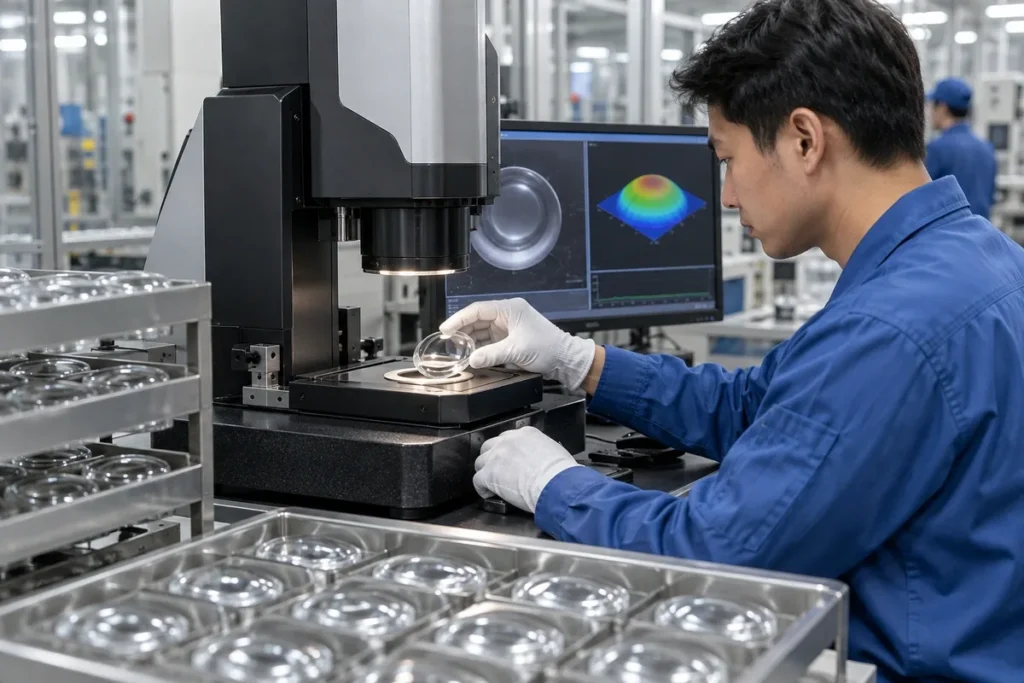
Protective glass covers for LED lights must transmit the intended spectrum while protecting the board, optics and seals from impact, weather and contamination. The cover also becomes part of the thermal and mechanical stack. Thickness, edge condition, coating, mounting and gasket compression should therefore be selected with the luminaire—not as an independent sheet of glass.
Key Takeaways
- Define optical transmission and appearance across the LED spectrum, including coating if required.
- Design edges, holes and support width before selecting strengthening or finishing.
- Use a gasket and frame that distribute load and allow thermal movement.
- Validate impact, ingress, thermal cycling and optical output on the assembled luminaire.
What Does the Protective Cover Need to Do?
Some covers are simple flat barriers; others carry printed masks, antireflective coatings, texture or molded features. Outdoor fixtures add ultraviolet exposure, rain, dust, cleaning chemicals and temperature cycling. Road luminaires may also require controlled light cut-off, so cover shape or surface can influence photometry.
List the functions in priority order. Maximum transmission may conflict with glare control or privacy of internal components. A highly durable surface may require a different coating route from a decorative tint.
Protective Cover Selection Matrix
| Design input | Glass implication | Assembly implication |
|---|---|---|
| Optical output | Transmission, color, haze and coating | LED spectrum, optic spacing and cleanliness |
| Impact exposure | Thickness, strengthening and edge quality | Frame support, guard and test orientation |
| Thermal cycle | Material family and stress margin | Expansion clearance and hot spots |
| Ingress target | Flatness/form at sealing land | Gasket material, compression and fastener pattern |
| Maintenance | Surface durability and cleanability | Access, replacement method and scratch protection |
Plan Edges, Holes, Printing and Coatings
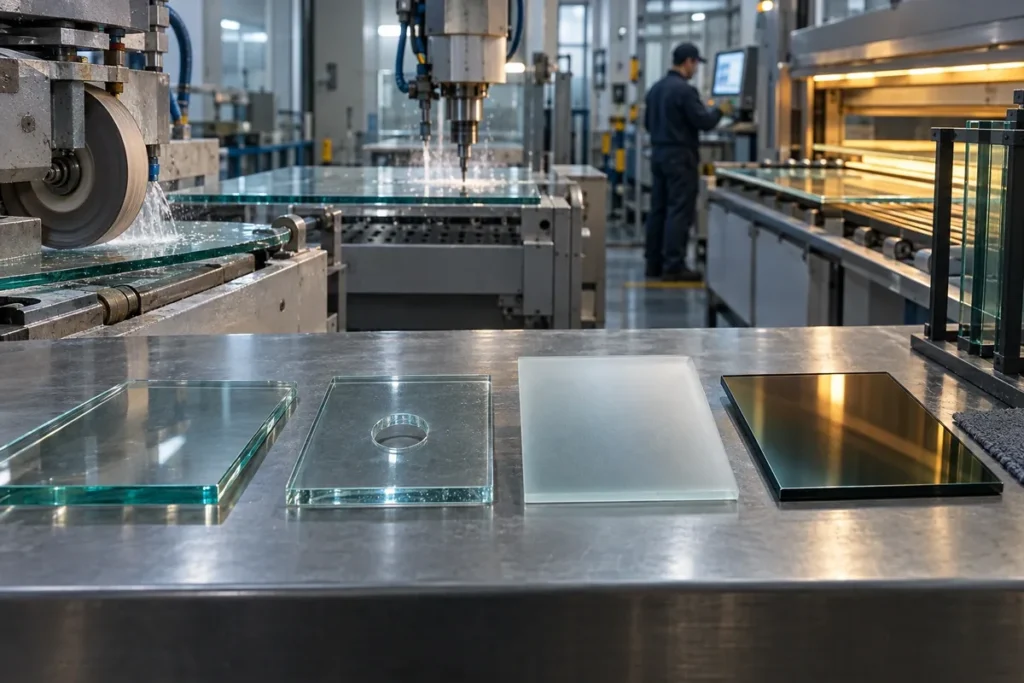
Edge chips can control strength even when the center surface is perfect. Specify ground or finished edges appropriate to the support and protect them during assembly. Holes and notches require suitable radii and distance from edges. Major machining should be completed before thermal tempering where that route is used.
Printed masks can hide seals or prevent stray light, while coatings can modify reflection or environmental response. Define coating side, spectral target, cosmetic limits, adhesion test and masked zones. Avoid assuming a coating developed for indoor flat glass will survive an outdoor luminaire without qualification.
Validate the Complete Outdoor Assembly
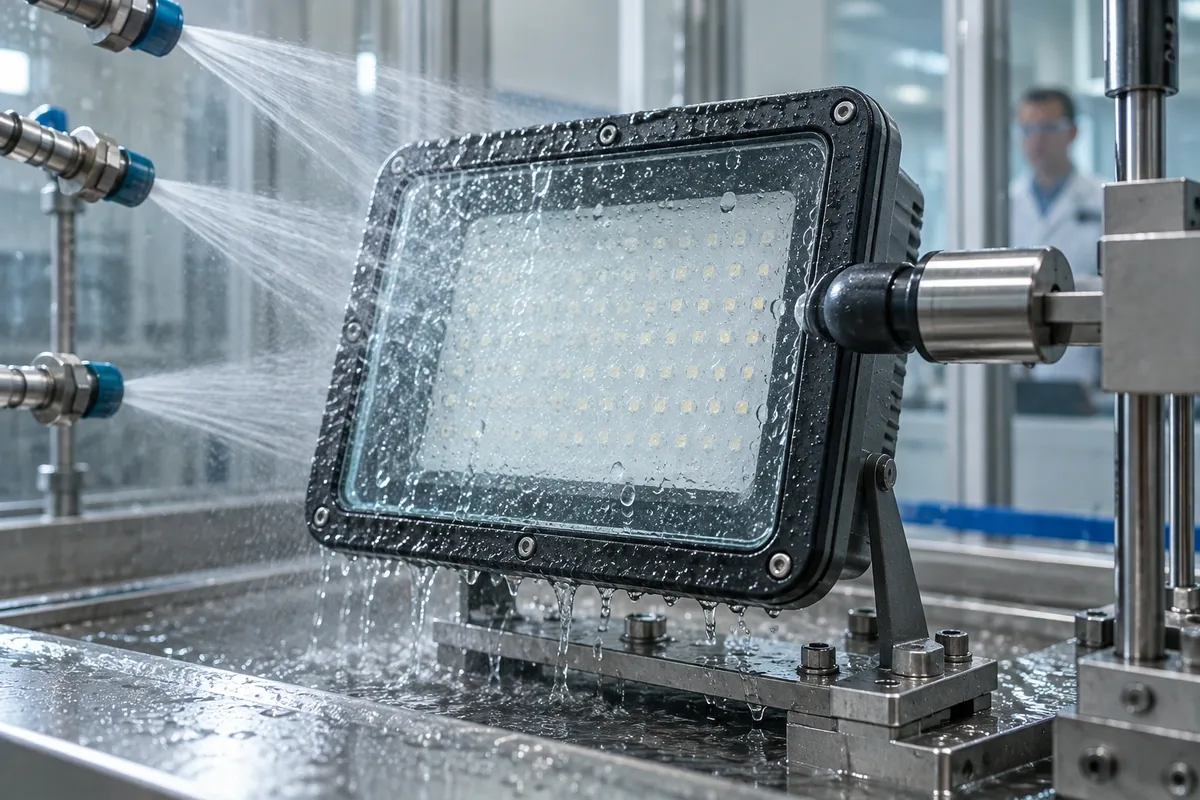
Measure optical output before and after environmental exposure. Check gasket compression and frame flatness, then perform the specified ingress, impact, vibration and thermal tests. Condensation or contamination on the inside surface can reduce light even if the glass itself is unchanged.
Document the cover drawing, material, coating batch and installed torque or clamp position. If glass thickness or supplier process changes, review photometry and mechanical tests that may be affected.
Custom Protective Glass at China Lampoptics
China Lampoptics reviews flat and molded protective glass for outdoor and industrial lighting, including feasible cutting, edge work, drilling, strengthening, sandblasting and coating routes. Each route is confirmed from the final size, shape, material and test requirement.
Provide the frame and gasket section, LED spectrum, transmission or haze target, environmental tests, edge/holes, coating requirement and volume. This allows manufacturing and luminaire validation to be planned together.
Watch: A Related Glass or Optics Process
This video shows the heating and cooling concept behind thermal tempering, one possible route for suitable flat lighting covers. Final suitability still depends on material, geometry and required tests.
Related Products and Capabilities
Continue Reading
Discuss Your Protective Glass Covers For Led Lights Project
Send your drawing, application conditions, quantity and the characteristics that matter most. China Lampoptics will review the information and identify the open technical items before quotation.
Contact China Lampoptics